Saturday, 29 September 2012
Gaze into the fist of Dredd
In the future, war has reduced most of the US to an irradiated wasteland. In Mega-City One, 800 million survivors are crammed into a single urban sprawl stretching from New England to Washington, D.C. As scarcity and the collapse of previous governments have caused a massive crime wave, the city is ruled in an authoritarian fashion and policed by Judges, lawmen entitled to use lethal force and act as judge, jury and executioner.
Judge Dredd (Karl Urban) is assigned a recruit, Cassandra Anderson (Olivia Thirlby). Anderson has failed her exams, but she may be valuable to the Hall of Justice for another reason: as a mutant, she has psychic powers.When the two investigate a seemingly routine triple homicide in a two-hundred-storey apartment block called Peach Trees, they stumble upon the empire of drug kingpin Ma-Ma (Lena Headey). After Ma-Ma shuts down the building to prevent their escape, the Judges must battle their way to the top against hundreds of gangbangers and desperate armed residents.
That's pretty much it. Where lesser comic book films stretch their material to pseudo-epic scope whether it fits the source material or not, there's a lot to be admired in Dredd's single-minded commitment to straightforwardness. Screenwriter Alex Garland (Sunshine) trims all the fat off the story for a lean ninenty-five minute running time. His script does not aspire to do more than chronicle a day's work for Dredd, the equivalent of a four-issue arc in the early 2000AD days, and that simplicity is the film's great strength.
Not that it lacks for strengths. Dredd is a masterclass in distilling the spirit of the comic book without taking on many of its details. The broad characters, physically deformed mutants, robots, laser guns, supernatural creatures and alien planets of the comic books are replaced by a deliberately basic, gritty future world. Technology barely exceeds present-day levels. Ordinary cars and weapons are used by everyone but the better-equipped Judges (and in the course of the film, even Anderson begins carrying an MP-5). The Judges' armour is far simpler and more practical-looking than its comic-book incarnation.
As for the character's heart and soul, Dredd does not attempt to sugarcoat the grimness of the source material. The comic books often overplayed their insanely dark future world for comic effect, but this was lost on quite a few readers. ('To my surprise, and even alarm', Pat Mills muses, 'a psycho character with no feelings would regularly win out any day over a hero who had some humanity or vulnerability.') By contrast, Dredd plays the Dirty-Harry-up-to-eleven concept straight, for a film that pleases everyone's inner authoritarian but troubles the soul. (That is, if satire is not as intrinsic to the concept as I think it is.)
The film is bolstered by three strong central performances. Urban, not allowed to take off his helmet, works his mouth and chin for all they're worth and affects a vocal chord-shredding growl. It sounds silly, but it works. Headey makes the most of the opportunity to exchange her restrained evil of Game of Thrones for unhinged villainy. Thirlby, meanwhile, shoulders the task of audience surrogate and standard 'newbie with a steep learning curve' character, communicating both doubt and increasingly strength effectively.
It's a jolly handsome film that should be seen in 3D. Slo-mo, Ma-Ma's drug that slows time down for the user, is exploited for numerous gorgeous shots of water droplets, explosions - and viciousness. Dredd's many gunfights delight in slow-motion shots of faces torn apart by bullets and other forms of unsavoury violence. Like its titular character, Dredd is single-minded, brutal, and singularly compelling.
Saturday, 28 April 2012
With a little help from my friends
At a S.H.I.E.L.D. facility Thor's adopted brother Loki (Tom Hiddleston) steals the Tesseract, a potentially infinite energy source, and brainwashes Agent Clint 'Hawkeye' Barton (Jeremy Renner) and Dr Selvig (Stellan Skarsgård) into becoming his minions. In response, Director Nick Fury (Samuel L. Jackson) decides to reopen the Avengers Initiative and gradually recruits Iron Man (Robert Downey Jr.), Captain America (Chris Evans), Thor (Chris Hemsworth) and Dr Bruce Banner (Mark Ruffalo) to his cause with the help of Black Widow (Scarlett Johansson) and Agent Coulson (Clark Gregg). It soon transpires that Loki has made a pact with the alien race of the Chitauri, who will help him conquer Earth.
The Iron Man films, Thor and Captain America: The First Avenger established their respective characters well enough for Whedon to not have to worry about them, which must have been a relief in an ensemble piece. Three challenges remained, I think: the Incredible Hulk, left on shaky ground by two underwhelming previous films; Natasha Romanoff/Black Widow, little more than window-dressing in Iron Man 2; and Hawkeye, likewise little known among the general public. That it works so well isn't just to Whedon's credit. Mark Ruffalo is a terrific Bruce Banner, finally giving us, at least in embryo, the Hulk film we were waiting for; Renner's natural charisma carries off a somewhat bland hero; and Black Widow is so much better written than the femme fatale routine Justin Theroux put her through that she hardly seems like the same character.
Compared to the intense character work on these three the other Avengers cruise along, and why shouldn't they? Obvious pitfalls are avoided: the film is remarkably light on jokes regarding Captain America's disconnect with the modern world, for example, and treats Cap as an emblem of old-fashioned virtue above all. If we can fault the way The Avengers handles character, it's only in its distressingly keen sense of their respective popularity. At times, the film turns into Iron Man & Friends, but favouritism never overwhelms balance entirely, and the thoroughly pleasant surprise of the love lavished upon minor characters makes up for whatever focus on Robert Downey Jr.'s increasingly tired shtick there might be.
'Balance', in fact, describes The Avengers rather well. It is an extraordinarily polished, carefully weighed film, almost entirely free of rough edges; but where it never plummets, it hardly soars either. Whedon is a better director of narrative than director per se, and in consequence there are a number of extraordinarily effective shots going from character to character, with nary a memorable image to be seen. In truth, I entered terminal superhero fatigue roughly two years ago, and The Avengers did not lift me out of that. But I spent two and a half entirely agreeable hours at the cinema, and for an ensemble film of this size to even work on that level is an unlikely success in itself.
Friday, 14 October 2011
Gotham City always brings a smile to my face
Richard Donner's Superman (1978), released in the wake of Star Wars (1977), introduced the superhero blockbuster and dominated the eighties with its sequels, but during that decade films and comic books were out of sync: on the page, the Dark Age was dawning with Alan Moore's V for Vendetta (1982-89) and Watchmen (1986-87) as well as Frank Miller's The Dark Knight Returns (1986) and Batman: Year One (1987).* Tim Burton's Batman (1989), the first really serious superhero film, changed that and kicked off the first wave of comic-book adaptations. (The last film in the series, 1997's Batman & Robin, killed off that wave as well as its own franchise.)
Twenty-odd years on, what was highly revisionist at the time has become 'classic'. The plot begins with Batman still a rumour, scoffed at by the less superstitious of Gotham's criminals. The new district attorney, Harvey Dent (Billy Dee Williams), is preparing to challenge the criminal empire of Carl Grissom (Jack Palance), who is struggling with his overly ambitious lieutenant Jack Napier (Jack Nicholson). Grissom double-crosses Napier, sending him to raid a chemical plant at night and ordering corrupt policeman Eckhardt (William Hootkins) to ambush Napier's men. In the ensuing struggle, Batman disarms Napier, who falls into a vat of green acid and is believed dead.
Napier, however, has miraculously survived both the acid and the ensuing botched plastic surgery ('You understand that the nerves were completely severed, Mr Napier. You see what I have to work with here...') and becomes the villainous Joker in the film's strongest and most iconic scene. After murdering Grissom, he plots to poison Gotham City's hygiene products with Smilex, which will kill the victim while fixing their face in a horrid rictus grin, in the run-up to the city's bicentennial celebrations. (Incidentally, this provides an excellent way to guess at Gotham's location: with a foundation date of 1789, the city is presumably in Ohio, the Great Lakes region, or the north-eastern Atlantic coast.) The Joker also pursues photographer Vicki Vale (Kim Basinger), who is dating wealthy Bruce Wayne (Michael Keaton).
It's a Joker picture, then, even more so than The Dark Knight (2008): Nicholson takes top billing, and Batman functions almost solely as his foil. The focus on the Joker's origin sets the 1989 film apart from the latest Christopher Nolan picture, which has Batman's nemesis appear from nowhere. Giving a definitive origin story for the Joker was controversial among fans (Batman: The Killing Joke by Alan Moore had given a possible, but deliberately ambiguous origin the previous year). But it works: Nicholson's Joker is a crazed villain even before being disfigured (his pre-murder one-liner, 'Have you ever danced with the devil in the pale moonlight?', goes back to his ordinary criminal days), suggesting the Joker is merely a useful persona.
Nicholson gets the best setpieces, too, the most famous perhaps his dance routine desecrating an art gallery to the sounds of Prince's 'Partyman' supplied by a boombox-carrying goon ('I am the world's first fully functioning homicidal artist!'). The actor goes all out on the craziness, and while Nicholson's shtick can be irritating - witness his horrendous overacting almost derail The Departed (2006) - it's perfect here. Granted, I still prefer Heath Ledger's funnier, more anarchic, better-acted take on the role, but Nicholson's Joker, unlike previous live-action iterations simply a ruthless mass murderer, is very good.
That brings us to the film's darkness, infamous in 1989. Again, The Dark Knight has one-upped Batman's on-screen nastiness but not, I think, the earlier film's attitude. Whatever you may say about Christopher Nolan's films - cold procedurals all of them - he tends to choose scripts that ultimate believe in and reward goodness and humanity (as The Dark Knight does repeatedly in its last half-hour). Not so in Batman: here we have a hero who kills off henchmen like there's no tomorrow and, in the film's climax, defeats his opponent with a highly questionable move. If The Dark Knight is willing to show a great deal more darkness, Batman ultimately has a more pessimistic view of the world.
The casting of Keaton, a well-known comedian, was greeted with scepticism, but he is a revelation in the role. Christian Bale is a closer fit to the character's physical description in the comic books, but his Bruce Wayne is nothing but a mask, ultimately shallow, while Batman is his real personality. That works, sure, but Keaton's Wayne - a shy, ordinary man in a mansion he barely knows - is much easier to empathise with. We'd never suspect this nice guy of being Batman, so when he picks up a poker, screaming 'You wanna get nuts? Come on! Let's get nuts!' at the Joker it really works. Keaton's Batman cares about people, whereas Bale's Batman often seems to be quite ready to burn down half of Gotham to get at the Joker. (No-one would do that to Burton's Gotham: a Gothic excess of spires and gargoyles where the Nolan films offer the atmosphere of a techno-thriller, it's just too gorgeous to destroy.)
Despite everything, though, it's not a great film. The plot is functional at best, Basinger is phoning it in, and the action scenes are not quite top-notch. If I like Batman, it's as a radically different vision to the Miller-Nolan school of Batman as man become symbol, brutally disregarding the limitations of his body: in the Millerverse, if Batman's chest had been a mortar, he'd burst his hot heart's shell upon it. Keaton's Batman is defiantly human, struggling with relationships and self-doubt, and he's all the stronger for it.
*With the benefit of hindsight, Moore easily emerges as the greater of the two, but the jury is still out, I think, on who had the greater cultural impact.
Friday, 16 September 2011
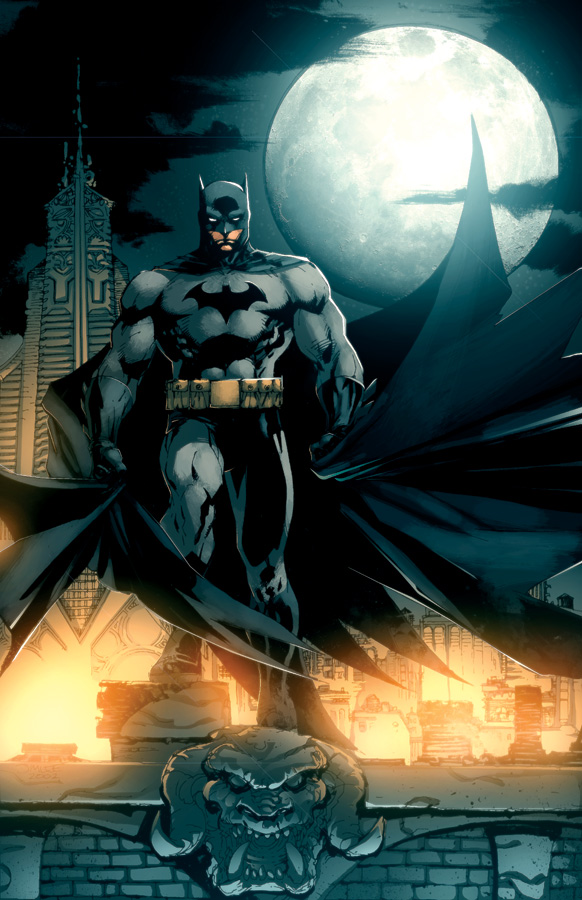
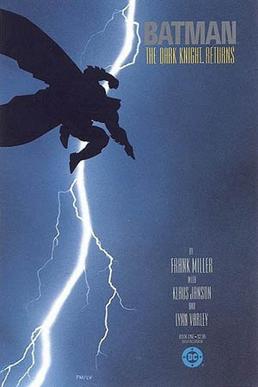
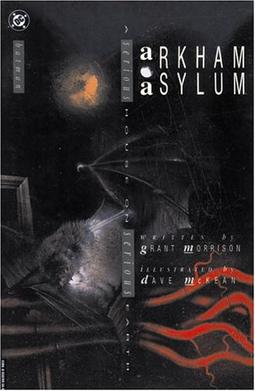
Gotham in ink
Note: This is an updated version of an article originally written in 2008, hence the outdated references.
Saturday, 10 September 2011
I'll destroy you with my positronic ray!
And yet I love them both equally; and while I may one day be worthy to review 2001, Barbarella has the courtesy to be stupider than me right now. This knowing ludicrousness is not a sign of quality in itself: I loathed the equally gormless Flash Gordon, and one of the most obnoxious qualities of the Scream franchise is its postmodern winking at its own flaws. What, then, makes Barbarella: Queen of the Galaxy (the indescribably beautiful promotional title) a delight where these others aren't?
Well, it isn't the plot. (Which, incidentally, I had to look up.) Sometime in the far future, Barbarella (Jane Fonda) is asked by the President of Earth (Claude Dauphin) to travel to the planet Tau Ceti and find the missing scientist Durand Durand (Milo O'Shea), who is in possession of a positronic ray, a dangerous weapon in an age that has left war behind. On Tau Ceti, Barbarella encounters a series of events that don't quite constitute a plot, and eventually finds she must confront the Great Tyrant of Sogo (Anita Pallenberg) with the help of the blind angel Pygar (John Phillip Law) and Professor Ping (Marcel Marceau). Incoherent is putting it mildly: the various points in the story bear little relation to one another, and the ending is utterly baffling.
Which is why the producers didn't promote the plot: they instead counted on the appeal of Jane Fonda in skimpy clothing. I wouldn't normally discuss an actor's looks, but the film itself pushes Fonda's physical attributes to the front so insistently that I could not review the final product without reference to them. Well, with that lie out of the way: Jane Fonda is extremely attractive in Barbarella: QotG, although she also looks a lot like her father, Henry Fonda. (Which, my friend remarked, is something frequently encountered in real life: your friend has a fit sister, but the family resemblance is undeniable, creating a weird situation.)
Barbarella is introduced performing an infamous zero-gravity striptease during the opening titles. Your reaction to the visuals and the music in this scene will determine your attitude to the rest of the film: is it sleazy titillation, lowest-common-denominator fluff offering cheap thrills to an assumed male audience, or a charming slice of sixties silliness and an expression of the sexual revolution? (It's both.) Throughout, Fonda slips from one revealing outfit into another. She discovers sex which, we learn, has ceased to be physical on earth, and is eventually tortured in the 'Excessive Machine', in which, the villain threatens, 'you will die... of pleasure!'. Barbarella makes the most of the fall of the Hays Code in the same year. Earlier films could get quite a lot of innuendo past the censors (see The Big Sleep); but in 1968, Dino de Laurentiis could offer you boobs.
The tongue-in-cheek attitude I mentioned earlier certainly goes a long way. In a delightful sequence, Barbarella is attacked by children and killer dolls after crash-landing on Tau Ceti; she is rescued by the Catchman (Ugo Tognazzi), who is just as hairy clad in furs as he is without them. The production design is an important part of the calculation: the producers never attempt to create realistic alien worlds, going instead for obvious plastic, rubber, papier-maché and plaster. The look is somewhat reminiscent of the obviously-fake sets of the original Star Trek series, which was on television at the time; it is certainly light-years from serious contemporary science fiction.
So why do I adore this film - this mess of over-the-top dialogue, awful sets and cheap titillation - where I actively dislike Flash Gordon? It helps that Jane Fonda, unlike the hapless Sam J. Jones, is in on the joke and an able actress. (One wonders how different Bonnie and Clyde and Rosemary's Baby would have been had Fonda not turned them down in favour of filming Barbarella with then-husband Roger Vadim.) There are the hammy supporting performances: the best known may be Milo O'Shea, who gave a more earnest performance as Friar Laurence in Romeo and Juliet the same year. And then there's the fact that Barbarella's spaceship has shag carpet on the walls. Shag carpet. On the walls.
But overall, I think it's the mind-boggling sixties-ness of the thing. The amazing psychedelic pop soundtrack by Bob Crewe and Charles Fox ('Barbarella psychedella, dazzle me with rainbow colours...') sets the mood for the film. And that's where I think Barbarella is more than a guilty pleasure. Though exploitative, its trippy camp and celebration of sex show the buoyant optimism of the flower power generation, the belief that a new age of peace and love was just around the corner. It's a vision of the future we've lost with our cyberpunk metropoleis, killer robots, and nuclear wastelands. Barbarella's future may be the least likely of our visions, but it's certainly one I wouldn't mind living in. Except for the shag carpet, of course.
Wednesday, 5 May 2010
Getting rusty
Here’s a paradox: Iron Man 2 undoubtedly features some good action, some funny moments, and solid performances. In fact, it’s a pretty enjoyable time at the cinema. But it still registers as a distinct disappointment, and I can’t bring myself to love it.
Iron Man 2 starts where the first film, 2008’s critical and box-office darling Iron Man, ended: Tony Stark (Robert Downey jr., as if you didn’t know) has just revealed to the world that he is the man in the metal suit. In Russia, a man called Ivan Vanko (Mickey Rourke) watches the show and swears revenge for his dead father, Anton Vanko, who helped Stark’s father Howard develop the technology now powering Iron Man’s armour. He may look like the world’s angriest homeless man, but Vanko is in fact a scientific genius who before long builds his own suit to become the villainous Whiplash, in alliance with Stark’s jealous rival Justin Hammer (Sam Rockwell, back from 2009’s much-praised but little-seen Moon). Meanwhile, Tony Stark makes his aide/nanny Pepper Potts (Gwyneth Paltrow) CEO of Stark Industries, aided by Natalie Rushman (Scarlett Johansson). But the technology keeping Stark alive is also killing him and Stark, faced with his mortality, is beginning to act irresponsible.
I’d like to start out positive. Therefore, two words (one word?): War Machine. Yeah, like that’s a spoiler. Colonel James Rhodes (Don Cheadle, replacing Terrence Howard, who was apparently both greedy and ill-suited for the part) finally gets his own suit of power armour. I could praise Cheadle’s performance, which easily bests Howard’s – but that’s not what I paid to see. What I did pay to see: a heavy suit of metallic grey (no ‘hot rod red’ for War Machine) armed with dual submachine guns, energy repulsors, a missile launcher not-so-amusingly nicknamed ‘the ex-wife’, and a mini-gun on its shoulder. (Thanks, Wikipedia.) The War Machine design works exceptionally well not merely because it’s all kinds of cool in itself, but because it is different from Iron Man – where Iron Man is relatively nimble, War Machine is robust, making up in armour and firepower what he lacks in dexterity. This sounds like a great trade-off to me, really.
The other performances (yes, I know I just praised the designs more than Don Cheadle) range from the great to the solid. Sam Rockwell is particularly enjoyable: his Justin Hammer is desperate to impress, smarmy and not a little pathetic – but without ever becoming mere comic relief. By contrast, Scarlett Johansson as Black Widow (replacing Emily Blunt, who had to drop out of the project due to scheduling conflicts) isn’t bad per se, she just has little screen time and feels terribly tacked on. After seeing the movie, undertake the following little exercise: go through the film and ask yourself which part of the plot wouldn’t have worked without her presence. Alas, the filmmakers forgot Mark Twain’s rule that ‘the personages in a tale, both dead and alive, shall exhibit a sufficient excuse for being there’. (Miss Johansson’s looks do not constitute a ‘sufficient excuse’, but I’ve never found her all that attractive, so I may be biased.)
Black Widow is part of a larger problem: Iron Man 2 is not merely the second instalment in a franchise, but an introduction into the unfolding Marvel film universe. So a section in the middle of the film is given over to Nick Fury (Samuel L. Jackson with an eye-patch – you may think this is automatically awesome, but zounds, you’d be wrong) narrating exposition about S.H.I.E.L.D. and all kinds of things that will be quite central when The Avengers comes out barely two winters hence, but not now. When it’s not spinning its wheels, Iron Man 2 recycles material from its predecessor. For this reason large parts of the film are, who thought I’d say this, boring, and you’d never guess it’s actually a little shorter than its predecessor, for it certainly feels a good half-hour longer. Where Iron Man was a taut, fun thrill-ride, the sequel is undeniably flabby.
In the process, much of what made Iron Man such a delight is sacrificed. Being a superhero sequel in the twenty-first century, the second film must of course be serious and dour (but must it also be dramatically inert?): Tony Stark’s former cheerful devil-may-care attitude is therefore replaced with grim foreboding. The delight of his banter with Pepper Potts, arguably the foundation of Iron Man’s success, is thus greatly reduced. Pepper, in fact, is barely in this film, and she’s far less fun, which is the writer’s fault, not Gwyneth Paltrow’s. As for Downey, he’s still exuding charisma, but I’m tiring of him. The humour mostly falls flat in this instalment, too. (The exception: there's a surprise cameo by Bill O'Reilly that I rather enjoyed.) Much of this is a case of diminishing returns; but one cannot but blame Justin Theroux’s script, which is in pretty much every way inferior to Iron Man’s, churned out by a larger team of writers.
If the script is sadly sub-par, Iron Man 2 also showcases Jon Favreau’s weaknesses as a director. In an early scene of Stark signing autographs, Favreau uses nonsensical POV shots. Later in the film, there is a brawl scene that is filmed poorly and edited worse, so that it utterly fails to register. Both script and direction deficiencies come together in a tremendously ill-judged party scene that should not have been written and, being written, should not have been filmed that way. It’s neither funny nor pathetic (in the Greek sense of the word), and it’s a microcosm of Iron Man 2’s inferiority to its predecessor. On the other hand, Favreau shows that he still knows how to make big hunks of metal punching each other interesting, which immediately makes him a better director than Michael Bay. And given that that’s what audiences will be there to see, no-one could claim Favreau doesn’t deliver.
Iron Man 2 is not as good as its predecessor. But neither is it a disaster. It does all the things Iron Man did, and all of them a little worse. Parts of it are dour and inert; others are a lot of fun. Bottom line: it’s just… okay. You won’t be angry you spent money on it, and in today’s world of summer blockbusters, that’s something to be grateful for.