Showing posts with label historical materialism. Show all posts

Tuesday, 14 February 2012

If your neighbour worships twenty gods: a note on biblical law and religious toleration


Christians are used to seeing secular society - whose institutions favour no particular faith - as a dire threat. To John Piper, for example, '[t]he modern secular world... tries to remove God from his all-creating, all- sustaining, all-defining, all-governing place [and] has no choice but to make itself god'. In other words, a secular society is blasphemous by definition. Against this conservative appraisal, I'll suggest secularism is most fruitfully understood not as a menace destroying western civilisation from within, but as a blessing longed for by those who did not enjoy it, made possible by Jesus' death on the cross.

At the same time, I'll argue that the liberal understanding of secularism is ahistorical and impossible to square with biblical evidence. Here, for example, is the excellent blogger Fred Clark, arguing against the US Catholic bishops' attempt to stop contraceptive services for women:
'It does me no injury,' Thomas Jefferson wrote, 'for my neighbour to say there are 20 gods or no God. It neither picks my pocket nor breaks my leg.' The advocates of burka-logic [sic] disagree. They insist that the very presence of such irreligious neighbors does them an injury - the injury of constraining their freedom to live unperturbed by the constant reminder of such blasphemies.
This quintessentially liberal argument - my neighbour's religious predilections do me no harm, so I have no business constraining him - cannot survive an encounter with the God of the Old Testament. At Sinai God makes a covenant is with Israel as a community to ensure correct religious observance and moral behaviour in the land (Deuteronomy 1:1-14). The Mosaic Law does not offer any room for religious toleration. Indeed the Israelites are explicitly commanded to destroy all traces of Canaanite paganism if they wish to enjoy the land (Deuteronomy 12:1-4).

Contrary to Jefferson, under Old Testament law my neighbour's heterodox religious observance does pick my pocket and break my leg. The Religious Right's notion of 'individual responsibility' is quite absent in the Bible. God repeatedly threatens to punish people for sins they have not themselves committed, 'visiting the iniquity of the fathers on the children and the children's children, to the third and fourth generation' (Exodus 20:5, Exodus 34:7, Numbers 14:18, Deuteronomy 5:9, and many more). Positively, God considers whole communities more kindly on account of a few righteous people (Genesis 18:22-32, Romans 11:28).

The insistence that Israel is judged as a whole for the actions committed in its midst rather than as individuals is perhaps best encapsulated by Deuteronomy 21:1-9:
If in the land that the LORD your God is giving you to possess someone is found slain, lying in the open country, and it is not known who killed him, then your elders and your judges shall come out, and they shall measure the distance to the surrounding cities. And the elders of the city that is nearest to the slain man shall take a heifer that has never been worked and that has not pulled in a yoke. And the elders of that city shall bring the heifer down to a valley with running water, which is neither ploughed nor sown, and shall break the heifer's neck there in the valley. Then the priests, the sons of Levi, shall come forward... And all the elders of that city nearest to the slain man shall wash their hands over the heifer whose neck was broken in the valley, and they shall testify, 'Our hands did not shed this blood, nor did our eyes see it shed. Accept atonement, o LORD, for your people Israel, whom you have redeemed, and do not set the guilt of innocent blood in the midst of your people Israel, so that their blood guilt be atoned for.' So you shall purge the guilt of innocent blood from your midst, when you do what is right in the sight of the LORD.
Here the murderer is unknown and unidentifiable, but the nearest settlement is required to offer a sacrifice in atonement for the sin committed lest it be visited upon their heads. The action, not the acting subject, is the primary term. Nor does the Bible consider the motives of offenders. Distinguishing murder from accidental killings, for example, is an innovation of the ninth century, when earnest scholars attempted to settle matters humanius (more humanely) than the often harsh Church Fathers. (So much, incidentally, for the notion that a concern for human welfare reveals a 'man-centred' world-view.)

We tend to take a modern legal understanding of individual responsibility for granted, but it can seriously distort our reading of the Bible. The concept of bloodguilt - that sin, if unatoned, will return to haunt even those who have not themselves committed it - is accepted by New Testament writers (Luke 11:50-51, Revelation 6:10). Augustine's notion that original sin is passed on through biological parenthood - logically consigning those who die in the womb to damnation - would also be impossible without bloodguilt.

But that isn't the whole story. In the New Testament, God's people are not told to enforce obedience among their nonbelieving neighbours. Indeed the New Testament is marked by disinterest in secular power at best, and outright hostility at worst (Revelation 17:1-6). The death of Jesus at the cross changes everything. From that point onwards, it is not biological descent from Abraham but faith that determines membership in the people of God (Romans 9:30). The ethno-religious boundaries of ancient Israel have been shattered. God's people are now of every nation and tongue, no longer identifiable with individual peoples or states.

Secularism - a society no longer compelled to enforce religious obedience among its subjects, on pain of judgment - is thus made possible by the death of Jesus. When an individual puts her faith in Christ she cannot become his without also becoming part of the people of God; God's covenant is made with his people as a whole. There is no salvation for the individual outside the collective salvation of God's people (which is why I continue to find Calvinism's emphasis on Christ's successful purchase of a definite people compelling). It is because of this ingrafting into the people of God that baptism - a public symbol of membership in God's family - is important. But it no longer coincides with membership in an earthly nation or obedience to a set of temporal laws.

If the potential for secularism was present from Jesus' death onwards, that potential had to remain unrealised in pre-modern societies, which functioned through personal relationships and localised hierarchies sealed and enforced through oaths. Public declarations of political and religious loyalty - which are quite superfluous in modern states - were vital to rulers who lacked the centralised bureaucracy necessary to enforce obedience among their subjects. (For example, a modern state knows who all its subjects are and where they live, something the ancients could not have imagined in their wildest dreams.)

Even the Roman state, often praised for its tolerance, could not solve the problem of religious diversity by becoming secular - atheist as a state - but only by being radically inclusivist, declaring all faiths valid and adding foreign deities to its pantheon. Still, it required that its subjects subordinate their loyalties to the imperial cult, and those who could not comply - Christians, most famously - had to suffer its wrath. Pre-modern societies that did not compel everyone's conversion (the political entities of the Islamic world, for example) nonetheless had to privilege one faith.

It was only with the vastly increased capacity of the state from the French Revolution onwards, and its sweeping aside of motley feudal ties and privileges, that overwhelmingly Christian societies could provide freedom of religion for their subjects without breaking down. Our nonconformist forebears - the very people from whom modern evangelicalism is descended - ardently campaigned and prayed for a secular state that would not exclude them on the basis of religion, and eventually obtained that sweet freedom.

Saturday, 31 December 2011

Class and class struggle in early Rome


Despite its grandiose title, this post - long delayed by being away from my copy of Livy's Ab urbe condita - does not offer an outline of class struggle in the early Roman Republic as a whole. It is intended, instead, to provide a brief introduction to how Livy frames conflict between the orders. (This is based on The Early History of Rome, the Penguin translation of the first five books of Ab urbe condita, which ends with the sack of Rome by the Gauls.)

The early Republic was a Beutegemeinschaft, a society based on capturing and distributing loot through annual warfare. Success in war kept the gold flowing and was thus integral to the survival of the state, which exported its tensions. For this, the patricians - Rome's ancient aristocracy, the political and religious elite - required the consent of the far larger plebeian class, who did most of the fighting.

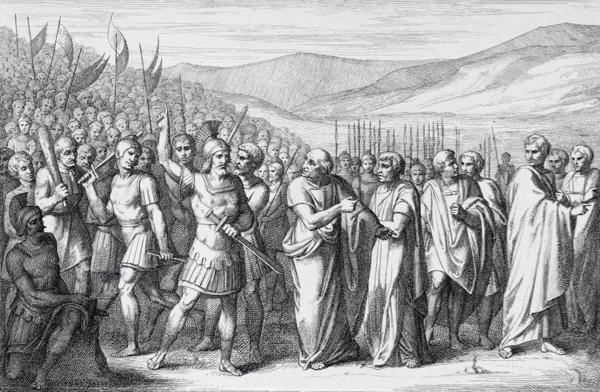
This was exploited by the plebeians in the first secessio plebis in 494 BC - a general strike in which the plebeians, rather than respond to military summons, left the city, gathered on the Mons Sacer and threatened to found a new town. Grievances included disadvantages in the allocation of land in colonies, armed Roman settlements built to subdue captured enemy territory, and the patricians' exclusive privileges. The patricians made significant concessions, including the institution of plebeian tribunes, representatives of the plebs who could influence the legislative process. The ongoing tug-of-war between the tribunes and the Senate occupies much of Livy's account.

Most of what we learnt in school, though, was about Rome's foreign wars, not her internal struggles. This is hardly surprising, since the conflict of the orders offers none of the dramatic bloodletting of Porsena's siege of Rome or the wars against Veii; but in truth the social conflict, mostly confined to forums and laws though it is, provides thrills aplenty. It also has the advantage of being less overgrown with fictions and the rigid narrative framework all accounts of foreign wars had to follow.

Livy includes a beautiful vignette that encapsulates the patricians' fears at the opening of his fourth book. Faced with the prospect of a bill brought by the plebeians that would legalise intermarriage between the orders - an unthinkable travesty to the aristocracy - the consuls M. Genucius and C. Curtius respond (4.1):
In all communities the qualities or tendencies which carry the highest reward are bound to be most in evidence and to be most industriously cultivated - indeed it is precisely that which produces good statesmen and good soldiers; unhappily here in Rome the greatest rewards come from political upheavals and revolt against the government, which have always, in consequence, won applause from all and sundry. Only recall the aura of majesty which surrounded the Senate in our father's day, and then think what it will be like when we bequeath it to our children! Think how the labouring class will be able to brag of the increase in its power and influence! There can never be an end to this unhappy process so long as the promoters of sedition against the government are honoured in proportion to their success. Do you realise, gentlemen, the appalling consequences of what Canuleius is trying to do? If he succeeds, bent, as he is, upon leaving nothing in its original soundness and purity, he will contaminate the blood of the ancient and noble families and make chaos of the hereditary patrician privilege od 'taking the auspices' to determine, in the public or private interest, what Heaven may will - and with what result? that, when all distinctions are obliterated, no one will know who he is or where he came from! Mixed marriages forsooth! What do they mean but that men and women from all ranks of society will be permitted to start copulating like animals? A child of such intercourse will never know what blood runs in his veins or what form of worship he is entitled to practise; he will be nothing - or six of one and half a dozen of the other, a very monster!
We're not supposed to like these consuls (whose speech, of course, is fabricated wholecloth by Livy). The points made, though, are familiar: the belief that rampant disobedience to authority is crippling the commonwealth, as the Tories affirm; the notion that society, politically correct as it is, rewards the lazy and insubordinate; and lastly, a fear of what, in a different day and age, the Americans called miscegenation, which will lead to human beings becoming as beasts. There's nothing more heartening than reading millennia-old rants warning of the imminent collapse of human civilisation - it puts the Daily Heil in perspective.

We might call Livy's stance on all this broadly call patriotic: he firmly disapproves of internal strife that weakens Rome against her enemies. To this end, he demands justice for the plebeians and repeatedly censures the more arrogant of the patricians: but he also wishes the plebeians would cease to cause trouble. That Livy's narrative should be dominated by his desire for internal peace is hardly surprising. He was writing towards the end of the first century BC, when the period of vicious and hugely destructive civil wars - still within living memory - had ended with the dominance of Augustus, who is praised for restoring concord (even as Livy holds modern morals to be depraved).

Even as the plebeians fought for increased rights, they nonetheless had a stake in Roman society. In consequence they should not be reckoned the wretched of the earth but, perhaps, something of a labour aristocracy, set above the landless and the unfree. 'We propose that a man of the people may have the right to be elected to the consulship', argued Canuleius (4.1): 'Is that the same as saying some rogue who was, or is, a slave?'Social stratification eventually lead to the absorption of the richer plebeians into a broader Roman aristocracy, the nobilitas. It wasn't until the Social Wars and the slave risings of the first century BC that the dispossessed again threatened the integrity of Roman class society.

Wednesday, 5 October 2011

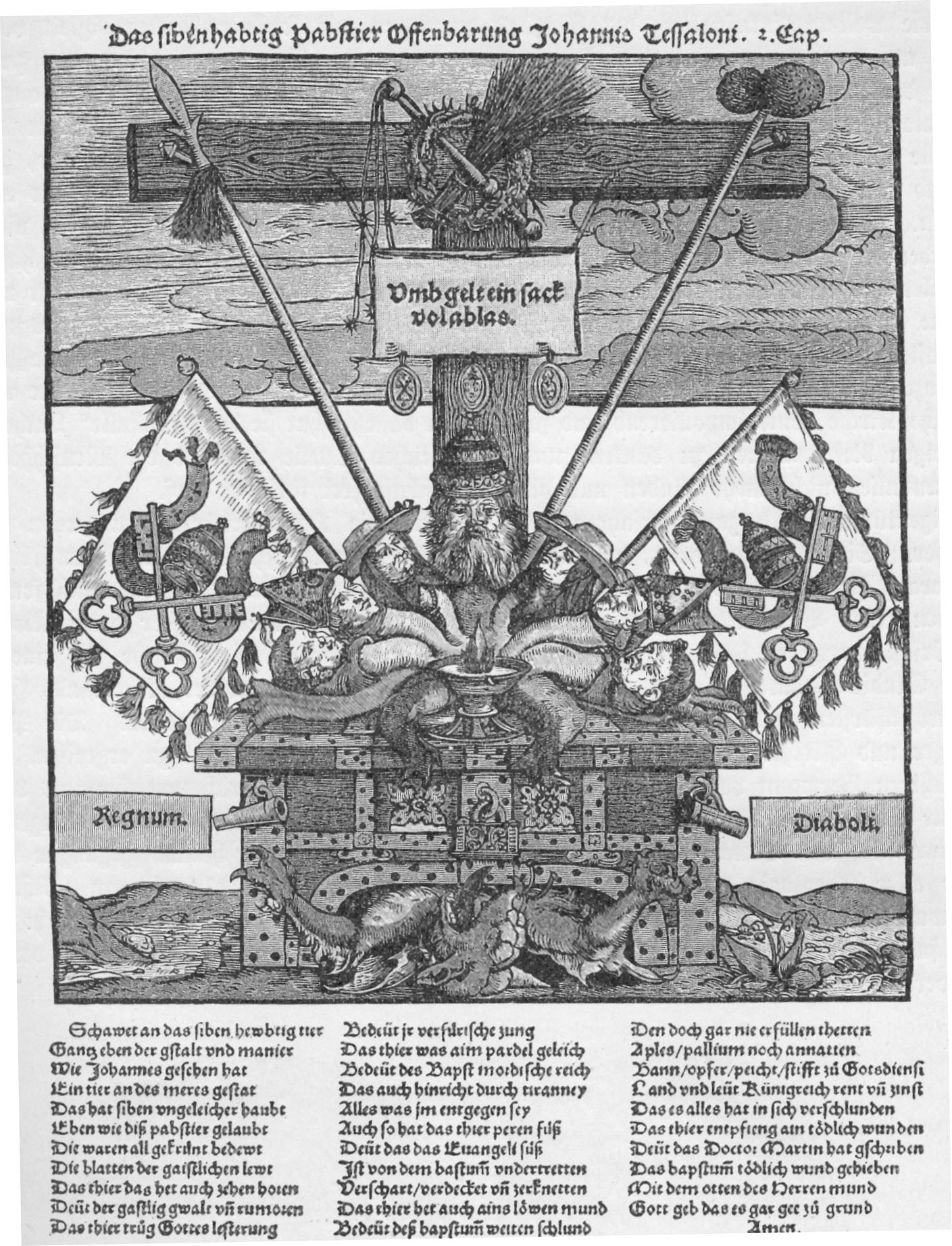
Against the anti-papists

(Note: this is an English paraphrase of an earlier post.)

The Left Party took a clear position on the pope's recent visit to Germany: half its MPs were to leave the room during the pope's speech before the Bundestag. I believe this attitude, widespread among the German Left both within and without parliament, is wrong both theoretically and strategically. The following is intended as a kick-off to a left-wing response to no-to-popery rhetoric in Germany: a critique of the critique of the pope, if you will.

Last year's papal visit to Britain, until recently my home, was similarly contested. At the time, Simon Hewitt outlined why hostility to the pope was suspect, but his argument, rooted as it is in historical materialism, applies mostly to a British context. But just as in Britain, German anti-Catholicism would do well to understand its own history.

Germany, almost uniquely among the European states, is divided into two denominations of roughly equal size.* The religious wars of the sixteenth and seventeenth centuries ended in a draw. The decline of imperial authority left no power above the princes, who proceeded to enforce uniform religious observance among their subjects. (It may have been for this reason that my Protestant ancestors left Upper Austria for Pomerania in the early eighteenth century.) After Prussia expelled Austria from the German Confederation, sixteen million Catholics remained in the newly unified German state: mostly in the south and west, in Ermland, Upper Silesia and the Polish border regions - beside twenty-eight million Protestants.

The Hohenzollern emperors were none too fond of these Catholics. They suspected them, the 'inner France', of conspiring with foreign powers and branded them 'enemies of the Reich'. Bismarck waged a protracted war of position - the Kulturkampf of the 1870s - against the Catholic Church. In short, Catholicism served the rulers of the Junker State as an imaginary enemy to secure their own power. Catholics fought back in the political arena through the Centre Party; many also joined the fledgling Social Democrats. At the same time, German nationalists in Austria-Hungary founded the 'Away from Rome' movement, combining virulent anti-Catholicism with antisemitism; protofascists like Georg von Schönerer converted to Protestantism.

Though officially neutral with respect to religion, Nazism was suspicious of the Catholic Church as a 'foreign' power from the beginning. In Catholic regions the Nazis never achieved the electoral breakthroughs that made the rural Protestant North their stronghold. In his infamous Myth of the Twentieth Century, Alfred Rosenberg claimed the Papacy descended from the haruspices - Etruscan soothsayers - and was thus of Asiatic, 'non-Aryan' origin. In western Germany, Catholicism only won equality and the capacity to contribute equally to public life after 1945.

Of course most latter-day anti-papists will be appalled at the unsavoury history of German anti-Catholicism: many, indeed, will not be familiar with it. Most of those hostile to the papal visit are of a generally secular frame of mind rather than hailing from a traditionally Protestant backgrounds. Either way hostility to the Catholic Church is not neutral terrain: any critique of the pope must formulate a response to the historical persecution of Catholics and unequivocally defend Catholics' enduring right to practise their faith in Germany.

Rejecting simplistic criticisms of the pope does not, of course, mean a blithe acceptance of the Vatican's teachings. Critics are right to lambaste Rome's stance on gender and sexuality as well as its treatment of the abuse scandal. As a Protestant, I also have fairly wide-ranging disagreements with Catholic teachings, from salvation to ecclesiology, the Eucharist and the use of images. None of that means, however, that one shouldn't invite the pope and hear him out. Not to mention that anyone who rejects the pope must be consistent: will he or she show the same zeal protesting President Obama, who is responsible for the deaths of thousands through drone attacks - which, however hostile, no-one could quite claim of the pope?

Liberal secularists opposing Protestants and Catholics as well as Muslims and religious Jews must be prepared to be self-critical and accept that, just like the Christianity of yore, their agitation has frequently been exploited in the cause of imperial aggression in recent years. Western Crusaders like Henryk Broder and Christopher Hitchens use a critique of religion to justify the invasion of Muslim countries as well as the continuing occupation and colonisation of Palestine. Secularism must be as wary of its false friends as it is of its supposed or real enemies. It must be critical of its own vocabulary and accept that it is counter-productive to stereotype Christians as, in the admirable words of Professor Dawkins, 'dyed-in-the-wool faith-heads'. Painting Joseph Ratzinger, a highly intelligent theologian, as an out-of-touch fuddy-duddy won't do much for anyone's credibility.

Most varieties of secularism find their origin not in Marxism but in a - particular and arguably wrong - interpretation of the Enlightenment, and the Left should be wary of applying them uncritically. Marx's real critique of religion cannot be separated from his critique of the social order, as a quick glance at the Introduction to the Critique of Hegel's Philosophy of Right will show:
The foundation of irreligious criticism is: Man makes religion, religion does not make man. Religion is, indeed, the self-consciousness and self-esteem of man who has either not yet won through to himself, or has already lost himself again. But man is no abstract being squatting outside the world. Man is the world of man – state, society. This state and this society produce religion, which is an inverted consciousness of the world, because they are an inverted world. Religion is the general theory of this world, its encyclopaedic compendium, its logic in popular form, its spiritual point d’honneur, its enthusiasm, its moral sanction, its solemn complement, and its universal basis of consolation and justification. It is the fantastic realisation of the human essence since the human essence has not acquired any true reality. The struggle against religion is, therefore, indirectly the struggle against that world whose spiritual aroma is religion.
Religious suffering is, at one and the same time, the expression of real suffering and a protest against real suffering. Religion is the sigh of the oppressed creature, the heart of a heartless world, and the soul of soulless conditions. It is the opium of the people.
The abolition of religion as the illusory happiness of the people is the demand for their real happiness. To call on them to give up their illusions about their condition is to call on them to give up a condition that requires illusions. The criticism of religion is, therefore, in embryo, the criticism of that vale of tears of which religion is the halo.
Unlike Marx I do not believe 'religion' - which Marx rather unacceptably generalises as a universal phenomenon - to be an illusion, but the main thrust of Marx's argument is hard to argue with. Proclaiming the end of religion without at the same time fighting for the end of a state of affairs that leads people to long for a less terrible Beyond is not just an admission of impotence, but apologetics for the vale of tears. Unlike liberal atheism Marxism dissolves superstition into history, not vice versa: it seeks to overthrow the present society rather than pointlessly demand that people should bear it without illusions.

But left-wing anti-papism is wrong not only in theory but also in practice. The Left Party has struggled for years to overcome its own east-west division: a mass party in eastern Germany but often the weakest of five parliamentary parties in the West, it is faced by the task of establishing itself among the West German working class. The most industrialised regions of the West (the Ruhr and the Rhineland), however, are also among the country's most strongly Catholic. Spicing up democratic socialism with God-is-dead sloganeering is self-sabotage. Left-wing politics must approach workers without prejudice, not condemn their beliefs, whatever they may be, as antediluvian.** It must engage real human beings, not the sort it would like in a perfect world. The party oddly has no problem grasping this when it comes to Iraq or Palestine, which should make one at least a little uneasy.

In other news, the decline of Christianity in Germany has led to strange side-effects. When the pope declined to advance the ecumenical integration of the churches, the press considered this a 'disappointment' to Protestants, whose hopes were apparently 'dashed' by the Pontiff. It would appear that when he said he felt closer to the Orthodox than to the Protestant churches, the pope made Protestant bishops cry. One might imagine the Eastern and Lutheran churches as prodigal sons competing for the approval of a displeased father and eager to move back into his house at the earliest opportunity. Well, I must announce my disappointment is somewhat limited: the Protestant tradition, be it Lutheran or Calvinist, has long been sufficiently strong to survive without a papal blessing. We'll live.


*Yugoslavia and Ireland are somewhat similar in this respect.
** Of course there are limits: the Left must always be a force against racism and sexism among workers, for example, which are morally unacceptable and weaken the working class.

Sunday, 25 September 2011

Los von Rom? Eine Kritik der Papstkritik

Die Linke bezog klar Stellung zum Papstbesuch. Die Hälfte ihrer Abgeordneten wollte zur Papstrede im Bundestag den Saal verlassen. Ich halte diese Ablehnung, die auch außerparlamentarisch in linken Kreisen weit verbreitet ist, für theoretisch und strategisch falsch. Wir bedürfen einer linken Antwort auf die Nein-zum-Papst-Rhetorik - eine Kritik der Papstkritik, wenn man so will.

Auch die Reise des Papstes nach England, bis vor kurzem meine Wahlheimat, war umstritten. Simon Hewitt legte damals dar, warum ihm die Gegnerschaft suspekt war, allerdings fußt sein Argument auf historischem Materialismus und damit einem britischen Kontext, der für Deutschland nicht gilt. Der deutsche Antikatholizismus täte gut daran, die eigene Geschichte zu verstehen.

Deutschland ist in Europa fast einzigartig in seiner Teilung in zwei Konfessionen ähnlicher Größe.* In den Religionskriegen des sechzehnten und siebzehnten Jahrhunderts gelang keiner Seite der Sieg, und durch die Zermürbung der Kaisermacht gab es in Deutschland bald gar keine Instanz über den einzelnen Fürstenhäusern, die nach dem Prinzip cuius regio, eius religio ihre Untertanen dem eigenen Glauben unterwarfen. (Vielleicht aus diesem Grunde wanderten meine evangelischen Vorfahren im frühen achtzehnten Jahrhundert aus Oberösterreich nach Pommern aus.) Nachdem Preußen Österreich aus Deutschland drängte, verblieben im Kaiserreich sechzehn Millionen Katholiken - vor allem im Süden und Westen, im Ermland, in Oberschlesien und den polnischen Grenzgebieten - zu achtundzwanzig Millionen Protestanten.

Den Hohenzollern waren diese Katholiken nicht lieb, sie wurden als "inneres Frankreich" des Sympathisantentums mit äußeren Mächten verdächtigt, als Reichsfeinde gebrandmarkt und im Kulturkampf von Bismarck bekriegt: kurzum, die Kirche diente den Herrschern des Junkerstaates als Scheinfeind, um die eigene Macht zu sichern. Katholiken wehrten sich politisch durch die Zentrumspartei, viele traten auch der SPD bei. Zugleich formierte sich unter den Deutschnationalen Österreich-Ungarns die Los-von-Rom-Bewegung, die Antikatholizismus mit Antisemitismus verband. Protofaschisten wie Georg von Schönerer traten zu dieser Zeit zum Protestantismus über.

War der Nationalsozialismus offiziell konfessionsneutral, so stand er doch der katholischen Kirche von Anfang an als außerdeutscher Macht ablehnend gegenüber. Im katholischen Deutschland gelang den Nationalsozialisten niemals der Durchbruch, der das ländliche, evangelische Norddeutschland zu ihrer Hochburg zumindest nach Stimmenanteilen gemacht hatte. Alfred Rosenberg erklärte im Mythus des zwanzigsten Jahrhunderts, das Papsttum sei aus den haruspices, den Wahrsagern der Etrusker, entstanden und somit asiatischen, "nichtarischen" Ursprungs. Erst nach 1945 gewann der Katholizismus im Westteil Deutschlands Gleichberechtigung und konnte auch zum Kulturleben der Bundesrepublik oft entscheidend beitragen.

Natürlich betrachten die meisten heutigen Papstgegner diese unschöne Geschichte des deutschen Antikatholizismus mit Abscheu, viele werden auch gar nichts davon wissen. Jedenfalls ist die Ablehnung der katholischen Kirche kein unbeflecktes Gelände: ein Nein zum Papstbesuch muß mit einem Ja zum Existenzrecht des Katholizismus in Deutschland einhergehen. Auch stammen die wenigsten Papstgegner aus dem Umfeld des klassischen Protestantismus, sondern sind allgemein säkular eingestellt. Dennoch muß jede Papstkritik zum historischen Antikatholizismus in Deutschland Stellung beziehen und Katholiken klarmachen, daß ihrem Glauben und Brauchtum nicht allgemein das Daseinsrecht abgesprochen wird.

Eine Kritik der Papstkritik bedeutet nun keineswegs das unbedingte Ja zu allen Lehren des Vatikans. Die Gegner haben ja recht damit, daß zum Beispiel die Sexual- und Geschlechterpolitik Roms, auch der Umgang mit dem Mißbrauchsskandal sehr unzureichend war. Ich als Protestant melde natürlich weitreichende theologische Differenzen mit dem Papst an, von der Erlösung zur Ekklesiologie, dem Abendmahl und dem Bilderstreit. Das heißt aber nicht, daß man den Papst nicht einladen und ihm höflich zuhören könnte. Und wer den Papst ablehnt, der muß sich die Frage nach der eigenen Prinzipienfestigkeit gefallen lassen: würden dieselben Menschen ebenso energisch gegen Präsident Obama protestieren, der immerhin Tausende Menschen in Pakistan durch Drohnenangriffe hat töten lassen - was man vom Papst ja nicht behaupten kann?

Die säkulare Religionskritik wendet sich unterschiedslos gegen Protestanten und Katholiken, auch gegen Muslime und religiöse Juden. Sie muß sich dabei kritisch zu sich selbst verhalten und sich eingestehen, daß ihre Position oft zu imperialistischen Zwecken mißbraucht wird, wie es einst mit dem Christentum geschah. Westliche Kreuzritter wie Christopher Hitchens und Henryk Broder rechtfertigen mit der Religionskritik den Überfall auf muslimische Länder ebenso wie die fortdauernde Besatzung und Kolonisierung Palästinas. Sie muß also von ihren falschen Freunden genauso Abstand nehmen wie von ihren vermeintlichen oder wahren Gegnern. Außerdem muß sie ihr eigenes Vokabular überprüfen und sich klarmachen, daß es ihr nicht hilft, Christen für verblendet oder dumm zu erklären. Wer einen hochintelligenten Theologen wie Joseph Ratzinger als zurückgeblieben abstempelt, hat ein Glaubwürdigkeitsproblem.

Die weitestverbreiteten Strömungen des Säkularismus entstehen nicht aus dem Marxismus, sondern aus einem falsch verstandenen liberalen Aufklärungsdenken, und sollten von der Linken darum nicht unkritisch angewandt werden. Marx' tatsächliche Religionskritik ist untrennbar mit der Gesellschaftskritik verbunden, wie in Zur Kritik der Hegelschen Rechtsphilosophie: Einleitung zusammengefaßt:
Das Fundament der irreligiösen Kritik ist: Der Mensch macht die Religion, die Religion macht nicht den Menschen. Und zwar ist die Religion das Selbstbewußtsein und das Selbstgefühl des Menschen, der sich selbst entweder noch nicht erworben oder schon wieder verloren hat. Aber der Mensch, das ist kein abstraktes, außer der Welt hockendes Wesen. Der Mensch, das ist die Welt des Menschen, Staat, Sozietät. Dieser Staat, diese Sozietät produzieren die Religion, ein verkehrtes Weltbewußtsein, weil sie eine verkehrte Welt sind. Die Religion ist die allgemeine Theorie dieser Welt, ihr enzyklopädisches Kompendium, ihre Logik in populärer Form, ihr spiritualistischer Point-d'honneur, ihr Enthusiasmus, ihre moralische Sanktion, ihre feierliche Ergänzung, ihr allgemeiner Trost- und Rechtfertigungsgrund. Sie ist die phantastische Verwirklichung des menschlichen Wesens, weil das menschliche Wesen keine wahre Wirklichkeit besitzt. Der Kampf gegen die Religion ist also mittelbar der Kampf gegen jene Welt, deren geistiges Aroma die Religion ist.
Das religiöse Elend ist in einem der Ausdruck des wirklichen Elendes und in einem die Protestation gegen das wirkliche Elend. Die Religion ist der Seufzer der bedrängten Kreatur, das Gemüt einer herzlosen Welt, wie sie der Geist geistloser Zustände ist. Sie ist das Opium des Volkes.
Die Aufhebung der Religion als des illusorischen Glücks des Volkes ist die Forderung seines wirklichen Glücks. Die Forderung, die Illusionen über einen Zustand aufzugeben, ist die Forderung, einen Zustand aufzugeben, der der Illusionen bedarf. Die Kritik der Religion ist also im Keim die Kritik des Jammertales, dessen Heiligenschein die Religion ist.
Zwar halte ich im Gegensatz zu Marx "die Religion", die Marx unzulässig als allgemeines Phänomen zusammenfaßt, nicht für eine Illusion. Dem Hauptargument der Marxschen Religionskritik aber kann ich zustimmen. Wer das Ende der Religion proklamiert, ohne zugleich für das Ende aller Zustände, die den Menschen auf ein betteres Jenseits hoffen läßt, zu kämpfen, der ist nicht nur kraftlos, sondern Apologist des Jammertals. Im Gegensatz zum liberalen Atheismus leitet marxistische Kritik nicht die Geschichte aus dem Aberglauben, sondern den Aberglauben aus der Geschichte ab; sie sucht die gegenwärtige Gesellschaft aufzuheben, statt sinnlos zu verlangen, daß der Mensch sie illusionslos zu ertragen habe.

Aber die linke Papstkritik ist nicht nur theoretisch, sondern auch strategisch falsch. Die Linke bemüht sich seit Jahren, ihr West-Ost-Gefälle zu überwinden: im Osten Volkspartei, im Westen oft kleinste der parlamentarischen Parteien, muß sie unter den Arbeitern Westdeutschlands Fuß fassen. Nun sind aber die Industrieregionen Westdeutschlands, wie das Ruhrgebiet und Rheinland, unter den am stärksten katholischen Gegenden. Wer dort den demokratischen Sozialismus mit Gott-ist-tot-Parolen anreichert, stellt sich selbst ein Bein. Linke Politik sollte sich den Arbeitern vorurteilsfrei nähern und von ihnen lernen, nicht ihre Anschauungen von vornherein für vorsintflutlich erklären.** Sie muß den Schulterschluß mit wirklichen Menschen wagen, nicht mit solchen, wie sie sie gerne hätte. Das erkennt die Partei ja seltsamerweise auch, wenn es um Palästina oder den Irak geht, aber in Dortmund soll es aus irgendeinem Grunde (der ja, man vergesse es nicht, auch anrüchig sein kann) anders sein.

Der Schwund des Christentums in Deutschland hat übrigens eine merkwürdige Nebenwirkung. Die Absage, die der Papst dem weiteren Zusammenwachsen der Kirchen erteilte, wertet die Presse als "Enttäuschung" für Protestanten, deren Hoffnungen der Papst zunichte mache. Er fühle sich Orthodoxen näher als Protestanten, sagte der Papst und brachte damit, so möchte man meinen, evangelische Kirchenhäupter zum Weinen. Das klingt, als seien Ost- und Lutherkirchen verlorene Söhne, die um das Wohlwollen eines unzufriedenen Vaters wettbuhlen und am liebsten so bald wie möglich wieder bei ihm einziehen wollen. Ich darf vermelden, daß meine Enttäuschung sich in Grenzen hält: die protestantische Tradition, sei sie lutherisch oder calvinistisch, reicht längst aus, um auch ohne den Papstsegen fortzubestehen. Das überstehen wir schon.

* Jugoslawien und Irland ähneln Deutschland in dieser Hinsicht.
** Natürlich hat diese Einstellung Grenzen. Frauen- und Fremdenfeindlichkeit sind z.B. stets abzulehnen, da sie die Arbeiter teilen und schwächen. 

UPDATE: An English paraphrase of this post can be found here

Tuesday, 7 June 2011

Fleischhauer schlägt wieder zu!

Daß ich regelmäßig die Spiegel Online-Kolumne des Herrn Fleischhauer lese, mag auf Persönlichkeitsprobleme hindeuten. Fleischhauer liest man am besten in kleinen Dosen, sonst erschöpft sich der eigene Zorn an der schieren Gemeinheit und Dummheit seiner Polemik. Der feine Herr ist die Abteilung Attacke einer gewissen Art rechten Bürgers, der sich bestens frisiert und in edle Anzüge gekleidet über den realitätsfernen Pöbel lustig macht. Der nämlich - man glaubt es kaum! - verlangt Dinge wie Atomausstieg, Frieden, ein Ende des Klassenkampfes von oben. Der Linke als Träumer ist der Mittelpunkt der Rhetorik Fleischhauers, der sich selbst als Bewahrer der Aufklärung sieht. Politik ist die Herrschaft der aufgeklärten Elite über den unwissenden und nichts wissenwollenden Gefühlsmenschen.

So in seiner neuesten Kolumne, in der Herr F. den Kirchentag in Dresden kritisiert. Für mich als Christen und Sozialisten ist das Thema doppelt interessant. Daß Fleischhauer die EKD nur als eine der "Vorfeldorganisationen" der ihm verhaßten Grünen ansieht, ist kurios, entspricht aber seiner kämpferischen Grundhaltung. Die von ihm zitierten Resolutionen - "Alternativen zum Wirtschaftswachstum", Schutz der Roma vor Ausweisung und das "Recht auf ein Leben ohne Bedrohung durch atomare Strahlen" sind vernünftig; allein den Antrag an die Kirchenleitung, das Schicksal der "der als Hexen hingerichteten Bürger und Bürgerinnen" aufzuarbeiten, scheint mir ein bißchen lächerlich. Was wendet nun Fleischhauer gegen besagte Resolutionen ein?

Vor allem dies: die Anträge zeigten einen "Stolz auf das unbedarfte Denken" auf.

Mit dem Herzen zu denken beziehungsweise mit dem Kopf zu fühlen... gilt auf dieser Art von Veranstaltung als besondere Tugend. Mit der Aufklärung hat sich der Sentimentalismus nie wirklich anfreunden können, Rationalität muss seit langem mit dem Vorwurf leben, zynisch, kalt, ja irgendwie männlich zu sein. Der Stolz auf das unbedarfte Denken ist geradezu Signum der Gefühlstheologie: "Präreflektierte Unmittelbarkeit" sei doch "eigentlich ganz schön", verkündete Margot Käßmann zum Auftakt der grünen Tage in Dresden, womit sie zweifellos vielen Zuhörern aus dem - ja: Herzen - sprach.
 Und ganz unrecht hat Herr Fleischhauer hier gar nicht: tatsächlich hat sich "der Sentimentalismus" mit "der Aufklärung" nicht abfinden können. Hat nicht die Bourgeoisie "die heiligen Schauer der frommen Schwärmerei, der ritterlichen Begeisterung, der spießbürgerlichen Wehmut in dem eiskalten Wasser egoistischer Berechnung ertränkt" (Marx/Engels)? Aber der selbsternannte Hüter aufklärerischer Vernunft ist der eigentlich Unvernünftige.

Stimmt es, daß "es auf Dauer schwierig sein dürfte, ein Industrieland ganz ohne verlässliche Energiequellen am Laufen zu halten"? Was heißt "verläßlich"? Verläßlich ist bei fossiler Energie nur die zunehmende Umweltzerstörung nebst ständig drohender Katastrophen, d.h. die Vernichtung unseres Lebensraumes. Damit ist "ein Industrieland" vielleicht "am Laufen zu halten", die Menschen aber nicht. Das ist durchaus logisch: der Bourgeois setzt die Reproduktion seiner Macht gleich mit dem Wohlergehen der Gesellschaft und arbeitete darum im Namen des Fortschritts einst Kinder zu Tode (was nun angenehmerweise größtenteils anderswo geschieht - zum Glück gibt es ja die räumliche Distanz).

Marcuse charakterisiert das als eindimensionales Denken, die Anwendung tadelloser Logik und Rationalität, die sich beim kritischen Hinsehen als katastrophal unvernünftig erweist. Ständiges explosives Wirtschaftswachstum mag den Herren Wirtschaftsweisen vernünftig erscheinen, ja vielleicht sogar eine Existenzbedingung des heutigen Kapitalismus sein. Weil die Ressourcen der Erde aber endlich sind, wird die Forderung nach größerem Wirtschaftswachstum zur Forderung nach der beschleunigten Selbstvernichtung der bürgerlichen Gesellschaft - was so schlimm nicht wäre, wenn sie uns allesamt nicht mit ins Grab risse. Nichts ist unvernünftiger als die Position der Kanzlerin, die uns schnellstens in die Vorkrisenzeit zurückversetzen will, als wir eben vor der Krise standen.

Auch das brutale Absenken des allgemeinen Lebensstandards, die wir gerade in Großbritannien und anderen Ländern erleben, die gewaltsame Umverteilung von unten nach oben scheint sinnvoll, will man den stotternden Motor des Kapitalismus wieder in Fahrt zu bringen (vorausgesetzt, man hält Binnennachfrage für unwichtig). Wer aber am Wohlergehen des Menschen und nicht am Kontostand der Herrscher ansetzt, wird diese "Vernunft" höchst unvernünftig finden. Dazu muß man keineswegs nur mit dem Herzen denken. Die Logik des Kapitalismus läßt sich verteidigen, aber nur "by arguments which are too brutal for most people to face, and which do not square with the professed aims of the political parties". Darum die beispiellose Propagandaoffensive der letzten Jahre.

So löst sich Fleischhauers Kritik an "sentimentalem" Wunschdenken letztlich auf in Kritik alles Denkens, das beim Menschen statt beim Gewinn des Kapitalisten ansetzt. Wer den Menschen als Subjekt und nicht nur als Instrument wahrnimmt, kann Fleischhauer nicht folgen.

Gegen Ende seines Auswurfs aber gelingt es Fleischhauer dann doch, eine interessante Debatte anzustoßen. Er sieht das kirchliche Interesse an weltlichen Themen als fatale Selbstschwächung:

Die Folgen der Selbstsäkularisierung sind heute an vielen Gottesdiensten ablesbar. Kaum ein Pastor traut sich noch, ungeniert von Himmel und Hölle zu sprechen, und wenn, dann ist das nur allegorisch gemeint, wie er sich hinzuzufügen beeilt. Stattdessen findet sich in jeder guten Sonntagspredigt die Litanei über den Kriegstreiber Amerika, die Schrecken der Globalisierung, das Elend der Hartz-IV-Empfänger.

Diese Diesseitsfixierung hat einen für die Kirche unschönen Nebeneffekt: Mit der Verschiebung des Erlösungshorizonts, der sich ganz aufs Heute richtet, setzt sie sich der Konkurrenz zu weltlichen Glaubensorganisationen aus, die dem Bedürfnis nach entschiedenem Handeln sehr viel besser nachkommen können. Warum nicht gleich Mitglied bei Greenpeace, Peta oder Amnesty werden?
 Fleischhauers Argument liegen zwei falsche Annahmen zugrunde.

Erstens hat es niemals ein Zeitalter gegeben, in dem Kirchen sich unpolitisch verhalten hätten - und das nicht nur, weil Politik zwangsläufig alle Lebensbereiche durchdringt. Kirchen sind immer politisch positioniert. Die Kirchen des Kaiserreichs lehrten statt der Subversion, die Fleischhauer mißfällt, eben Ruhe, Gehorsam und Ordnung als Christenpflicht und halfen damit dem status quo in Deutschland. Luther verfaßte neben der Freiheit eines Christenmenschen auch An den christlichen Adel deutscher Nation und griff damit religiös-politische Zustände an. Eine Art politische Neutralität der Kirche ist nur durch Staatsterror zu erreichen.

Zweitens ist die Trennung zwischen "Religion" und "Politik" fiktiv. Es gibt keine religiöse Sphäre, in der es nur um Engelein und Abendmahl ginge, die Gesellschaft insgesamt aber fein säuberlich außen vor bliebe. In der Gottesherrschaft des Alten Testaments ist das unübersehbar, aber auch das Evangelium ist zutiefst politisch. Die Werte, die Gläubige ihrer Religion entnehmen, beeinflussen ihr politisches Engagement, und die Gesellschaftskonstellation durchdringt umgekehrt die Kirche. Die scheinbare Trennung von Religion und Politik, Staat und Kirche ist dafür sogar das beste Beispiel, denn sie ist das unmittelbare Produkt der kapitalistischen gesellschaftlichen Revolution (wozu siehe Marx, Zur Judenfrage).

Stimmt es nun, daß "[k]aum ein Pastor [sich noch] traut..., ungeniert von Himmel und Hölle zu sprechen"? Damit hat Fleischhauer in meiner Erfahrung allerdings recht. Und wenn die Kirche also zur Gruppentherapie und Ethikstunde verkommt, in der man sich der Bibel schämt, wie vielerorts geschehen, macht sie sich tatsächlich selbst überflüssig. Aber daraus läßt sich keineswegs schließen, daß die Kirche gesellschaftliches Engagement aufgeben und nur noch von Kreuzigung und Höllenfeuer zu erzählen hätte. Ein solcher Rückzug wäre wie schon gesagt ohnehin unmöglich. Vielmehr gibt das Evangelium der Kirche eine einzigartige Perspektive auf gesellschaftliche Fragen und kann einen Dialog zwischen Gott und Welt anstoßen, der beide bereichert.

Jesus' Spruch, wonach ein Kamel leichter durch ein Nadelöhr als ein Reicher ins Himmelreich gehe, ist wenig tröstlich für die Herrschaft. Jesaja 58 zerlegt die zurschaugestellte Frömmigkeit jener Elite, die zugleich die Armen auspreßt. Das Evangelium - daß alle Menschen in ihrem Wert, aber auch ihrer Schuld vor Gott gleich sind und Christus als Mensch lebte, hungerte, litt und für uns starb - gehört keineswegs jenen, die aus ihm Akzeptanz der Gesellschaftsordnung ablesen wollen. Vielmehr leitet es zur Kritik an. Diese Kritik - den Dialog zwischen Wort und Welt - kann die Kirche führen. Daß sie sich in Dresden in die großen Gesellschaftsfragen einmischt, ist gut für die Kirche und gut für die Gesellschaft.

Sunday, 20 March 2011

Economic apotheosis, with reference to South Park

In the South Park episode ‘Margaritaville’, Randy becomes a preacher, explaining the Great Money Disappearing Event to a rapt audience:

We have become lovers of pleasure rather than lovers of the Economy! There are those who will say that the Economy has forsaken us! Nay! You have forsaken the Economy! And now you know the Economy's wrath! O thoust can shop at a sporting goods store, but knowest thou that the Economy will take away thy Broncos' cap from thine head! Mock the Economy without fear! Thine own stockbrokers... now lie dead by their own hand and thou knowest that thy stockbrokers did not fear the Economy! Well here we are, my friends! You have brought the Economy's vengeance upon yourselves! … We must all wear sheets instead of buying clothes that need detergent! Instead of cars that take gasoline we can get around on llamas from Drake's farm! Instead of video games that take batteries and software, our kids will play with squirrels! We must let the Economy know that we are capable of respecting it! No more needless spending! The Economy is our shepherd. We shall not want.
Modern society, whose elites pride themselves on their rationality, has made ‘the economy’ into a god. Not an ever-kind and smiling one, mind you: this one puts the Greek gods to shame in its fickleness. Economists, who are its priests, cannot predict its actions; governments cannot tame it; its victims must bear its wrath cheerfully as the vengeance of a power beyond comprehension. And yet ‘the economy’ is fundamentally a set of relationships between human beings: it is man-made. Where does this mystification come from?

According to Nicos Poulantzas, the concept of the ‘free labourer’, who owns nothing but his labour power,

generates the relative separation of the State and the economic sphere… a separation which underlies the characteristic institutional framework of the capitalist State, since it maps out the new spaces and respective fields of the State and the economy. This separation of the State and the space of the reproduction of capital is therefore specific to capitalism: it must not be understood as a particular effect of essentially autonomous instances composed of elements that remain constant whatever the mode of production. (State, Power, Socialism, p. 18.)
In feudal society, by contrast, producers owned (that is, lived on and tilled) the land and the tools, so extracting their product involved the direct application of legitimate state violence; and the guy who took away your produce was quite obviously the same person that ruled you politically. I want to suggest, however, that there is a different approach to the question of why ‘the economy’ appears as a thing capable of action in capitalism. The explanation, I think, lies in capitalism’s capacity to produce periodic crises.

We tend to accept as given that economic crises happen; despite the protestations of bankers and politicians, everyone knows that the next crisis is certain. In that environment, it is difficult to remember that internal crisis was simply unknown in feudal society. Since commodity production was only a tiny proportion of overall economic activity, there could be no crisis of overproduction; since finance in the modern sense hardly existed and was only employed by a narrow sector of society, financial crises were also impossible. Crises of confidence could not occur where economic activity was not based on investment and information travelled very slowly, preventing panic. The feudal economy’s need for natural resources was insignificant compared to the enormous appetite of today’s productive sector, and hence no supply crises could occur. Thus internal systemic crisis was impossible as long as capitalism as a mode of production was restricted to a small part of the urban population. The feudal economy was not based on explosive growth, but could exist in equilibrium.

Not, of course, that feudal society was incapable of crisis per se. External crisis not only existed, but could have harrowing consequences. Droughts, floods, excessively cold winters and other natural disasters easily led to famine. The low productive surplus feudalism generated often resulted in large loss of life in such crises. External crises could profoundly affect social relations, of course. The Black Death of the mid-fourteenth century killed so many English peasants that the position of the remaining peasants vis-à-vis the nobility was immediately strengthened by the shortage of labour power. King Edward III cracked down in 1351, laying down laws to limit peasants’ gains. The Black Death led to a wave of migration to the cities and the creation of opportunities for women, as economic sectors previously monopolised by men opened up because of mass death.

Such crises have much in common with capitalist crises. Both strike suddenly, seemingly out of nowhere, and destroy livelihoods and fortunes, leading to a decline in living standards and in many cases to starvation and death (be it directly or indirectly, through ‘structural adjustment’). Both tend to lead to political polarisation and a rise in tension and. Both, in short, rapidly destroy the lives their stunned victims were accustomed to and create a new, much more unpleasant reality. But of course there is a key difference between the two. The sort of crisis that could ravage medieval society was caused by acts of God. Capitalist crisis is man-made: indeed natural disasters tend to create wonderful opportunities for capitalists rather than impoverish them. The former sort of crisis was caused by the mode of production’s vulnerability to external events; the latter kind is inherent in the mode of production itself.

That difference, it seems to me, neatly explains how ‘the economy’ became a sphere of life quite distinct from others – politics and everyday life. The inexplicable natural disasters that befell medieval society were attributed to God; but since, at least officially, economic life is man-made and God has no hand in it, he cannot be held responsible. The system can inflict punishment all by itself. Thus begins ‘the economy’s’ reign of terror as it smites its terrified victims. We must propitiate the economy and treat it well, or expect awesome vengeance.

Of course, in reality ‘the economy’ is an abstraction from sets of social relations, productive and commercial. Mystification, the elevation of the abstraction into a godlike being (alienation), serves dominant interests because it denies individuals’ and classes’ specific roles and responsibilities. Blame the bankers? Not if Bob Diamond has anything to do with it. Failure is an orphan, and when crisis strikes it can only be ‘the economy’ that somehow malfunctioned. Economic crises become as natural as the seasons rather than being, as they should be, associated with a particular form of society – one that can be overcome.

The non-existence of ‘the economy’ in pre-modern society also points us to what will happen to this strange god if an alternative form of life is attempted. For, as people begin to take control of their own lives, as the profit motive is removed, production is for use rather than profit and crisis disappears, ‘the economy’ will lose its dreadful power and, like all false gods, will wither away.

Thursday, 20 May 2010

Headin' nowhere


(Note: much of the historical context, and some of the analysis, is drawn from two sources: Bonnie and Clyde by Lester D. Friedman and Arthur Penn’s Bonnie and Clyde, edited by Friedman, who seems quite the expert on the film. I won’t reference rigorously, this not being an academic essay – just note that I’ve stolen much of the material.)

The ‘New American Cinema’ (c. 1967-1981) was without doubt the richest period of Hollywood. Easy Rider, The Godfather and its sequel, The Conversation, Taxi Driver, Carrie, The Texas Chain Saw Massacre, Badlands, Raging Bull, Apocalypse Now, The Deer Hunter, A Clockwork Orange, Annie Hall… That’s just a few of the most important films of that magical decade-and-a-half when new filmmakers revolutionised cinema. They were auteurs, fiercely protective of their individual visions, but by common consent they had one thing in common: they were unleashed by Bonnie and Clyde.

Bonnie and Clyde (1967) was created first and foremost by the passion of four men: first-time screenwriters David Newman and Robert Benton, producer and leading man Warren Beatty and director Arthur Penn. Beatty wanted to gain more independence within the studio system, while Penn was eager to realise his vision of a film inspired by the New Wave that was then in full bloom in France. Indeed both François Truffaut and Jean-Luc Godard were in talks to direct the film: while Truffaut made some very specific suggestions that survived in the final product (such as the high angles during car chases), Godard wanted to make the film resolutely his own and set it in the modern day. But Penn won the day, and being no Godard can be a good thing: while still an auteur, he did not insist on being so idiosyncratic and, frankly, difficult. So, like it or not, Bonnie and Clyde is far more accessible (‘easy’, I guess) than your average French film. It was a box-office flop on its limited release in October 1967, but the immediate critical controversy it spawned and the ten Oscar nominations received persuaded executives to re-release the film in early 1968, and the rest is history.

After an astonishingly effective opening montage of Depression-era photographs that begins in silence, the film proper starts with a close-up image of a woman’s mouth. She’s Bonnie Parker (Faye Dunaway), and she spends this opening scene naked. Hollywood naked, you understand: it’s quite clear she is, but you don’t see anything. Still, that’s Penn telling you straight away that what you’re about to see will be taboo-breaking and exciting in all sorts of ways. From her bedroom window, Bonnie observes Clyde Barrow (Warren Beatty) trying to steal her mother’s car. This leads to him inviting her out for a drink, and when he tells her that he has just been released from jail after serving time for armed robbery, she not only suggestively strokes the gun he produces to show off (really, it’s very suggestive, and no-one in 1967 was in any way likely to mistake it), but also dares him to rob a shop for her. Which he does, and she is so excited by this that it takes little persuasion from Clyde to convince her to abandon her tedious existence as a waitress and follow him on a life of driving cool cars, taking what they need without asking, and being wildly in love. Not that the last part works as Bonnie hoped: in a major point of the film, Clyde turns out to be impotent, and the external violence leashed out mirrors the characters’ inner frustration.

Bonnie and Clyde is very clearly divided into three acts, each ending in violence: in the first part, the titular characters meet and set out on their life of crime. Their play-acting at being gangsters definitively ends when, during a bungled bank robbery, Clyde shoots a bank employee to make possible their escape. The second act chronicles the crime spree of the Barrow Gang, consisting beside Bonnie and Clyde of the latter’s brother Buck (Gene Hackman), Buck’s wife Blanche (Estelle Parsons), who is drawn into the gang by accident and loyalty to her husband, and the simple-minded mechanic C.W. Moss (Michael J. Pollard). The Barrow Gang’s aimless life of robbing banks and stealing cars comes to an end when they are cornered by police in the film’s hardest-hitting gunfight. In the third act, Bonnie and Clyde are in hiding, hoping for a fresh start, but we know it is not to be.

If that sounds like I’ve just given away large parts of the plot, fear not: the fact that it will not all end happily is quite clear from early on. Clyde’s shooting of the bank employee is the point of no return: from there on, the lovers have blood on their hands and must atone for it in the end. Nor is their journey really represented as a romantic road trip, although it is clear that the characters would very much like to think they’re living wild and free outside societal restrictions. In her poem about their lives together, Bonnie frames their ‘adventure’ as a modern Robin Hood story. She recounts Clyde’s experience of being kept down by the Man: ‘Then he said to me, “I’ll never be free, so I’ll meet a few of them in hell”.’ But in an early attempted stick-up, Clyde is assaulted by the desperate shop owner, evidently unaware that he is robbing not the rich, but hard-working average Americans.

The obsession with image is one of the most pervasive themes of the film. It is no coincidence that Bonnie and Clyde begins with photographs and a reflection in a mirror while the very final frame of the movie is seen through a window. Bonnie in particular grasps the possibility the media afford. She constructs the image of the gang as dashing outlaws posing with guns and cigars by taking pictures with a captured policeman (Denver Pyle) and sending them to the newspapers. If Bonnie projects an image outwards, Clyde creates illusions within their relationship, cultivating hopes of a romantic life that will plainly not materialise. He tells Bonnie’s mother that when he and Bonnie settle down, they will live no more than three miles from her. ‘You try to live three miles from me and you won’t live long, honey’, Mother Parker tells her daughter in one of the best scenes of the film. ‘You best keep running, Clyde Barrow. And you know it.’

This rejection at his lover’s hands reveals Clyde’s weakness. From the first, he is not in the dominant position in the relationship a Hollywood lead might be expected to be in. He commits the first robbery of the film in his desperation to impress Bonnie and is visibly the more nervous of the two in their early crimes. Bonnie, the clear protagonist in the film’s first act before fading somewhat in the second, takes easily and naturally to a life that liberates her from the cage she knew before. Where Clyde is inarticulate, insecure (constantly driven by the need to impress his girlfriend and keep up with his older brother) and fails in the bedroom, she is vocal, confident and sexually voracious. Indeed, it is difficult to resist the early impression that she is something of a hellcat, a temptress leading weak-willed Clyde down the path of iniquity. That this is not so becomes clear when the rigours of their run from law enforcement reveal Bonnie’s frailty.

If I’ve now made the film doom-laden and laborious, I’ve given you a very wrong impression. For starters, the entire thing is hilarious. Penn switches between action, comedy and tragedy very quickly. One of Clyde’s early attempts at bank robbery fails when the bank he has chosen is revealed to be abandoned, whereupon he drags the sole remaining cashier outside to explain the situation to Bonnie for fear of embarrassing himself: this is a good example of using humour to further the plot (in this case, showing Clyde’s insecurity). And if not for the humour, let’s face it: Bonnie and Clyde is also great at showing attractive young people posing with guns (which, wrong and reactionary though it may be, are decidedly awesome) and wearing fantastic fashion. Here’s what I mean:

Yeah. Faye Dunaway is decidedly central to the film not only in being absurdly well-dressed, but also in exuding sex appeal (no-one can drink a bottle of Coke like Bonnie Parker). Even if little is explicit, Dunaway is so sensual that it would be astonishing if every moral conservative in America hadn’t been appalled. This brings us to the major criticism the film received then: namely, the accusation that it romanticised violent crime. As I pointed out above, the reality is rather more complex than that, but there’s no denying that young people being in love and robbing banks are cool (unless it’s Malick’s Badlands). And of course the policemen gunned down along the way are more or less faceless goons. So the film has it both ways: it foregrounds the characters’ self-delusion while also letting the viewer feel their appeal.

I am as usual ill-equipped to discuss technical aspects, so let’s do it. Penn’s direction is self-consciously flashy: it works to draw attention to itself, but since it’s excellent, that’s all to the good. A character’s death is filmed with an unsteady zoom from a high angle, an unflinching eye on human suffering. In what is probably the film’s most famous scene, Penn uses rapid cutting to devastating effect. His filming of violence is almost nauseatingly visceral, far more real than what moviegoers in 1967 were used to. No accusation is more wrong-headed than that Penn made violence look glamorous. Instead, he made you feel it. At the height of the Vietnam War, that was a political statement, and one just as relevant today.

Bonnie and Clyde is a rich film. It bears endless scholarly dissection. But for the casual or not so casual viewer, it’s a visceral, innovative and, dare I say it, thoroughly entertaining experience centred on a couple of outstanding performances. Like Godard’s Weekend, Bonnie and Clyde has a sort of inbuilt negative dialectic: it constantly negates the meanings it seems to construct. It’s a cautionary tale about the follies of youth. Ah, but it’s so romantic! As for me, I’ll remember the tragedy and the violence. And Faye Dunaway sporting a beret.

Saturday, 20 March 2010

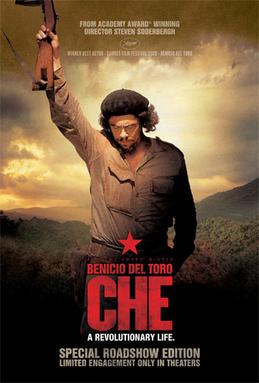
Individualism must disappear (Steven Soderbergh, 'Che')

Che's very title is a lie. It's a lie because Steven Soderbergh's 2008 two-part opus is not a biopic. Because, despite the advertising campaign's desperate attempt to convince us of the contrary, Soderbergh has not the slightest interest in showing us 'the man behind the myth'. James Verniere is right in calling Che a feature-length version of the famous portrait, but wrong in considering that a flaw.

Che: Part One (also known as The Argentine) opens with Che Guevara giving a radio interview in New York. The scene is shot in grainy black and white, with extreme close-ups of Che, and it immediately contrasts with the next scene that takes us back to Mexico City in 1955, and into colour and medium shots. This progression through opposites is preserved throughout The Argentine as Soderbergh switches between black-and-white scenes of Che's visit to the United States in 1964 and an account of the Cuban Revolutionary War from the beginning to the victory; the film ends with the victorious revolutionary troops on their way to Havana after the decisive battle of Santa Clara. By contrast, Che: Part Two (Guerrilla) is structured as a single relentless slog from Guevara's arrival in Bolivia in late 1966 to his capture and execution by the military eleven months later. It's a difficult experience to sit through as the situation of the guerrillas goes from bad to worse to catastrophic, with no relief in sight.

Watching Che is in many ways a jarring experience to us consumers of Hollywood films. The biographical picture in our depoliticised culture bestows on its hero a simple, everyday motivation: William Wallace in Braveheart fights the English because they murdered his wife, Johnny Cash in Walk the Line becomes a tortured musician because of his abusive father and dead brother. Both films personalise a process that is in reality larger than the individual, but which, the filmmakers assume, the audience won't understand or care about: thirteenth-century politics in the former, early rock'n'roll in the latter case – thus draining whatever subversive content the material may have had. (As Slavoj Žižek remarks of Warren Beatty's Reds, '[e]ven the October Revolution is OK, according to Hollywood, if it serves the reconstitution of a couple'.) Hollywood attempts, foolishly, to isolate the individual as archetype from his socio-political context. In Che Steven Soderbergh resolutely refuses to do this, and the extent of his commitment becomes clear when you consider that other Che film, Walter Salles's The Motorcycle Diaries (2004). That's a good movie, but a firmly conventional one: impetuous young man sets out on road trip across South America and on his journey encounters oppressed people that make him re-think his priorities.

Che is not about a person at all. Each part opens with a map – Cuba in the first, South America in the second film – that brings home the point that what we are about to see is not about Ernesto Guevara, but about his revolutions and why one succeeded while the other failed. Soderbergh frankly admits that he had no interest in Che's personal life, and neither film tells you anything at all about the time before the Sierra Maestra. Soderbergh drives the point home by filming virtually everything in medium shot, with the very notable exception of the black-and-white 1964 scenes of Part One. Benicio del Toro's performance is a wonder to behold not because he allows us deep insights into his psyche, but precisely because it is so detached and deliberately underplayed. 'Individualism must disappear', Guevara insisted, and in Soderbergh's opus it does as Che the person disappears into his struggle.

Hollywood loves a linear narrative: it's the cinematic expression of the bourgeois idea of progress. Che, by contrast, is structured dialectically. Part One and Part Two are opposites in almost every respect. They aren't even in the same aspect ratio: The Argentine is shot in 2.35:1, while Guerrilla is presented in more cramped 1.85:1, as befits the second film's almost claustrophobic feel. Further, The Argentine employs a vibrant colour scheme rich in greens and browns, while Guerrilla is extremely desaturated, using feeble greens and blues and pale light for a sickly and depressed look.

Soderbergh insists on showing us Che not as an individual, but as a revolutionary, and a revolution is always achieved by a collective. We are not invited to ask 'Who was this man?', but 'How did he try to bring about revolution?'. This uncompromisingly political and procedural stance that led some critics to call Che curiously impersonal and dramatically unsatisfying. On the contrary: in removing the man from the revolutionary, in rejecting the accumulated clichés of the Hollywood biopic, Soderbergh has made the best possible film about a man who chose to dedicate his life to the revolution – more than that: to embody it.

Saturday, 21 November 2009

Horror comes home

The development of horror from its origins in eighteenth-century Gothic fiction and dark romanticism* to the present day has always closely mirrored the historical development of society. Early horror was a reaction to the industrial revolution, the enormous development of the productive forces creating a contradiction between an increasingly urbanised population and the countryside, now thought wild and uncivilised. The ‘dark places of the earth’ (Joseph Conrad) became an Other, a canvas on which both fears and desires were projected. Thus in Dracula Jonathan Harker travels to a world in which the achievements of civilisation are noticeably absent (no trains in Transylvania). In some senses, it’s an alluring world: most obviously the Count’s polygamy and sexual voraciousness offer an enticing alternative to the public rectitude of Victorian England. But the inviting Other also seeks to devour Harker.

If horror is found outside the bounds of civilised society, it’s not always so easy to keep it out. In Dracula, the titular vampire soon comes to England and terrorises Lucy Westenra. It is this invasion of the domestic sphere by the Other that is the most defining trait of post-war horror. The blank spots on the map had disappeared. To be sure, the city-countryside contradiction still existed and was in many ways at its starkest. A string of horror films and thrillers of the 1970s – Deliverance (1972), The Hills Have Eyes (1977), I Spit on Your Grave (1978) and others – dealt in no uncertain terms with the horrors that befall people from the city as the countryside avenges its victimisation (Carol J. Clover). Of these, The Texas Chain Saw Massacre (1974) comes closest to being a slasher film, but it’s not quite there: the distinguishing feature of the slasher, as typified by Halloween (1978) and Black Christmas (1974) before it, is that evil is no longer on the outside. It has invaded the home itself.

Halloween establishes this paradigm in its famous first scene. After opening credits featuring John Carpenter’s incredibly creepy theme, we are outside a small-town house on Halloween night, 1963. A stalker lurks in the bushes, observing a young woman and her boyfriend inside. His perspective is our perspective: the entire scene is presented as a single scene from the first-person perspective (although Carpenter hides a cut at one point). The stalker sneaks around the house, then enters through a back door. He picks up a kitchen knife and a Halloween mask. The couple go upstairs, oblivious to the world; the boyfriend leaves shortly afterwards, rather smug about the world’s shortest teenage sex. Our stalker goes up the stairs. He brutally stabs the girl to death before running outside, where he is confronted by two adults. As the man takes off his Halloween mask, we leave the killer’s perspective for the very first time and realise, to our horror, that he is a six-year-old boy with a disturbingly blank expression.

The killer, Michael Myers, is placed in a psychiatric institution for life, but manages to escape almost fifteen years later, on October 30, 1978. His therapist, Dr Sam Loomis (Donald Pleasence), suspects that Michael will return to his hometown of Haddonfield, Illinois, to wreak more murder, and tries to enlist the help of local police in chasing down Michael. Meanwhile, local teenagers Laurie Strode (Jamie Lee Curtis in her film début) and Annie (Nancy Loomis) are babysitting local children, while their friend Lynda (P.J. Soles), obviously unaware she’s in a slasher film, thinks the absence of adults presents a great opportunity for sex with her boyfriend Bob (John Michael Graham). Needless to say, ‘the night he came home!’ will be bloody.

Halloween’s greatest strength is its simplicity. You’d think the old ‘escaped lunatic’ trope would make the film tired, but instead it imbues the proceedings with an archetypal character. Michael Myers kills because he is evil, pure and simple; he is only technically human, knowing neither love nor hatred. He cannot be bargained or negotiated with; he does not want revenge. He doesn’t want anything. He is a machine, pitiless and unfeeling. You cannot propitiate him by changing your behaviour. If he comes across you, he will kill you, and therein lies true terror.

On the receiving end of that terror are our actors. Most of the characters, frankly, are paper-thin. Lynda and Annie are both defined chiefly by their great interest in sex, and can only be distinguished by hair colour and the former’s tendency to say ‘totally!’ a lot. Donald Pleasence makes the most of heavy-handed dialogue. The standout is Jamie Lee Curtis. She is at once convincingly caring and tough, afraid and determined. Her hard, almost androgynous features are a perfect fit for the role. She doesn’t exactly confirm to the Final Girl mould, either: while she is indeed a virgin, dialogue establishes that this is for lack of opportunity rather than moral uprightness. I am unsure about the usual pseudo-Freudian psychosexual interpretation of the slasher film. It seems to me that Laurie’s superiority over her friends is not to do with sex, but with emotional maturity. Michael in his mechanical nature represents primordial unreason, but Laurie is mature enough to take responsibility for others as well as herself. While Annie dumps the girl she’s babysitting on Laurie, the latter protects the kids in her care. Laurie has learned to master her baser desires, while her friends’ enslavement to these causes their deaths.

Speaking of deaths, there aren’t that many. Five people and a dog are murdered in Halloween, but two of these killings (including the dog) occur off-screen. If, as the great Tim Brayton has said, the number of murders in a given slasher film is inversely proportional to the movie’s quality (which explains the scores slaughtered in any given Friday the 13th sequel), Halloween must be pretty good. Which it is. Nor are the deaths very bloody: although Halloween is brutal, scary and nasty-minded, there is virtually no gore.

About the direction and cinematography no words need be spoken, for they are fantastic. Some of the most famous compositions (Michael in his white mask rising behind Laurie, for instance) are at once beautiful and horrifying. Carpenter’s pacing, too, deserves praise. In a world in which many horror directors feel the need to pile up the deaths to stop audiences from dozing off, Carpenter devotes the middle section of the movie solely to building an all-encompassing atmosphere of dread. And how well he does it: when night falls, each death is as harrowing as about twelve of the same in the Friday the 13th series. I joke, of course: deaths in Friday the 13th are never harrowing, only mildly diverting, if you’re lucky.

Halloween is a short, taut film. It’s also art. And it’s very scary. It is, then, all the things the slasher genre that exploded into mainstream popularity a few years later with Friday the 13th (1980) and its sequels was not to be. But the sad decline of the slasher film from bad movies into unspeakably horrible movies cannot taint the terrifying power of Carpenter’s greatest work.

*I desperately tried to fit my beloved E.T.A. Hoffmann into that sentence, but just couldn’t. Read the man, will you?


In this series: Halloween (1978) | Halloween II (1981) | Halloween III: Season of the Witch (1988) | Halloween 4: The Return of Michael Myers (1988) | Halloween 5: The Revenge of Michael Myers (1989) | Halloween: The Curse of Michael Myers (1995) | Halloween H20: Twenty Years Later (1998) | Halloween: Resurrection (2002) | Halloween (2007) | Halloween II (2009)

Sunday, 15 November 2009

Ein Sturm vom Paradiese her


In seinem Essay "Über den Begriff der Geschichte" schreibt Walter Benjamin:

"Es gibt ein Bild von Klee, das Angelus Novus heißt. Ein Engel ist darauf dargestellt, der aussieht, als wäre er im Begriff, sich von etwas zu entfernen, worauf er starrt. Seine Augen sind aufgerissen, sein Mund steht offen und seine Flügel sind ausgespannt. Der Engel der Geschichte muß so aussehen. Er hat das Antlitz der Vergangenheit zugewendet. Wo eine Kette von Begebenheiten vor uns erscheint, da sieht er eine einzige Katastrophe, die unablässig Trümmer auf Trümmer häuft und sie ihm vor die Füße schleudert. Er möchte wohl verweilen, die Toten wecken und das Zerschlagene zusammenfügen. Aber ein Sturm weht vom Paradiese her, der sich in seinen Flügeln verfangen hat und so stark ist, daß der Engel sie nicht mehr schließen kann. Dieser Sturm treibt ihn unaufhaltsam in die Zukunft, der er den Rücken kehrt, während der Trümmerhaufen vor ihm zum Himmel wächst. Das, was wir den Fortschritt nennen, ist dieser Sturm."

Damit hat Benjamin den bürgerlichen Fortschrittsbegriff radikal verworfen. Im Historismus, der unser Geschichtsbild noch heute bestimmt und auch immer wieder in die Wissenschaft sich einschleicht, erscheint die Geschichte des Menschen als triumphaler Weg nach oben: von der Primitivität in die Höh', von der Finsternis ins Licht der Zivilisation. Der Historismus tendiert somit, wie Benjamin richtig erkennt, zu drei Schlußfolgerungen:

1. Er schreibt letztlich Universalgeschichte, denn wenn er die Geschichte als Aufstieg beschreibt, nimmt er sie insgesamt in Besitz.

2. Er begreift die Verlierer der Geschichte nur als Fußnote, als Hindernis auf dem Weg zur Zivilisation, als Sackgasse, kurzum: als überflüssig.

3. maßt er sich an, der Hegelsche absolute Geist habe gesiegt, und die Gegenwart besitze alle Weisheit und Vernunft, die den armen Barbaren der Vergangenheit fehlte.

Der Historismus ist somit tendenziell positivistisch, bejaht stets die herrschenden Verhältnisse, und vermag sich die Umwerfung letzterer gar nicht vorzustellen. Merke wohl: es gibt auch einen sozialistischen Historismus. Er zeigt sich wohl am klarsten und schrecklichsten im Stalinismus, der sich dazu berechtigt fühlte, seine Gegner auszulöschen und aus der Geschichte zu schreiben. Damit wurde in die Tat umgesetzt, was im Historismus ideologisch schon vorgezeichnet ist und sich im Werk stalinistischer Historiker wie E.H. Carr zeigt, die für die Verlierer der Geschichte keine Zeit und kein Verständnis haben.

Marx hat den bürgerlichen Fortschrittsbegriff, der noch Hegels Werk, in dem dialektische Entwicklung eben als Fortschritt verstanden wird, ausmacht, durch den historischen Materialismus ersetzt. In Marx' System gibt es Revolutionen der Produktionsmittel, aus denen sich gesellschaftliche und weltanschauliche Umwälzungen ableiten. Nur werden diese Revolutionen eben nicht als Fortschritt verstanden. Durch sie wird stets nur eine Gewaltherrschaft durch die andere ersetzt, werden die Produktions- und Vernichtungsmittel immer mächtiger, wächst die Gesellschaft an, vervielfacht sich das menschliche Elend. Eben das liegt Benjamins Geschichtsbegriff zugrunde: die Geschichte als immer weiter anwachsender Trümmerhaufen.

Weil der Marxismus sich für den Menschen als "ein erniedrigtes, ein geknechtetes, ein verlassenes, ein verächtliches Wesen" interessiert und ihn zu befreien sucht, kann er mit dem Historismus nichts anfangen. Das aber hat die Linke nicht davon abhalten, dem positivistischen Fortschrittsbegriff in die Falle zu gehen. Der evolutionäre Sozialismus eines Bernstein zum Beispiel nimmt schlicht an, daß dank dem Fortschritt schon alles in Ordnung kommen werde. Er übersieht dabei, daß Marx' Dialektik, im Gegensatz zu der Hegels, offen ist: der Gang der Geschichte ist eben nicht ein unvermeidliches Fortschreiten auf vorgezeichnetem Wege, sondern wird von Menschen geformt. "Sozialismus oder Barbarei" ist eine echte Wahl. Wohin der evolutionäre Sozialismus führt, sieht man, als sich im ersten Weltkrieg die Sozialdemokratie mit den reaktionären Kräften des Kaiserreiches zum Burgfrieden verband.

Walter Benjamins Zerstörung des positivistischen Fortschrittsbegriff ist ein hervorragendes Beispiel negativer Dialektik: das bejahende Selbstverständnis unserer Gesellschaft wird auf den Kopf gestellt. Aber aus dieser Zerstörung wächst erst das Potential für ein Umdenken, für die Vorstellung einer Zukunft, die der Gegenwart dialektisch gegenübersteht. Der Historiker ist Trümmersammler.