Showing posts with label fascism. Show all posts

Sunday, 13 January 2013

Surviving empire's wars

Poster at coproductionoffice.eu.
Reviews of Rome, Open City (Roma, città aperta) tend to start with the circumstances of the film's creation. I won't break with that tradition, for rarely is a film so clearly and intentionally a reflection of its own making. Roberto Rosselini experienced the fear, frustration and desperate hope of life in Rome before liberation himself. For that reason the film, shot while the frontline was just a few hundred kilometres north of Rome and released in 1945 some fifteen months after the Allied capture of the city, provides a startlingly immediate look at life under Nazi occupation.

Conceived by Rossellini with co-writers Federico Fellini and Sergio Amidei during the months of occupation in 1944, Rome, Open City is a feature-length amalgamation of what was originally to be two documentaries: one on Roman children sabotaging the German forces, another on a Catholic priest executed for aiding the resistance. The seams definitely show: it is, indeed, a bit of a rickety creation, plagued by uncertain financing and the lack of decent working studios, processing facilities or, well, anything.

Against the odds, though, Rome, Open City emerged as a work of genius, and the first great success of Italian neo-realism: though 'success' means foreign critics, really, as Italian audiences were not particularly receptive to a recreation of horrors they had experienced barely a year previously. Which I get: if you're struggling every day to find enough food and fuel to keep you going, a film that opens and ends on a tracking shot of your wartorn capital probably won't be your idea of escapist entertainment.

In the winter of 1943-44, resistance officer Giorgio Manfredi (Marcello Pagliero) narrowly escapes capture by the Gestapo and goes to hide out at the flat of his friend Francesco (Francesco Grandjacquet), a communist engaged to a widow, Pina (Anna Magnani), who is first seen orchestrating the looting of a bakery. Meanwhile the parish priest, Don Pietro Pellegrini (Aldo Fabrizi), works for the resistance by passing messages and money. But the local Gestapo commander, SS Sturmbannführer Bergmann (Harry Feist), is on their trail with the help of his Fascist counterpart, the police president of Rome (Carlo Sindici).

Now, about those seams: the script's looseness is generally a strength, but at times plot holes open. It's certainly the case that a band of Don Pietro's students, led by Pina's son Marcello and his friend Romoletto (I've not been able to ascertain the actors' names, so please do comment if you know them), are in there somewhere committing acts of petty sabotage against the Germans. But Romoletto's outsized heroism is shown as foolish in a scene in which Don Pietro has to take a makeshift bomb from him, and the boys disappear from the film at the half-way mark only to reappear right at the end. It is quite generally a film in which characters seem to appear and drop off the face of the earth with little rhyme or reason: Francesco, too, vanishes at a certain point, after which the focus narrows to Don Pietro, Manfredi, and their Axis pursuers.

What's more, Rome, Open City was shot silent, presumably for lack of sound stages, and sound dubbed in later. This is effective, with the possible exception only of some of the voice acting. Praise where it is due, though: many of the actors dubbing the Germans' lines are clearly native speakers (Joop van Hulzen speaks perfect German, like most Dutchmen seem to), and the German dialogue is generally not only flawless but pleasingly idiomatic (if you can bear the horrid military-inflected jargon the Nazis created, that is). There's one glaring exception, though: for unless Austrian-born Harry Feist grew up in some seriously weird linguistic enclave, his dialogue was overdubbed by a non-native speaker - who, to add insult to injury, was asked to intone minor errors like intransitive 'fortzusetzen' ('fortzufahren' would be correct). Ah, but I'm nitpicking.

Despite being largely a chamber piece, Rome, Open City contains impressive shots: one, of Pina running after a German truck, is rightly famous. Even so, the look of the film is - well, not slapdash, but it certainly looks like several kinds of film stock were used, that being pretty low on everyone's list of priorities at the time. Surprisingly, though, most of the variety in the film's aesthetic (which one imagines caused cinematographer Ubaldo Arata no shortness of headache) is caused not by stock but by inconsistent and difficult post-processing. Suffice it to say that more than once in the course of 102 minutes, it suddenly feels like we've stepped into a different film.

Those open seams might be considered flaws, but their effect is the opposite: they make the film feel fresh, startling and immediate even after decades. And that certainly contributes to the feeling of realism - which should not be misunderstood: much of Rome, Open City is thoroughly melodramatic, full of fiendish stereotypical villains (dancers sleeping with German officers for money and comforts, evil lesbians, camp SS commanders) and pure-hearted heroes (a hard-working widow, a fussy yet selfless priest). But there is as much surprising nuance as there is cliché: the atheist who prefers being married by a priest to having to step in front of Fascist officials, say, or the timid Austrian deserter (Ákos Tolnay).

More importantly, though, the realism of Rome, Open City lies in its unvarnished examination of a people under occupation. Not without humour, of course: I've come to accept that, in the same way every Bollywood film seems to have song-and-dance numbers irrespective of the subject matter, every Italian film of the first three post-war decades will contain silly humour, although what is offered here is grimmer than usual (Bergmann's conversations being disturbed by the screams of tortured men, for example). Realism, I said: Rossellini deals frankly with hunger and ration books, as well as controversial social issues like pregnancy outside wedlock, which British films like Saturday Night and Sunday Morning would not get around to doing for another fifteen years - contemporary social dramas like The Stars Look Down (1940) still have considerably stuffier morals.

Above all, though, the film tastes of fear: fear of speaking over the phone lest the secret police listen in, fear of being caught outside after curfew. And, everpresent, fear of being dragged out and roughly handled when the occupier chooses to raid your house. I'd say I don't want to preach at y'all, but that's precisely what I'm going to do: the picture Rossellini paints of life under foreign occupation is startlingly similar to the war in Iraq, complete with civilians murdered during house raids. The German regime in Italy is portrayed not so much as fascist as simply technocratic: it serves no end except to perpetuate itself. And barely even that: for as Bergmann cheerfully acknowledges, the Nazis will have to withdraw from Rome sooner or later.

Not that, in foregrounding counter-insurgency, Rossellini neglects the role Italian Fascist collaborators play in enabling Nazi rule. Indeed, the film appears downright prescient when Bergmann prophesies trouble after an Allied victory: for considering the 1948 election, the Years of Lead and Operation Gladio, what European country besides Greece had such a fractious, violent postwar history as Italy? When challenged as to why he's working with atheists, Don Pietro says: 'I believe that anyone who fights for justice and freedom walks in the ways of the Lord.' For a film so invested in the grubby details of ordinary life, Rome, Open City relies on religious imagery to an extraordinary degree. Unless, perhaps, the greatest sacred value lies in thoroughly earthly acts of earthly kindness. That is at the heart of Don Pietro's character - and at the centre of the film.

Saturday, 9 June 2012

South American graffiti, Part 1: Santa Cruz de la Sierra

Graffiti are a dazzlingly diverse means of political expression. From quick scrawls to elaborate murals, they're as suited to coarsely denouncing your opponents as they are to immortalising transcendent ideals. In short, I love 'em, and so I pretty much adored South America during my recent travels. A vibrant culture of guerrilla art combined with authorities that are rather slow to paint over graffiti makes the continent a Mecca for my kind.

In the next couple of posts, I'll show you some highlights of political graffiti, focusing on Bolivia but also including Chile and Paraguay. First up: the eastern Bolivian metropolis of Santa Cruz de la Sierra.

Invoking the name of the Falange Socialista Boliviana (FSB), the now defunct Franquist-inspired Bolivian fascist party of yesteryear, right-wing youths in Santa Cruz demand federalism (i.e. autonomy for the eastern departments).


'Loving in freedom and being happy': graffito defending the equality of LGBTQ people. Stencilled graffiti like this are common.

'The struggle belongs to the people, not to the parties! TIPNIS resist!' In support of TIPNIS, the protected indigenous territory through which the government is trying to build a road (turning its own base against it in the process).

Capitalism destroys flora, fauna and human life. 'We the poor have rights.'

Left-wing graffito ('socialism or death') painted over and given the coup de grace by fascist stencil graffiti.

'Narcostate.'

'Long live communism.'

Monday, 23 January 2012

Let the little children come unto me

When I was seventeen, I spent three weeks serving as a 'senior camper' at a Christian summer camp. The purpose of Iwerne Holidays was to present the gospel to teenagers from independent schools in a fun environment including sports, excursions, and all sorts of activities. It was just like being a 'camp counselor' across the pond, except we weren't hacked to pieces by machete-wielding madmen.*

It was, however, nothing at all like Jesus Camp. Therein lies much of what makes the film so fascinating and irritating.

Jesus Camp, released in 2006, is an artifact of the culture wars of the 2000s, that appalling time in history when 'religion' (whatever that means) was at the forefront of public debate in the Anglo-Saxon world. The days of Richard Dawkins, Christopher Hitchens, James Dobson and Pat Robertson, all of them thankfully increasingly irrelevant in an age where culture war has dissolved into the naked class struggle whose halo it was from the beginning.

Anyway! The film follows evangelical culture around a Pentecostal children's camp called 'Kids on Fire' in North Dakota. There, pastor Becky Fischer 'equips' children to be 'warriors for Christ' to 'take America back' by evangelism as well as fighting abortion and other forms of ungodliness in the public sphere. Directors Heidi Ewing and Rachel Grady focus on three of the children: twelve-year-old Levi, homeschooled by his mother, who teaches him that evolution is a hoax; nine-year-old Rachael, who regularly engages in evangelism towards strangers; and ten-year-old Tory, who breakdances to Christian metal.

At Kids on Fire, these and other children are taught to be wary because 'the devil goes after the young' and to distrust secular entertainment ('Had it been in the Old Testament, Harry Potter would've been put to death!'). Among themselves, the children discuss their feelings about films and books, revealing their struggles with what they're being taught. In a service that can in good conscience only be described as mass hysteria, the children break down weeping and pledge to end abortion by political activism and asking God for 'righteous judges'.

We meet Levi again at New Life Church in Colorado Springs. In an interview, Pastor Ted Haggard expresses his delight at evangelical Christians forming a decisive voting bloc against homosexuality, abortion and the teaching of evolution. This scene, of course, now has a potency the filmmakers couldn't be aware of at the time: just a few months later, Haggard fell from grace when it was revealed he'd indulged in adulterous gay sex and illegal drugs for years.


As you'll have guessed by now, Jesus Camp is a liberal message picture. Despite the lack of a narrator, Ewing and Grady clearly think the formation of a political evangelicalism focused on anti-abortion, anti-homosexual 'family values' is a very bad thing, and I agree with them. Even so, I didn't really need the constant scare music they lather on every scene of Pentecostal worship. The snippets of Mike Papantonio's radio show, in which he criticises the Religious Right, are editorialising I welcome: it's good to see a Christian offer an alternative view to the one pushed by the film's subjects.

Even while Jesus Camp sternly disapproves of its subject matter, it's a respectful, humane film. When Becky Fischer says, offhand, 'I get exhausted doing this' while preparing for another session, it's the rawest, truest moment in the film. While I don't think we learn enough about them (which isn't really excusable, given the film's short running time), the children are never treated as less than full human beings with dreams and ambitions. Levi's worldview may be a mess of cruel lies - if global warming is true, ye are yet in your sins - but we learn to rejoice and mourn with him.

As such, the film's ostensibly simple message constantly rebels against the much more complex response the film actually induces in the viewer - especially if that viewer, like me, is himself an evangelical Christian. Becky Fischer's ministry is horrifying: she's convinced children need to be indoctrinated because most people's Weltanschauung is fixed from a young age, so better get in early; and she's worried because 'the enemy' - Islam - is supposedly training young children to blow themselves up, an amount of dedication she seems to view with envy rather than horror. (It was 2006, remember.)

In Fischer's call that children should be 'warriors' the Christian concept of spiritual warfare thus comes worryingly close to real, physical warfare. The 'Christian pledge of allegiance' one of the families recites at home has nothing to do with the gospel but a lot with a brand of Christian nationalism - something I can't imagine Jesus approving of. Faith in radical, counter-cultural grace - following an executed criminal - does not sit comfortably with colonising the public sphere because 'our nation was founded on Judaeo-Christian values' (Fischer).

Although the film is unmistakeably a product of its time - witness the scene in which the children are invited to bless a cardboard cutout of George Bush by stretching out their hands towards it - it seems prescient in other ways. The language of 'taking back America', now secularised in the Republican Right's crusade against ostensible Marxists, socialists, and liberals, is used here in religious garb. This rhetoric of national rebirth in the face of an ungodly, totalitarian government - a narrative that is a pack of lies, remember, no matter what we might feel about Obama otherwise - has given rise to the uniquely American permutations of fascism that are now flourishing at the even-loonier end of the Tea Party.


Jesus Camp runs into problems in failing to notice that Fischer and her ilk are engaged in intra-evangelical point-scoring, too: Rachael believes that churches with ordered, sedate services are 'dead'. The raucous Pentecostal manifestations of Kids on Fire - dancing, weeping, speaking in tongues, the whole vocabulary of the charismatic movement - would be regarded with bemusement if not outright horror by many evangelicals; fundamentalists, who trace their tradition back to the Puritans and disapprove of both dancing and what Jonathan Edwards called 'enthusiasm', would be especially appalled.**

The filmmakers don't seem to realise that the Religious Right is less a terrifying monolith than a collection of increasingly disparate forces provisionally united around certain political issues: opposing homosexuality, abortion and secularism, championing the military and the death penalty. Just like Fischer herself, Ewing and Grady never investigate the loci of structural power and privilege among their subjects: the power of leaders over followers, adults over children, men over women. Jesus Camp would be a richer film for it, but it remains an eye-opening portrait of the Religious Right.

*What did you expect? Being a Christian summer camp, the experience lacked the weed-smoking and fornication necessary to enrage Norfolk's homicidal maniac population.
**Perhaps more embarrassingly, many evangelicals would not be comfortable with a female pastor.

Wednesday, 23 November 2011

Aus dem das kroch

Forgot to plug my recent review of The Resistible Rise of Arturo Ui in Ceasefire:
All works dealing with Nazism have to face Truffaut’s paradox. Since fascism, highly theatrical at all turns, conveyed meanings through the politics of the spectacle, it’s difficult not to fall prey to the narratives built into its totalitarian aesthetic: because the Nazis spent so much energy trying to look cool, making sure they don’t is a major task. (A film like Downfall, for example, inadvertently pays homage to the Nazi cult of death.)

As such, depicting Nazis as Chicago gangsters undercuts their self-mythologisation and rings true in another way, too: in the 1920s, Hitler was cultivating a gangster image by wearing a trench coat and a fedora, while carrying a bull-whip.

The Resistible Rise of Arturo Ui is at its best when savaging the mixture of ingratiation and bullying that characterised the Nazis’ relationship with Germany’s ruling class and the elites’ self-serving opportunism, cowardice and well-honed skill at not seeing things one would rather not know about.

Thursday, 27 October 2011

In praise of the Red Army

This post touches on a couple of issues regarding the Eastern Front (1941-45) that have irritated me recently. There's a popular perception of the German-Soviet War, refuted in numerous academic works, that runs roughly like this:

(1) Soviet forces overwhelmed the Wehrmacht by sheer numerical superiority: essentially, a four-year zerg rush.
(2) Hitler caused a great number of German setbacks by procrastination, recklessness, and stubbornness (e.g. a fixation on Stalingrad, the failure to cross the Neva in 1941, etc.)
(3) The Western Allies decided the outcome of the war when they invaded Normandy.

In Germany (3) is uncommon thanks to a general awareness that the Eastern Front consumed the vast majority of the war effort. (All my grandparents lost siblings in the Soviet Union; my grandfather fought as part of Army Group North from 1942 to 1945 and was a Russian POW until 1949.) (1) and (2), however, are widespread beliefs.

It's not difficult to see why. When German generals wrote their memoirs in the fifties, they were eager to exculpate themselves from responsibility for total defeat. Instead they blamed Hitler, who was unlikely to find vigorous defenders, and conveniently dead sycophants like Keitel. Of course Hitler was a bad commander-in-chief, terrible both at military judgment and at managing personal relationships with his generals; but in truth a number of people in the OKW would have found themselves with egg on their faces - like Franz Halder, who confidently noted that '[i]t's not too much to say that the campaign against Russia has been won within fourteen days' in July 1941. Collectively, the German generals easily displayed as much arrogance and short-sightedness as the Austrian corporal.

The Soviets, as pictured in German and Anglo-Saxon popular perception, were inferior to the Wehrmacht in everything but numbers. This sort of claim is at least partly a hangover from Nazi war propaganda: what was the Soviet Union but Asia's endless hordes threatening to overwhelm Western civilisation (the line adopted by the Nazis when they attempted to transform an opportunistic war of conquest into a pan-European crusade against 'Bolshevism' in 1942-43)? A few men, hopelessly outnumbered but superior in virtue, natural nobility, as well as technological and operational genius, fighting to the last against slavering barbarians - why, it's exactly the sort of romantic Thermopylae tripe the Nazis loved until the very end (see Kolberg).

In this racist fantasy the Soviets of course had to appear as the direct opposite of the noble Aryan: countless faceless goons (even though, as in the Battle of Kursk, numbers and losses were much more even than is commonly supposed), incapable of anything but mass charges (despite brilliantly executed operations like Operation Uranus and strategic offensives like Operation Bagration), indifferent to losses (there's some truth to this one, owing to the extraordinary situation of the Red Army in 1941-42, but from 1943 the Soviets were much more careful with their manpower), barbaric in their treatment of civilians (ignoring, like all empires, the systematic atrocities the 'civilised' troops committed against the populace).

It goes without saying that the Red Army was the decisive force in the war. Nazi Germany did not fall because it ran out of oil, and certainly not because of the Allied carpet bombing of German civilians: it perished because 80% of its armed forces were engaged and destroyed by the Red Army, and its conquered territories were occupied by the Soviets. In this the USSR was of course helped by supplies provided by the Western Allies; but it was Stavka that in extraordinarily difficult circumstances planned, and millions of Soviet soldiers that executed, the campaigns that brought European fascism to its knees.

In the First World War, Germany defeated the Russian Empire committing only a third of her forces. It's not to excuse Stalinism to note that Uncle Joe's assessment of the need to catch up in industrial development was spot on. By the 1940s the Soviet Union had become an industrial powerhouse. Soviet equipment was often of equal quality (the notorious German realisation, early in the war, that their tanks were inferior to the T-34 was not an isolated incident), but the Nazis' disastrous decision to focus on quality over quantity squandered what technological edge they did have, massively exacerbating the industrial disparity - another instance of Nazi racism digging its own grave.

It's true that in the early phase of the war - roughly, from June 1941 to the second half of 1942 - the Red Army did not have the strategic initiative and, faced with rapidly advancing German armies, indeed attempted to stop the Wehrmacht by resorting to human waves and other desperate tactics. The result, despite intermittent success, is well known: losses so devastating similar tactics could not be contemplated due to manpower depletion alone from 1943 onwards (although Zhukov did some 1941 re-enactment in the 1945 Seelow Heights and Berlin campaigns).

Instead, having recovered from the initial shock, the Soviets relearnt the doctrine of deep battle their theorists had developed in the 1920s and 1930s. Deep battle, superficially similar to 'Blitzkrieg', is designed to break through to an enemy force's rear and occupy its territory. Unlike the Germans' unhealthy obsession with encircling and annihilating enemy forces (a fascination which, while going back to Clausewitz, was certainly favoured by Nazism's prejudices), the Soviet doctrine envisaged not physically destroying an enemy but confusing him, throwing him off-guard, and breaking his ability and will to act at an operational and strategic level.

Early attempts to put deep battle into practice were not unqualified successes, but from Stalingrad onwards the Soviets perfected the strategy, revolutionising the Red Army at every level. It was most impressively displayed in Operation Bagration, launched two weeks after D-Day. The offensive destroyed far more German forces than the Battle of Normandy, brought the Red Army to the borders of the Reich and, most importantly, shattered Army Group Centre and left the Wehrmacht in shambles. Before Bagration, German forces on the Eastern Front had been well-organised; afterwards, the Wehrmacht never achieved the same coherence and was soon forced to throw together Kampfgruppen, improvised formations of whatever was at hand in a sector.

In short, Soviet forces defeated the Wehrmacht because, from late 1942 onwards, they were the better army. Of course numerical superiority, present in most situations, helped, and so did the Soviet Union's greater industrial output. But all this would have counted for nothing had the Soviets not gained the skill necessary to disorganise and defeat the Wehrmacht at a strategic, operational and, yes, tactical level. The stereotype of an ignorant mass driven to the slaughter by callous commissars does a disservice to the bravery, motivation and skill of Soviet soldiers.


Wednesday, 21 September 2011

Fascism and the EDL


I analyse the ideology of the EDL in Ceasefire:
Paradoxically the EDL not only tolerates, but encourages the participation of fascists, as well as adopting the marching styles and clothing favoured by British and continental neo-fascists. Yet its officials ape the rhetoric of the most successful ‘national-populist’ European parties. In other words, the EDL appears to adopt the garb of fascism but not the substance. Unlike the BNP and most traditional fascist groups, the EDL has no strategy for winning power. It hopes, instead, to influence political elites through highly publicised rallies and marches, and listening to David Cameron it appears they haven’t been entirely unsuccessful.

Friday, 9 September 2011

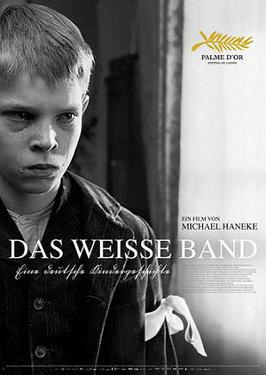
Gewalt und Kinderzorn

Das Kaiserreich ist der Vergessenheit anheimgefallen. Das wäre nicht schlimm, handelt es sich doch um ein insgesamt widerwärtiges Kapitel unserer Geschichte. Zu bedauern ist nur, daß die Revolution, die die Junkerherrschaft stürzte, dabei mitvergessen worden ist. Denn in ihr lag die Chance, den verhängnisvollen Lauf der deutschen Geschichte abzubiegen. Michael Hanekes Film Das weiße Band: Eine deutsche Kindergeschichte argumentiert eindrucksvoll, daß die Wurzeln des Nationalsozialismus eben im Kaiserreich liegen.

Im Dörfchen Eichwald, irgendwo im deutschen Nordosten im letzten Friedensjahr 1913-1914: der Arzt stürzt mit seinem Pferd über ein verstecktes Seil. Der Sohn des Barons wird gefesselt und verprügelt im Wald aufgefunden. Ein Täter kann nicht festgestellt werden. Während die Erwachsenen nach einer Erklärung für die anscheinend sinnlose Gewalt suchen, verstreicht das letzte sieche Vorkriegsjahr.

Das Schwarz-Weiß-Schema des Films spiegelt die Kälte des Stoffs wieder. Die erzählerische Distanz, die Haneke streng aufrechterhält, erlaubt keine Identifizierung mit einzelnen. Hier wird ein Dorf als Mikrokosmus Deutschlands beleuchtet, als Wiege des deutschen Faschismus. Den versteht Haneke als Rache einer unterdrückten und brutalisierten Generation, deren Gewalt sich gegen alles Fremde entlud. Sie mußte den nach außen getragenen Vatermord doch als Säuberung verstehen und also gerade in ihrer Überwindung die elterliche Strenge verwirklichen.

Der Untertitel "Eine deutsche Kindergeschichte" trifft es genau. Der ernste Pastor (Burghart Klaußner) bindet seinen Kindern zur Erinnerung an die geforderte Reinheit das weiße Armband des Titels um. Die Jugend des Dorfes ist stumm und fügsam, man soll sie sehen und nicht hören. Die Kinder haben nicht die Kraft, sich offen zu wehren. Aber ihre haßerfüllten Blicke, ihr eisernes Zusammenhalten und Sich-Verschwören gegen die Welt der Erwachsenen spricht Bände. Der junge Lehrer (Christian Friedel) ahnt, was die anderen Erwachsenen nicht sehen können und wollen.

Der Gewalt der Eltern gegen die Kinder steht der Zwang der Herrenschicht gegen das gemeine Volk gegenüber. Es ist gerade die gönnerhafte Leutseligkeit des Barons (Ulrich Tukur), die ihn widerwärtig macht, und das nicht nur seinen Untergebenen, sondern auch seiner Frau (Ursina Lardi). Das weiße Band zeichnet das Bild einer Gesellschaft, deren unerträgliche innere Gewalt sich nicht entladen kann. Sie mußte exportiert werden; wäre nicht, wie es die plump-selbstherrliche Kriegspropaganda wollte, "jeder Stoß ein Franzos'" gewesen, so hätten sich wohl die Gutsherren vor den Bajonetten wiedergefunden - was dann ja auch geschah.

Dabei muß man dem Regisseur, was mir sonst nicht behagt, zu seinem eigenen Film widersprechen. Haneke will Das weiße Band als Film über Ideologie an sich, nicht nur über den deutschen Faschismus verstanden wissen. Die Ideologie "an sich" aber ist Fiktion, der Film dagegen zeichnet eben eine konkrete historische Situation statt eines ewigen Gleichnis. Daß der Nationalsozialismus in der evangelischen Provinz Norddeutschlands einen Nährboden fand, ist ebensowenig zu bestreiten wie sein Ursprung im Kleinbürgertum, von dem er auf andere, gemeinhin unsichere und bindungsarme Klassen – die Arbeitslosen, das Großbürgertum, die in Not geratenen konservativen Eliten des Kaiserreichs – übersprang.

Als Wermutstropfen ist anzuführen, daß der Film nicht immer ganz authentisch wirkt. Hie und da zerbricht die Illusion der spätwilhelminischen Gesellschaft. So spricht bis auf den bayerischen Gutsverwalter jedermann geschliffen hochdeutsch, das doch damals nur die Sprache der Herrschaft und der Gebildeten war – man erinnere sich an den pater familias in Thomas Manns Buddenbrooks, der plattdeutsch spricht, um im Revolutionsjahr 1848 das meuternde Volk zu besänftigen. Nur der Vater des Kindermädchens Eva hat einen ausgesprochen norddeutschen Zungenschlag; insgesamt ist die Sprechweise der Charaktere allzu modern. Die Baronin, zugegebenermaßen eine Dame von Welt, spricht gar von „Fairneß“.

Daß die Kritik zu solcher Haarspalterei greifen muß, um Das weiße Band zu kritisieren, ist ein Kompliment an den Regisseur. Der Film ist weniger spannend als beklemmend, aber gerade die kritische Distanz erlaubt den Blick auf das Grauen. Wir Nachgeborenen wissen, was sich da zusammenbraut. Nur treibt einen die Ahnung um, daß wir weniger gelernt haben, als gut für uns wäre.

Sunday, 14 August 2011

Why I won't condemn the riots

As unexpected as the riots in England's cities were, the response was tediously predictable. Beside the hang-'em-high fulminations of the right-wing press, media consensus from the Guardian to the Telegraph was to deplore 'mindless', 'senseless' violence by 'feral youths', 'thugs', and so on. We're used to this: it's how they've talked about all clashes on Britain's streets since Millbank (and long before that).

The BBC's stance, too, was well-rehearsed. Their reporting was thoroughly on-message, narrowing the issue at stake to 'Is the police response effective or not?' The most distinctive characteristic of such reporting on Tory Britain, however, was that from Diane Abbott to Nigel Farage, anyone who had a microphone shoved in their face was asked to condemn the rioters before anything else.

Those who did not do so with sufficient force ran into trouble with their interviewers, as Darcus Howe found out. It's a test of loyalty: agree with our political elites or become a non-person, an Other as far as the media are concerned. Such ideological rigidity rather gives the lie to our liberal democracy's self-professed openness.

David Starkey's racist comments, on the other hand, were not condemned as vigorously. (Toby Young's incompetent attempt to exonerate Starkey is typical of the 'He wasn't racist' crowd.) I don't think Emily Maitlis gave Starkey a free pass: she challenged him repeatedly. The historian may simply have been ignorant: he confused Jamaican Patois with Textspeak and saw rap as the reason for the riots (one might ask him about the role of rap in 1790s riots).

But there's something more malicious and calculated here. Starkey consistently attempted to racialise the debate, reducing debates about gang culture (valid by themselves) to questions about 'black culture' (and Owen Jones was spot on when he pointed out that by 'white' Starkey meant 'respectable'). Of course, the last forty years have seen a change in the discourse: instead of skin colour the Right now talks about culture, understood as a fixed quality innate to human beings, not a constantly changing process influenced by all sorts of factors, i.e. dialectically. Thus the sign 'culture' still points to the signified 'skin colour', but without embarrassingly blatant racism.

There's the first reason we shouldn't condemn the rioters: the racist vocabulary in which they are being execrated. Starkey is only making explicit what has been implied in much of the condemnation: the rioters are, pardon my Disney, savages, barely even human. Here's Max Hastings's astonishing tirade:
The people who wrecked swathes of property, burned vehicles and terrorised communities have no moral compass to make them susceptible to guilt or shame... They are illiterate and innumerate, beyond maybe some dexterity with computer games and BlackBerries. They are essentially wild beasts. I use that phrase advisedly, because it seems appropriate to young people bereft of the discipline that might make them employable; of the conscience that distinguishes between right and wrong. They respond only to instinctive animal impulses — to eat and drink, have sex, seize or destroy the accessible property of others. (emphasis mine)
Hastings goes on to express regret that looters were not shot, and complains about their antisocial refusal to watch the royal wedding. Disadvantaged young people are constructed as an utterly alien and contemptible Other. This isn't new: the people we now dismiss as 'chavs' were once Burke's 'swinish multitude' and the Victorians' 'vicious, semi-criminal' urban poor. To smear an entire segment of the population as the forces of chaos is hardly ethical.

Secondly, this demonisation both ignores and facilitates neoliberal 'reforms'. The Right initially insisted that any attempt to search for root causes amounted to an endorsement, and with good reason: such a search might uncover that youth club closures left young people with nothing to do and nowhere to go. It might find that 20 per cent of youth and half of young black people are unemployed, or that black people are 26 times more likely to be stopped and searched than their white peers. By moralising looting and demonising the young such inconvenient facts can be ignored, while their 'feral' nature can be used to justify the attacks on jobs and services this government is anxious to push through.

Thirdly, the condemners keep bad company. The moralism now echoing through the Commons, from people who cheerfully defrauded the taxpayer, is nought but rank hypocrisy. David Cameron enjoyed smashing private property in his youth. The BNP and EDL racists now coming out of the woodwork to act as Freikorps are using understandable fear and anger to preach a message of hate. Frankly, I don't want to agree with these people on much at all.

Lastly and perhaps controversially, looting shows a response to real injustice, however poorly expressed. I hold that any attack on property is political - it claims that 'this should not belong to you'. What sort of politics this expresses depends on the situation: after all, imperialism or the current looting of the public sector are also attacks on the property of others. But the riots attacked a system in which corporations and the rich running them control the vast majority of human wealth, expropriating and withholding them from the majority. Ultimately, looting is an unhelpful, sporadic, localised response to this general malaise: a much better response would frankly be to expropriate all capital.

In refusing to condemn the riots, let's not fall into the trap of claiming they were not terrifying and destructive to many people, few of them wealthy. It's in the nature of riots that most of the people hurt will be subaltern, not the elites. But that doesn't mean we should collude in demonising the rioters: it means that we should argue for better working-class politics and engage with frustrated young people in building resistance movements. Riots are counter-violence, but ultimately they do little to hurt ruling-class violence. For that, we need revolutionary politcs.

Saturday, 14 May 2011

'Host populations'

Will Hutton thinks that the left needs to smarten up its attitude towards immigration. The argument: the far right is gaining ground across Europe. The notion that 'the left must make the case that immigration is a force for good – it makes Europe richer' is 'denial'. If we are to win the debate on immigration, the left must argue for 'a good capitalism that will drive growth, employment and living standards by a redoubled commitment to innovation and investment' and 'accept that immigration offends basic attitudes to fairness' by allowing immigrants to 'get benefits without paying anything into the collective pot'.

Let's set aside that the likelihood of a 'good capitalism' is slim. Let's also set aside that Hutton is a liberal who has a deep fear and distrust of 'the mob'. His argument is a fairly standard one, one that has been repeatedly touted by the last Labour government and is now being championed by Maurice Glasman: in order to prevent a violent, barbaric racism we must embrace a legal, enlightened racism. In other words, we must wean racists from the racist far right by showing them their demands are being addressed.

But I really feel the need to seize on the term 'host population', which Hutton uses quite casually. It hardly needs saying that this phrase has two meanings, and this ambiguity serves the right. First, a host is someone who puts up guests and looks after them. Second, a host is the victim of a parasite. That, of course, is how the far right (fascist or otherwise) perceives 'the British': as a host body (the nation as an organism) that is being sucked dry by foreign leeches. Using a term like that is to walk right into racist discourse. One can only advise Hutton to stay away from it.