Showing posts with label satire. Show all posts

Friday, 11 January 2013

Tragic songs of atomic armageddon


The wonderful project Atomic Platters documents how the spectre of nuclear annihilation influenced American popular music in the fifties. From the frivolous to the apocalyptic, a great many artists dealt with the advent of the atomic age. In retrospect, a lot of those, er, contributions look rather naff. They're all pretty revealing, though. Here, I thought I'd discuss two entries into the genre - one terrifying, one hilarious. (Both, by sheer coincidence, are among my favourite songs.)

'The Great Atomic Power' by the Louvin Brothers sums up that act so well that it's no surprise Nathan Rabin chose the song as his introduction. Raised in poverty in Appalachia, Charlie and Ira Louvin were making self-consciously traditional country music in the increasingly pop-oriented market of the 1950s. But they were unusual in another sense, too: where pop stuck to love songs, their lyrics were marked by a harsh and unyielding backwoods fundamentalism that regularly threatened non-believers with the prospect of hell.
Do you fear this man's invention
That they call atomic power?
Are we all in great confusion
Do we know the time or hour
When a terrible explosion
May rain down upon our land
Leaving horrible destruction
Blotting out the works of man?
So far, so good. It isn't cheery, but neither is the nuclear winter.
Are you ready for the great atomic power?
Will you rise and meet your Saviour in the air?
Will you shout or will you cry
When the fire rains from on high?
Are you ready for that great atomic power?
Here the prospect of atomic war is conflated with the second coming of Christ. For pre-millenial dispensationalists like the Louvins, Christ's people will be spared the horrors of nuclear obliteration by being spirited away in the Rapture ('we... shall be caught up together with them in the clouds, to meet the Lord in the air: and so shall we ever be with the Lord', 1 Thess. 4:17). Applying religious imagery to the atomic bomb is common, of course, from Robert Oppenheimer's 'Now I am become Death, the destroyer of worlds' to Dr. Strangelove's Doomsday Machine. What interests me about the Louvin Brothers is that their identification of Judgment Day with the nuclear apocalypse is literal.
There is one way to escape it
Be prepared to meet the Lord
Give your heart and soul to Jesus
He will be your shielding sword
He will surely stand beside you
And you'll never taste of death
For your soul will fly to safety
And eternal peace and rest
Yes, that's the song's message: the ICBMs might start raining down any time, and if you don't fancy dying of radiation sickness in a post-apocalyptic wasteland you'd best believe in Jesus. I'm not sure how effective this is as an evangelistic strategy. It might get some people to convert out of fear; but in the long term few might be able to bear a God who is both author of and saviour from atomic destruction.
There's an army who can conquer
All the enemy's great band
It's a regiment of Christians
Guided by the Saviour's hand
When the mushroom of destruction
Falls in all its fury great
God will surely save His children
From that awful awful fate
Here the mashup of secular warfare and apocalyptic destruction becomes confusing, perhaps deliberately so. In the context of the arms race, 'the enemy' is the Soviet Union; but the term itself is a New Testament euphemism for the devil. The militarisation of Christianity results in an apparent inability or unwillingness to distinguish between the cause of Christ and that of the United States.

(Applying military discipline to Christians is of course hardly foreign to the Louvin Brothers' fundamentalism. In 'Broadminded', they opine that 'that word broadminded is spelt s-i-n' and lambaste their fellow Christians for indulging in seemingly harmless pleasures like occasional drinking, gambling and dancing, long-standing fundamentalist bugbears all.)

But there's something else going on. Like a lot of the Louvin Brothers' songs, 'The Great Atomic Power' is uptempo and sounds downright cheerful. Behind the vicious apocalyptic detail of the description, there is a certain glee. Such language, as Jacqueline Rose notes, 'is rooted... in a fear; but it also thrives on the prospect of annihilation'. That prospect does away with pesky doubts and moral ambiguities. It allows for a stark message: turn, the brothers preach, or burn.


Tom Lehrer's 'We Will All Go Together When We Go' goes a different route, satirically pointing out that the highest technological development of humankind has bred the danger of total annihilation: 'universal bereavement and inspiring achievement'. The humour comes from the cheerful treatment of human extinction.

Lehrer, too, regularly mixes religious language with that of the atomic age: 'when it's time for the fallout and St. Peter calls us all out', 'just sing out a Te Deum when you see that ICBM'. A sceptic, Lehrer has none of the brutal earnestness with which the Louvins approach the topic. But it's only natural our notions of all-out atomic war should be shaped by end-times fears, and vice versa. The unprecedented possibility raised by nuclear weapons - the sudden end of all human life on earth - was too large and frightening to be easily accommodated into comfortable public discourse. It always had to break those bounds and take on theological dimensions.

Monday, 12 September 2011

I, for one, welcome our Tory overlords


Lord Mandelson famously said that Labour was relaxed about people 'getting filthy rich'. Ed Miliband went further, declaring that 'I'm not just relaxed about you getting rich, I applaud you' and excising that nasty world 'filthy'. That's all very well, but there's one problem: it doesn't go far enough. So here's my humble attempt at an ode that does justice to the glory of the rich.

Miliband praised those who 'generate wealth [and] create jobs'. Indeed. Where would we be without the rich? How would we procure the basic necessities of life? I daresay there would be no wealth, no food, no resources: I fear we should starve to death. Society would fall into ruins. Anarchy would reign. Think of Africa, for example. As the admired British historian Hugh Trevor-Roper put it, Africa had no history, only 'the unedifying gyrations of barbarous tribes in picturesque but irrelevant corners of the globe'. It was the rich that brought Africa into world history and sacrificed much to civilise the natives. But did they show proper gratitude? Far from it. It is no wonder Africa has fallen back into barbarity.

For delivering us from this fate we owe a debt of gratitude to the wealthy. They labour day and night doing God's work, and that for very little reward: for what are the baubles the rich are content with compared to the dignity of spirit, that inner light possessed by the poor? What's more, when they have worked hard as entrepreneurs, many go on to sacrifice their twilight years selflessly serving the community as politicians and lobbyists, while the rest of us enjoy our gold-plated pensions.

But that's not all. The Good Book says that the meek will inherit the earth, that a man may lose his soul yet gain the whole world, and that it is easier for a camel to go through the eye of a needle than for a rich man to enter the kingdom of God. That means that the rich are freely forfeiting their salvation and giving up their place in the Kingdom for you, willing that none that believe in them should perish but have flat screen TVs. Greater love hath no-one than this, that he lay down his life for his friends.

 Yes, it's true. Our Tory overlords love us. David Cameron loves you. George Osborne loves you. Nick Clegg loves you most of all, and his heart bleeds when he sees you weary and heavy laden under national debt. That's why they're removing benefits: they love you too much to let you waste your life watching daytime television. We have relied on their generosity too much, and their cross has become too heavy to bear. The financial crisis is nothing but the wealthy stumbling under the weight of their work for us. They only ask that we help them a little, take some of their heavy load, as Simon of Cyrene did for Our Lord. Is that too much to ask?

Think about this the next time you wrongfully covet the goods of the rich. David Cameron was raised for this moment. Since childhood he was prepared to see his life poured out for us. When you grumble, when you kick against the pricks, you are only hurting yourself. Not for me wanton rebellion and lawlessness. I love our government.

Friday, 9 September 2011

A modest proposal for poststructuralism


Poststructuralism remains the crucial intellectual movement of our age. Where structuralism taught us to analyse structures, poststructuralism critiqued and ultimately dissolved them. Where objects previously had innate relationships towards each other, poststructuralists taught us to see these relationships as heterologous and ultimately arbitrary. Liberated from the strictures of structure, we entered an age of total freedom.

There's only one problem: the poststructuralist critique of discourse has been entirely one-sided. The real, physical world human beings live in is itself composed of a number of discourses. The material and the ideal cannot be considered separately: to do so would be to fall into the most vulgar distortion of Marxism. Of course, poststructuralists recognise this in theory. But in practice, they have only deconstructed ideas: they have acted as if there was a world of ideas, a superstructure that properly constitutes the critic's object of inquiry; and a material world, which should not or cannot be so analysed. The deconstruction of matter has been at best epiphenomenal to the whole enterprise. Where the discourse ceases to be purely ideal, poststructural critique ceases to be critical.

This is, of course, deeply ironic: in segregating the material from the ideal world, poststructuralists have erected precisely the sort of neat categorisation they claim to explode. There is only one way out of this impasse: it is to break down the artificial distinction by beginning to deconstruct the real world.

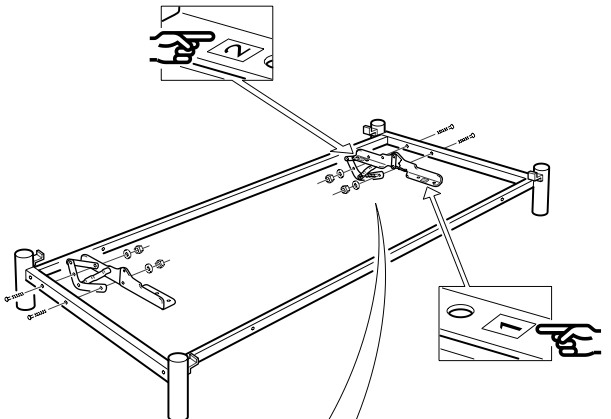
Take an example: chairs. The structure of a chair - the relationship of the legs to the seat and the back, and the screws holding the whole edifice in place - is taken for granted by the same fearless academics who otherwise deconstruct all life with the air of criminal ruthlessness. Yet we must recognise that there is nothing innate or 'natural' about the structure of the chair. To critique established discourses of sitting, we must take up screwdrivers and deconstruct the chair: take it apart, examine the individual components and then, if we feel particularly daring, reassemble it in new and unexpected ways.

Of course the chair is just an example: this attitude of a new - let's call it second-wave - deconstruction must permeate all areas of life. This may require new skills: not all of us may know how to use hammers, screwdrivers, and power tools. It's best to start small. Begin, for example, with your desk: carefully take apart your laptop, your books, papers and pens, eventually deconstructing the desk itself, and take it from there.

Not only is this a decisive step forward for poststructuralism, it also has other, unexpected benefits. For example, the 'impact' culture has so far been a problem for academics in the arts and humanities. But material deconstruction solves this problem with one stroke: as you carefully critique your campus, torch and shovel in hand, your impact on the real world will be easily demonstrated. What's more, material deconstruction offers exciting new opportunities for interdisciplinarity - with engineers, for example.

It won't be easy, but the paradigm shift waits for no-one. Let's get on with it!

Friday, 6 May 2011

Bull of the University of Nottingham, Against Rod Thornton

As you've no doubt heard, our university has suspended Rod Thornton, a lecturer in the School of Politics, for writing an article that ruthlessly exposes the university's lies and bullying during and after the 'Nottingham Two' affair in 2008. When the Guardian and the BBC ran the story, the university released a statement claiming Rod Thornton 'defamed' his colleagues with 'baseless accusations'.

I'm sure you're thinking what I'm thinking: lame. That's the best they could come up with? 'Defaming'? Clearly the art of vigorous denouncement without engaging in debate has suffered since the good old days. They need help. So here's a suggestion of how the university ought to have attempted to suppress legitimate whistleblowing - with apologies to Pope Gregory XI:

Bull of the University of Nottingham, Against Rod Thornton
The University, servus servorum sapientiae, to her beloved children the students of the University, in the diocese of Russell, grace and benediction.
We are compelled to wonder and grieve that you, who, in consideration of the favours and privileges conceded to your student body by the University, and on account of your familiarity with the Code of Discipline, in whose sea you navigate, by the gift of knowledge, with auspicious oar, you, who ought to be, as it were, warriors and champions of the orthodox faith, without which there is no economic growth, - that you through a certain sloth and neglect allow tares to spring up amidst the pure wheat in the fields of your glorious University aforesaid; and what is still more pernicious, even continue to grow to maturity. And you are quite careless, as has been lately reported to us, as to the extirpation of these tares; with no little clouding of a bright name, danger to your careers, contempt of the laws of this land, and injury to the faith above mentioned. And what pains us the more, is that this increase of the tares aforesaid is known in London before the remedy of extirpation has been applied in the School of Politics where they sprang up. By the insinuation of many, if they are indeed worthy of belief, deploring it deeply, it has come to our ears that Rod Thornton, Lecturer of the School of Politics, at the University of Nottingham, Expert in Terrorism (would that he were not also Master of Errors), has fallen into such a detestable madness that he does not hesitate to dogmatise and publicly preach, or rather vomit forth from the recesses of his breast, certain propositions and conclusions which are erroneous and false. He has cast himself also into the depravity of preaching heretical dogmas which strive to subvert and weaken the state of the whole University and even secular polity, some of which doctrines, in changed terms, it is true, seem to express the perverse opinions and unlearned learning of Rizwaan Sabir of cursed memory, and of Hicham Yezza, whose book is extant, rejected and cursed by our predecessor, Sir Colin Campbell, of happy memory. This he has done at the University of Nottingham, lately glorious in its power and in the abundance of its resources, but more glorious still in the glistening piety of its faith, and in the distinction of its sacred learning; producing also many men illustrious for their exact knowledge of the Code of Discipline, mature in the gravity of their character, conspicuous in devotion, defenders of the Management Board. He has polluted certain of the faithful by sprinkling them with these doctrines, and led them away from the right paths of the aforesaid faith to the brink of perdition.
Wherefore, since we are not willing, nay, indeed, ought not to be willing, that so deadly a pestilence should continue to exist with our connivance, a pestilence which, if it is not opposed in its beginnings, and torn out by the roots in its entirety, will be reached too late by medicines when it has infected very many with its contagion; we command you with strict admonition, in virtue of your sacred obedience, and under penalty of the deprivation of all the favours, indulgences, and privileges granted to you  by the said University, for the future not to permit to be asserted or proposed to any extent whatever, the opinions, conclusions, and propositions which are in variance with good morals and faith, even when those proposing strive to defend them under a certain fanciful wresting of words or of terms. Moreover, you are on our authority to suspend the said Rod, or cause him to be suspended. Besides, if there should be, which God forbid, among you opponents stained with these errors, and if they should obstinately persist in them, proceed vigorously and earnestly to a similar removal of them, and otherwise as shall seem good to you. Be vigilant to repair your negligence which you have hitherto shown in the premises, and so obtain our gratitude and favour, besides the honor and reward of the Management Board's recompense.

Better, eh? They really ought to get some papal scribes to smarten up their public relations effort. But seriously: the circumstances surrounding all this (for which please read Rod Thornton's paper, 112 pages long though it may be) stink to high heaven. It is unfortunate that our university, which prides itself on its allegedly open, democratic culture, should seek to attack its own students and lecturers and attempt to suppress dissent. We have a management culture that rewards loyalty and punishes heresy, one that disdains to follow its own procedures - it was a moment of grim amusement for me when Rod Thornton in his paper became the third person I know of to independently call the university 'Kafkaesque' in print. We can't let them get away with it.