Showing posts with label history. Show all posts

Thursday, 10 May 2012

Of apes and men


A revolution is underway among scholars who study the settlement of the Americas. The old orthodoxy held that the first Americans, represented by the Clovis culture, crossed the Bering Strait from Asia about 13,100 years ago. Now, finds showing human activity all over the continent suggest that the settlers - likely a diverse bunch, leaving Asia in several periods of migration - may have come to America as early as 14,600 years ago.

I'm thrilled by all this. Who wouldn't be? But just a couple of years ago, my reaction to the news would likely have been an awkward smile and an attempt to change the subject.

I was never a creationist, but like many Christians I found the facts of human origins something of an embarrassment. I knew the earth was older than the six thousand years postulated by creationists, but I rather wished it wasn't. Wouldn't it be easier on the gospel if we could continue to believe in a literal Adam and Eve?

Unfortunately, the contortions required to hold on to creationism are too high a price to pay. The biblicist dogma of Ken Ham & Friends can only be sustained by jettisoning all attempts at knowledge. For people ostensibly committed to guarding truth, that's ironic.

Young-earth creationists advance many spurious arguments attacking particular pieces of evidence, but the core of Answers in Genesis's 'ministry' at least seems to be two attacks on the possibility of knowledge itself:

(1) 'Were you there?' This pseudo-argument holds that we cannot claim to know anything we have not personally witnessed. If true, this would invalidate all historical knowledge whatever, including of course the entirety of biblical history and the life of Jesus.

(2) 'Evolution is inferential, not observational science, and thus our opinions on it are governed not by facts but by our assumptions.' On top of discounting all history, this declares a change of beliefs on the grounds of evidence (the basis of all evangelism) an a priori impossibility.

I don't need to tell you why these arguments are foolish. They're not really intended to convince, but to create enough wiggle room to allow true believers to remain in the fundamentalist subculture rather than seek answers elsewhere.

Creationism sustains itself at the cost of destroying all categories of knowledge. To deny our specific knowledge of evolution, it must deny the possibility of knowing anything at all beyond what is written in the Bible - and its biblicism is fatally self-contradictory and destructive. Creationism cannot claim any legitimacy, and it richly deserves to be abandoned.

Sunday, 8 January 2012

Of wolves and men

Properly done, historical fiction ought to be fascinating. It tells us, after all, how we came to be, and evokes a time and place very different from our own yet startlingly familiar. Unfortunately, though, it's usually not properly done. As someone who's passionate about history, here are some personal bugbears:

(1) Ideological anachronism. This is probably the single most widespread phenomenon in historical fiction. The hero will inevitably be the one character whose views are most similar to the dominant assumptions of early twenty-first century society, while everyone else is dismissed. For examples see Kingdom of Heaven and, in Germany, anything written by Rebecca Gablé.

(2) Soapboxing mixed with wish fulfilment. Hate Christianity with the fury of a thousand suns? Write a novel in which - reality be damned - all Christians are prudish, venal, effeminate caricatures to be derided and killed by your manly pagan heroes and make millions like Bernard Cornwell! Also applicable if you dislike feminism, pacifism and democracy, because in ye olden days men were still real men, just like your own warrior soul would be if it wasn't trapped by the political correctness brigade shoving rights for women and black people down everyone's throats.

(3) The influence of the bodice-ripper. Reducing complex historical processes to sex is tempting: it's much easier to write than all that politics and religion, and it'll sell like hot cakes. But bodice-rippers are notorious for their misogynistic bent. Their women long to be mastered by a manly man - sometimes to the point of rape apologia. At the same time, bodice-rippers refuse to take real women seriously and concede they might have something worthwhile to offer beside bedroom stories. For every Margaret Elphinstone writing terrific female-centred novels like The Sea Road, there are ten Philippa Gregory paperbacks.

It's before this background that Hilary Mantel's Wolf Hall matters. It's not that it's high-brow as opposed to the low-brow fare outlined above: it's that this is what popular fiction should look like, and to hell with the fraudsters who'd have you accept less. Winning both the Booker Prize and the National Book Critics Circle Award, Wolf Hall was the most critically acclaimed historical novel in quite a long time. But it left historical fiction aficionados confused - witness the book's three-and-a-half stars rating on Amazon - by the almost total absence of the blood, guts, and graphic sex one has come to expect from the Tudors in works ranging from Gregory's novels to, er, The Tudors.

Instead we get an honest-to-God fascinating central character: Thomas Cromwell, first seen as a teenager in 1500 being beaten within an inch of his life by his choleric father Walter, a Putney blacksmith. Thomas flees to Europe to become a mercenary, and by 1527 he's established himself as a London lawyer and right-hand man to Cardinal Wolsey, Henry VIII's Lord Chancellor. When Wolsey falls from power over his failure to procure a papal annulment of Henry's marriage to Katherine of Aragon, Cromwell stays behind to look after his patron's cause in his ill-fortune.

After Wolsey's death, Cromwell rises to influence at Henry's court by advancing the case of Anne Boleyn, who longs to finally displace the obstreperous Katherine and become queen. This is only accomplished by flagrantly disregarding the pope, and after Henry's marriage to Anne Cromwell pushes forward the creation of an English national church with Henry at its head. In his private life, meanwhile, he mourns the loss of his wife and daughters to disease while acquiring an extended household of protégés and becoming a surrogate father to the wards he takes in.

Mantel writes all this in the present tense and third person, while never leaving Cromwell's perspective. He's a self-taught multilingual scholar, but his rise to power is due mostly to a pragmatic ruthlessness: if Henry's cause is best advanced by schism, Cromwell will choose that course. He can never quite leave his low birth behind and is haunted by the ghosts of his father and his own family, but he's unafraid to push aside aristocrats and churchmen alike to make Henry supreme ruler of his country.

The prose is beautiful: as precise as Cromwell's mind, it's sophisticated but never excessively flowery. What pleased me most is the effusion of detail, all the little touches of Tudor England: the liturgical year (All Hallows Eve is 'the time when the tally-keepers of Purgatory, its clerks and gaolers, listen in to the living, who are praying for the dead', p. 154), Christmas decorations ('wreaths of holly and ivy, of laurel and ribboned yew', p. 169), the harrowing and subtle description of the aftermath of a Lollard's death at the stake ('When the crowd drifted home, chattering, you could tell the ones who'd been on the wrong side of the fire, because their faces were grey with wood-ash', p. 355).

Mantel takes the period seriously, refusing to reduce it to the Tudor Theme Park popular entertainment presents. Her characters' lives are extraordinarily full and complete, while she is also a master of economy in sketching them. Wolf Hall is a masterclass in the importance of character, its large cast never seeming less than real human beings, from the coarse, relic-obsessed Duke of Norfolk to the generous, violent, charming, approval-craving Henry, and right down to the common people.

That's true of the world of ideas, too. Instead of simply ignoring the issue of the Reformation, as much popular Tudor fiction does, Wolf Hall spends long pages dealing with Tyndale's writings smuggled across the Channel, with Thomas More, Cromwell and Thomas Cranmer discussing Purgatory and the role of the Church (the fact that the dispute between Reformers and Catholics was at bottom an ecclesiological one is brought out quite clearly). Cromwell himself appears clear-eyed and thoughtful, contemptuous of superstitions while attempting to retain a Catholic orthodoxy and a church hierarchy loyal to the sovereign.

In contrast to the pessimistic Thomas More, Cromwell is consciously creating a new England, one in which the monarchy will stand above all, sweeping aside the manifold entrenched privileges and powers of the middle ages: no pope, bishop or duke is to stand in the way of the king's importance and untrammelled power. The final vision of this new kingship is well articulated in Hamlet 3.3-7-23:
GUILDENSTERN We will ourselves provide.
Most holy and religious fear it is
To keep those many many bodies safe
That live and feed upon your majesty.
ROSENCRANTZ The single and peculiar life is bound
With all the strength and armour of the mind
To keep itself from noyance; but much more
That spirit upon whose weal depends and rests
The lives of many. The cess of majesty
Dies not alone but like a gulf doth draw
What's near it with it; or it is a massy wheel,
Fixed on the summit of the highest mount
To whose huge spokes ten thousand lesser things
Are mortised and adjoined, which when it falls
Each small annexment, petty consequence,
Attends the boisterous ruin. Never alone
Did the king sigh but with a general groan.
(Edition: Thompson and Taylor, London: Arden, 2006, based upon the 1604-5 Second Quarto Text)
This royal supremacy, however, is not asserted easily or totally. When he sends out ambassadors to compel all subjects to swear allegiance to Henry's new position as Head of the Church, Cromwell knows that he won't be able to vanquish the old powers completely:
[B]eneath Cornwall, beyond and beneath this whole realm of England, beneath the sodden marches of Wales and the rough territory of the Scots border, there is another landscape; there is a buried empire, which he fears his commissioners cannot reach. Who will swear the hobs and boggarts who live in the hedges and in hollow trees, and the wild men who hide in the woods? Who will swear the saints in their niches, and the spirits that cluster at holy wells rustling like fallen leaves, and the miscarried infants dug into unconsecrated ground: all those unseen dead who hover in winter around forges and village hearths, trying to warm their bare bones? For they too are his countrymen: the generations of the uncounted dead, breathing through the living, stealing their light from them, the bloodless ghosts of lord and knave, nun and whore, the ghosts of priest and friar who feed on living England, and suck the substance from the future. (p. 575)
Cromwell may, and does, ultimately neutralise those in his path. (He's more merciful than Henry: while the king is happy to have More executed, Cromwell expends much energy trying to save the unrepentant papist from the block.) But when the powers and authorities have been destroyed bodily they live on as ghosts, lingering over Cromwell's new England, hiding in the shadows cast by the Tudors' resplendent majesty.

Saturday, 31 December 2011

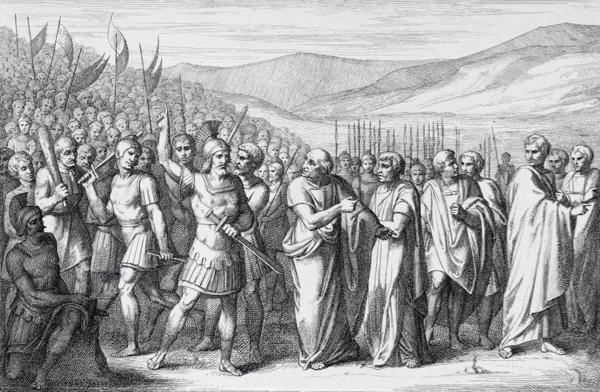
Class and class struggle in early Rome


Despite its grandiose title, this post - long delayed by being away from my copy of Livy's Ab urbe condita - does not offer an outline of class struggle in the early Roman Republic as a whole. It is intended, instead, to provide a brief introduction to how Livy frames conflict between the orders. (This is based on The Early History of Rome, the Penguin translation of the first five books of Ab urbe condita, which ends with the sack of Rome by the Gauls.)

The early Republic was a Beutegemeinschaft, a society based on capturing and distributing loot through annual warfare. Success in war kept the gold flowing and was thus integral to the survival of the state, which exported its tensions. For this, the patricians - Rome's ancient aristocracy, the political and religious elite - required the consent of the far larger plebeian class, who did most of the fighting.

This was exploited by the plebeians in the first secessio plebis in 494 BC - a general strike in which the plebeians, rather than respond to military summons, left the city, gathered on the Mons Sacer and threatened to found a new town. Grievances included disadvantages in the allocation of land in colonies, armed Roman settlements built to subdue captured enemy territory, and the patricians' exclusive privileges. The patricians made significant concessions, including the institution of plebeian tribunes, representatives of the plebs who could influence the legislative process. The ongoing tug-of-war between the tribunes and the Senate occupies much of Livy's account.

Most of what we learnt in school, though, was about Rome's foreign wars, not her internal struggles. This is hardly surprising, since the conflict of the orders offers none of the dramatic bloodletting of Porsena's siege of Rome or the wars against Veii; but in truth the social conflict, mostly confined to forums and laws though it is, provides thrills aplenty. It also has the advantage of being less overgrown with fictions and the rigid narrative framework all accounts of foreign wars had to follow.

Livy includes a beautiful vignette that encapsulates the patricians' fears at the opening of his fourth book. Faced with the prospect of a bill brought by the plebeians that would legalise intermarriage between the orders - an unthinkable travesty to the aristocracy - the consuls M. Genucius and C. Curtius respond (4.1):
In all communities the qualities or tendencies which carry the highest reward are bound to be most in evidence and to be most industriously cultivated - indeed it is precisely that which produces good statesmen and good soldiers; unhappily here in Rome the greatest rewards come from political upheavals and revolt against the government, which have always, in consequence, won applause from all and sundry. Only recall the aura of majesty which surrounded the Senate in our father's day, and then think what it will be like when we bequeath it to our children! Think how the labouring class will be able to brag of the increase in its power and influence! There can never be an end to this unhappy process so long as the promoters of sedition against the government are honoured in proportion to their success. Do you realise, gentlemen, the appalling consequences of what Canuleius is trying to do? If he succeeds, bent, as he is, upon leaving nothing in its original soundness and purity, he will contaminate the blood of the ancient and noble families and make chaos of the hereditary patrician privilege od 'taking the auspices' to determine, in the public or private interest, what Heaven may will - and with what result? that, when all distinctions are obliterated, no one will know who he is or where he came from! Mixed marriages forsooth! What do they mean but that men and women from all ranks of society will be permitted to start copulating like animals? A child of such intercourse will never know what blood runs in his veins or what form of worship he is entitled to practise; he will be nothing - or six of one and half a dozen of the other, a very monster!
We're not supposed to like these consuls (whose speech, of course, is fabricated wholecloth by Livy). The points made, though, are familiar: the belief that rampant disobedience to authority is crippling the commonwealth, as the Tories affirm; the notion that society, politically correct as it is, rewards the lazy and insubordinate; and lastly, a fear of what, in a different day and age, the Americans called miscegenation, which will lead to human beings becoming as beasts. There's nothing more heartening than reading millennia-old rants warning of the imminent collapse of human civilisation - it puts the Daily Heil in perspective.

We might call Livy's stance on all this broadly call patriotic: he firmly disapproves of internal strife that weakens Rome against her enemies. To this end, he demands justice for the plebeians and repeatedly censures the more arrogant of the patricians: but he also wishes the plebeians would cease to cause trouble. That Livy's narrative should be dominated by his desire for internal peace is hardly surprising. He was writing towards the end of the first century BC, when the period of vicious and hugely destructive civil wars - still within living memory - had ended with the dominance of Augustus, who is praised for restoring concord (even as Livy holds modern morals to be depraved).

Even as the plebeians fought for increased rights, they nonetheless had a stake in Roman society. In consequence they should not be reckoned the wretched of the earth but, perhaps, something of a labour aristocracy, set above the landless and the unfree. 'We propose that a man of the people may have the right to be elected to the consulship', argued Canuleius (4.1): 'Is that the same as saying some rogue who was, or is, a slave?'Social stratification eventually lead to the absorption of the richer plebeians into a broader Roman aristocracy, the nobilitas. It wasn't until the Social Wars and the slave risings of the first century BC that the dispossessed again threatened the integrity of Roman class society.

Friday, 30 December 2011

Where do oppressors go when they die?


Me in Ceasefire, on Christianity and social justice:
As a result of historic defeats the language of the Left is often focused on outcomes, 'equality' and 'social justice' The Bible, on the other hand, is more forthright: it talks of freedom, loosing the yoke, setting the prisoners free. Its vision of another world is not one that is more equal, but one in which the Downpresser Man has been vanquished, and revolutionary discourses heavily influenced by the Bible – reggae, for example – reflect this...

If he is 'the least of these', then Jesus is a Palestinian woman giving birth at a checkpoint in the West Bank, a fourteen-year-old jailed for rioting in Tottenham, a peasant starving in Somalia, a factory worker losing her home to foreclosure in Michigan, an Iraqi street orphan, a black man on death row in Texas, a raped woman who’s told she 'wanted it', a Foxconn employee who kills himself out of despair in China.
He is all the people we have been told to fear and despise, the whole suffering mass of humanity, the wretched of the earth. It’s not Christian to defend mansions and missiles just so long as the government will keep gay marriage illegal. Christian life is to unmask the discourses of power and to end oppression. The promise of Christmas is that injustice will not last forever.

Thursday, 27 October 2011

In praise of the Red Army

This post touches on a couple of issues regarding the Eastern Front (1941-45) that have irritated me recently. There's a popular perception of the German-Soviet War, refuted in numerous academic works, that runs roughly like this:

(1) Soviet forces overwhelmed the Wehrmacht by sheer numerical superiority: essentially, a four-year zerg rush.
(2) Hitler caused a great number of German setbacks by procrastination, recklessness, and stubbornness (e.g. a fixation on Stalingrad, the failure to cross the Neva in 1941, etc.)
(3) The Western Allies decided the outcome of the war when they invaded Normandy.

In Germany (3) is uncommon thanks to a general awareness that the Eastern Front consumed the vast majority of the war effort. (All my grandparents lost siblings in the Soviet Union; my grandfather fought as part of Army Group North from 1942 to 1945 and was a Russian POW until 1949.) (1) and (2), however, are widespread beliefs.

It's not difficult to see why. When German generals wrote their memoirs in the fifties, they were eager to exculpate themselves from responsibility for total defeat. Instead they blamed Hitler, who was unlikely to find vigorous defenders, and conveniently dead sycophants like Keitel. Of course Hitler was a bad commander-in-chief, terrible both at military judgment and at managing personal relationships with his generals; but in truth a number of people in the OKW would have found themselves with egg on their faces - like Franz Halder, who confidently noted that '[i]t's not too much to say that the campaign against Russia has been won within fourteen days' in July 1941. Collectively, the German generals easily displayed as much arrogance and short-sightedness as the Austrian corporal.

The Soviets, as pictured in German and Anglo-Saxon popular perception, were inferior to the Wehrmacht in everything but numbers. This sort of claim is at least partly a hangover from Nazi war propaganda: what was the Soviet Union but Asia's endless hordes threatening to overwhelm Western civilisation (the line adopted by the Nazis when they attempted to transform an opportunistic war of conquest into a pan-European crusade against 'Bolshevism' in 1942-43)? A few men, hopelessly outnumbered but superior in virtue, natural nobility, as well as technological and operational genius, fighting to the last against slavering barbarians - why, it's exactly the sort of romantic Thermopylae tripe the Nazis loved until the very end (see Kolberg).

In this racist fantasy the Soviets of course had to appear as the direct opposite of the noble Aryan: countless faceless goons (even though, as in the Battle of Kursk, numbers and losses were much more even than is commonly supposed), incapable of anything but mass charges (despite brilliantly executed operations like Operation Uranus and strategic offensives like Operation Bagration), indifferent to losses (there's some truth to this one, owing to the extraordinary situation of the Red Army in 1941-42, but from 1943 the Soviets were much more careful with their manpower), barbaric in their treatment of civilians (ignoring, like all empires, the systematic atrocities the 'civilised' troops committed against the populace).

It goes without saying that the Red Army was the decisive force in the war. Nazi Germany did not fall because it ran out of oil, and certainly not because of the Allied carpet bombing of German civilians: it perished because 80% of its armed forces were engaged and destroyed by the Red Army, and its conquered territories were occupied by the Soviets. In this the USSR was of course helped by supplies provided by the Western Allies; but it was Stavka that in extraordinarily difficult circumstances planned, and millions of Soviet soldiers that executed, the campaigns that brought European fascism to its knees.

In the First World War, Germany defeated the Russian Empire committing only a third of her forces. It's not to excuse Stalinism to note that Uncle Joe's assessment of the need to catch up in industrial development was spot on. By the 1940s the Soviet Union had become an industrial powerhouse. Soviet equipment was often of equal quality (the notorious German realisation, early in the war, that their tanks were inferior to the T-34 was not an isolated incident), but the Nazis' disastrous decision to focus on quality over quantity squandered what technological edge they did have, massively exacerbating the industrial disparity - another instance of Nazi racism digging its own grave.

It's true that in the early phase of the war - roughly, from June 1941 to the second half of 1942 - the Red Army did not have the strategic initiative and, faced with rapidly advancing German armies, indeed attempted to stop the Wehrmacht by resorting to human waves and other desperate tactics. The result, despite intermittent success, is well known: losses so devastating similar tactics could not be contemplated due to manpower depletion alone from 1943 onwards (although Zhukov did some 1941 re-enactment in the 1945 Seelow Heights and Berlin campaigns).

Instead, having recovered from the initial shock, the Soviets relearnt the doctrine of deep battle their theorists had developed in the 1920s and 1930s. Deep battle, superficially similar to 'Blitzkrieg', is designed to break through to an enemy force's rear and occupy its territory. Unlike the Germans' unhealthy obsession with encircling and annihilating enemy forces (a fascination which, while going back to Clausewitz, was certainly favoured by Nazism's prejudices), the Soviet doctrine envisaged not physically destroying an enemy but confusing him, throwing him off-guard, and breaking his ability and will to act at an operational and strategic level.

Early attempts to put deep battle into practice were not unqualified successes, but from Stalingrad onwards the Soviets perfected the strategy, revolutionising the Red Army at every level. It was most impressively displayed in Operation Bagration, launched two weeks after D-Day. The offensive destroyed far more German forces than the Battle of Normandy, brought the Red Army to the borders of the Reich and, most importantly, shattered Army Group Centre and left the Wehrmacht in shambles. Before Bagration, German forces on the Eastern Front had been well-organised; afterwards, the Wehrmacht never achieved the same coherence and was soon forced to throw together Kampfgruppen, improvised formations of whatever was at hand in a sector.

In short, Soviet forces defeated the Wehrmacht because, from late 1942 onwards, they were the better army. Of course numerical superiority, present in most situations, helped, and so did the Soviet Union's greater industrial output. But all this would have counted for nothing had the Soviets not gained the skill necessary to disorganise and defeat the Wehrmacht at a strategic, operational and, yes, tactical level. The stereotype of an ignorant mass driven to the slaughter by callous commissars does a disservice to the bravery, motivation and skill of Soviet soldiers.


Wednesday, 5 October 2011

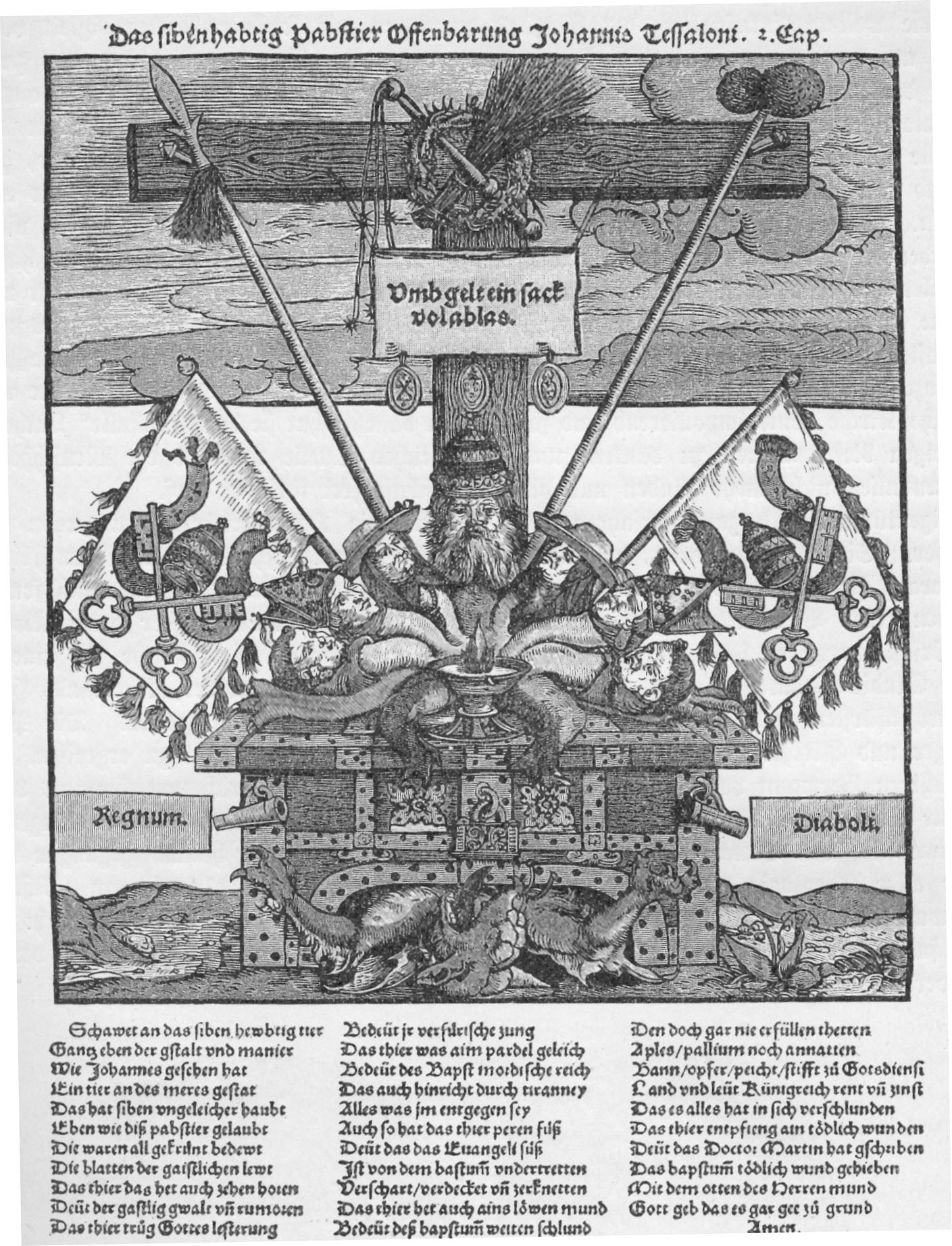
Against the anti-papists

(Note: this is an English paraphrase of an earlier post.)

The Left Party took a clear position on the pope's recent visit to Germany: half its MPs were to leave the room during the pope's speech before the Bundestag. I believe this attitude, widespread among the German Left both within and without parliament, is wrong both theoretically and strategically. The following is intended as a kick-off to a left-wing response to no-to-popery rhetoric in Germany: a critique of the critique of the pope, if you will.

Last year's papal visit to Britain, until recently my home, was similarly contested. At the time, Simon Hewitt outlined why hostility to the pope was suspect, but his argument, rooted as it is in historical materialism, applies mostly to a British context. But just as in Britain, German anti-Catholicism would do well to understand its own history.

Germany, almost uniquely among the European states, is divided into two denominations of roughly equal size.* The religious wars of the sixteenth and seventeenth centuries ended in a draw. The decline of imperial authority left no power above the princes, who proceeded to enforce uniform religious observance among their subjects. (It may have been for this reason that my Protestant ancestors left Upper Austria for Pomerania in the early eighteenth century.) After Prussia expelled Austria from the German Confederation, sixteen million Catholics remained in the newly unified German state: mostly in the south and west, in Ermland, Upper Silesia and the Polish border regions - beside twenty-eight million Protestants.

The Hohenzollern emperors were none too fond of these Catholics. They suspected them, the 'inner France', of conspiring with foreign powers and branded them 'enemies of the Reich'. Bismarck waged a protracted war of position - the Kulturkampf of the 1870s - against the Catholic Church. In short, Catholicism served the rulers of the Junker State as an imaginary enemy to secure their own power. Catholics fought back in the political arena through the Centre Party; many also joined the fledgling Social Democrats. At the same time, German nationalists in Austria-Hungary founded the 'Away from Rome' movement, combining virulent anti-Catholicism with antisemitism; protofascists like Georg von Schönerer converted to Protestantism.

Though officially neutral with respect to religion, Nazism was suspicious of the Catholic Church as a 'foreign' power from the beginning. In Catholic regions the Nazis never achieved the electoral breakthroughs that made the rural Protestant North their stronghold. In his infamous Myth of the Twentieth Century, Alfred Rosenberg claimed the Papacy descended from the haruspices - Etruscan soothsayers - and was thus of Asiatic, 'non-Aryan' origin. In western Germany, Catholicism only won equality and the capacity to contribute equally to public life after 1945.

Of course most latter-day anti-papists will be appalled at the unsavoury history of German anti-Catholicism: many, indeed, will not be familiar with it. Most of those hostile to the papal visit are of a generally secular frame of mind rather than hailing from a traditionally Protestant backgrounds. Either way hostility to the Catholic Church is not neutral terrain: any critique of the pope must formulate a response to the historical persecution of Catholics and unequivocally defend Catholics' enduring right to practise their faith in Germany.

Rejecting simplistic criticisms of the pope does not, of course, mean a blithe acceptance of the Vatican's teachings. Critics are right to lambaste Rome's stance on gender and sexuality as well as its treatment of the abuse scandal. As a Protestant, I also have fairly wide-ranging disagreements with Catholic teachings, from salvation to ecclesiology, the Eucharist and the use of images. None of that means, however, that one shouldn't invite the pope and hear him out. Not to mention that anyone who rejects the pope must be consistent: will he or she show the same zeal protesting President Obama, who is responsible for the deaths of thousands through drone attacks - which, however hostile, no-one could quite claim of the pope?

Liberal secularists opposing Protestants and Catholics as well as Muslims and religious Jews must be prepared to be self-critical and accept that, just like the Christianity of yore, their agitation has frequently been exploited in the cause of imperial aggression in recent years. Western Crusaders like Henryk Broder and Christopher Hitchens use a critique of religion to justify the invasion of Muslim countries as well as the continuing occupation and colonisation of Palestine. Secularism must be as wary of its false friends as it is of its supposed or real enemies. It must be critical of its own vocabulary and accept that it is counter-productive to stereotype Christians as, in the admirable words of Professor Dawkins, 'dyed-in-the-wool faith-heads'. Painting Joseph Ratzinger, a highly intelligent theologian, as an out-of-touch fuddy-duddy won't do much for anyone's credibility.

Most varieties of secularism find their origin not in Marxism but in a - particular and arguably wrong - interpretation of the Enlightenment, and the Left should be wary of applying them uncritically. Marx's real critique of religion cannot be separated from his critique of the social order, as a quick glance at the Introduction to the Critique of Hegel's Philosophy of Right will show:
The foundation of irreligious criticism is: Man makes religion, religion does not make man. Religion is, indeed, the self-consciousness and self-esteem of man who has either not yet won through to himself, or has already lost himself again. But man is no abstract being squatting outside the world. Man is the world of man – state, society. This state and this society produce religion, which is an inverted consciousness of the world, because they are an inverted world. Religion is the general theory of this world, its encyclopaedic compendium, its logic in popular form, its spiritual point d’honneur, its enthusiasm, its moral sanction, its solemn complement, and its universal basis of consolation and justification. It is the fantastic realisation of the human essence since the human essence has not acquired any true reality. The struggle against religion is, therefore, indirectly the struggle against that world whose spiritual aroma is religion.
Religious suffering is, at one and the same time, the expression of real suffering and a protest against real suffering. Religion is the sigh of the oppressed creature, the heart of a heartless world, and the soul of soulless conditions. It is the opium of the people.
The abolition of religion as the illusory happiness of the people is the demand for their real happiness. To call on them to give up their illusions about their condition is to call on them to give up a condition that requires illusions. The criticism of religion is, therefore, in embryo, the criticism of that vale of tears of which religion is the halo.
Unlike Marx I do not believe 'religion' - which Marx rather unacceptably generalises as a universal phenomenon - to be an illusion, but the main thrust of Marx's argument is hard to argue with. Proclaiming the end of religion without at the same time fighting for the end of a state of affairs that leads people to long for a less terrible Beyond is not just an admission of impotence, but apologetics for the vale of tears. Unlike liberal atheism Marxism dissolves superstition into history, not vice versa: it seeks to overthrow the present society rather than pointlessly demand that people should bear it without illusions.

But left-wing anti-papism is wrong not only in theory but also in practice. The Left Party has struggled for years to overcome its own east-west division: a mass party in eastern Germany but often the weakest of five parliamentary parties in the West, it is faced by the task of establishing itself among the West German working class. The most industrialised regions of the West (the Ruhr and the Rhineland), however, are also among the country's most strongly Catholic. Spicing up democratic socialism with God-is-dead sloganeering is self-sabotage. Left-wing politics must approach workers without prejudice, not condemn their beliefs, whatever they may be, as antediluvian.** It must engage real human beings, not the sort it would like in a perfect world. The party oddly has no problem grasping this when it comes to Iraq or Palestine, which should make one at least a little uneasy.

In other news, the decline of Christianity in Germany has led to strange side-effects. When the pope declined to advance the ecumenical integration of the churches, the press considered this a 'disappointment' to Protestants, whose hopes were apparently 'dashed' by the Pontiff. It would appear that when he said he felt closer to the Orthodox than to the Protestant churches, the pope made Protestant bishops cry. One might imagine the Eastern and Lutheran churches as prodigal sons competing for the approval of a displeased father and eager to move back into his house at the earliest opportunity. Well, I must announce my disappointment is somewhat limited: the Protestant tradition, be it Lutheran or Calvinist, has long been sufficiently strong to survive without a papal blessing. We'll live.


*Yugoslavia and Ireland are somewhat similar in this respect.
** Of course there are limits: the Left must always be a force against racism and sexism among workers, for example, which are morally unacceptable and weaken the working class.

Sunday, 25 September 2011

Los von Rom? Eine Kritik der Papstkritik

Die Linke bezog klar Stellung zum Papstbesuch. Die Hälfte ihrer Abgeordneten wollte zur Papstrede im Bundestag den Saal verlassen. Ich halte diese Ablehnung, die auch außerparlamentarisch in linken Kreisen weit verbreitet ist, für theoretisch und strategisch falsch. Wir bedürfen einer linken Antwort auf die Nein-zum-Papst-Rhetorik - eine Kritik der Papstkritik, wenn man so will.

Auch die Reise des Papstes nach England, bis vor kurzem meine Wahlheimat, war umstritten. Simon Hewitt legte damals dar, warum ihm die Gegnerschaft suspekt war, allerdings fußt sein Argument auf historischem Materialismus und damit einem britischen Kontext, der für Deutschland nicht gilt. Der deutsche Antikatholizismus täte gut daran, die eigene Geschichte zu verstehen.

Deutschland ist in Europa fast einzigartig in seiner Teilung in zwei Konfessionen ähnlicher Größe.* In den Religionskriegen des sechzehnten und siebzehnten Jahrhunderts gelang keiner Seite der Sieg, und durch die Zermürbung der Kaisermacht gab es in Deutschland bald gar keine Instanz über den einzelnen Fürstenhäusern, die nach dem Prinzip cuius regio, eius religio ihre Untertanen dem eigenen Glauben unterwarfen. (Vielleicht aus diesem Grunde wanderten meine evangelischen Vorfahren im frühen achtzehnten Jahrhundert aus Oberösterreich nach Pommern aus.) Nachdem Preußen Österreich aus Deutschland drängte, verblieben im Kaiserreich sechzehn Millionen Katholiken - vor allem im Süden und Westen, im Ermland, in Oberschlesien und den polnischen Grenzgebieten - zu achtundzwanzig Millionen Protestanten.

Den Hohenzollern waren diese Katholiken nicht lieb, sie wurden als "inneres Frankreich" des Sympathisantentums mit äußeren Mächten verdächtigt, als Reichsfeinde gebrandmarkt und im Kulturkampf von Bismarck bekriegt: kurzum, die Kirche diente den Herrschern des Junkerstaates als Scheinfeind, um die eigene Macht zu sichern. Katholiken wehrten sich politisch durch die Zentrumspartei, viele traten auch der SPD bei. Zugleich formierte sich unter den Deutschnationalen Österreich-Ungarns die Los-von-Rom-Bewegung, die Antikatholizismus mit Antisemitismus verband. Protofaschisten wie Georg von Schönerer traten zu dieser Zeit zum Protestantismus über.

War der Nationalsozialismus offiziell konfessionsneutral, so stand er doch der katholischen Kirche von Anfang an als außerdeutscher Macht ablehnend gegenüber. Im katholischen Deutschland gelang den Nationalsozialisten niemals der Durchbruch, der das ländliche, evangelische Norddeutschland zu ihrer Hochburg zumindest nach Stimmenanteilen gemacht hatte. Alfred Rosenberg erklärte im Mythus des zwanzigsten Jahrhunderts, das Papsttum sei aus den haruspices, den Wahrsagern der Etrusker, entstanden und somit asiatischen, "nichtarischen" Ursprungs. Erst nach 1945 gewann der Katholizismus im Westteil Deutschlands Gleichberechtigung und konnte auch zum Kulturleben der Bundesrepublik oft entscheidend beitragen.

Natürlich betrachten die meisten heutigen Papstgegner diese unschöne Geschichte des deutschen Antikatholizismus mit Abscheu, viele werden auch gar nichts davon wissen. Jedenfalls ist die Ablehnung der katholischen Kirche kein unbeflecktes Gelände: ein Nein zum Papstbesuch muß mit einem Ja zum Existenzrecht des Katholizismus in Deutschland einhergehen. Auch stammen die wenigsten Papstgegner aus dem Umfeld des klassischen Protestantismus, sondern sind allgemein säkular eingestellt. Dennoch muß jede Papstkritik zum historischen Antikatholizismus in Deutschland Stellung beziehen und Katholiken klarmachen, daß ihrem Glauben und Brauchtum nicht allgemein das Daseinsrecht abgesprochen wird.

Eine Kritik der Papstkritik bedeutet nun keineswegs das unbedingte Ja zu allen Lehren des Vatikans. Die Gegner haben ja recht damit, daß zum Beispiel die Sexual- und Geschlechterpolitik Roms, auch der Umgang mit dem Mißbrauchsskandal sehr unzureichend war. Ich als Protestant melde natürlich weitreichende theologische Differenzen mit dem Papst an, von der Erlösung zur Ekklesiologie, dem Abendmahl und dem Bilderstreit. Das heißt aber nicht, daß man den Papst nicht einladen und ihm höflich zuhören könnte. Und wer den Papst ablehnt, der muß sich die Frage nach der eigenen Prinzipienfestigkeit gefallen lassen: würden dieselben Menschen ebenso energisch gegen Präsident Obama protestieren, der immerhin Tausende Menschen in Pakistan durch Drohnenangriffe hat töten lassen - was man vom Papst ja nicht behaupten kann?

Die säkulare Religionskritik wendet sich unterschiedslos gegen Protestanten und Katholiken, auch gegen Muslime und religiöse Juden. Sie muß sich dabei kritisch zu sich selbst verhalten und sich eingestehen, daß ihre Position oft zu imperialistischen Zwecken mißbraucht wird, wie es einst mit dem Christentum geschah. Westliche Kreuzritter wie Christopher Hitchens und Henryk Broder rechtfertigen mit der Religionskritik den Überfall auf muslimische Länder ebenso wie die fortdauernde Besatzung und Kolonisierung Palästinas. Sie muß also von ihren falschen Freunden genauso Abstand nehmen wie von ihren vermeintlichen oder wahren Gegnern. Außerdem muß sie ihr eigenes Vokabular überprüfen und sich klarmachen, daß es ihr nicht hilft, Christen für verblendet oder dumm zu erklären. Wer einen hochintelligenten Theologen wie Joseph Ratzinger als zurückgeblieben abstempelt, hat ein Glaubwürdigkeitsproblem.

Die weitestverbreiteten Strömungen des Säkularismus entstehen nicht aus dem Marxismus, sondern aus einem falsch verstandenen liberalen Aufklärungsdenken, und sollten von der Linken darum nicht unkritisch angewandt werden. Marx' tatsächliche Religionskritik ist untrennbar mit der Gesellschaftskritik verbunden, wie in Zur Kritik der Hegelschen Rechtsphilosophie: Einleitung zusammengefaßt:
Das Fundament der irreligiösen Kritik ist: Der Mensch macht die Religion, die Religion macht nicht den Menschen. Und zwar ist die Religion das Selbstbewußtsein und das Selbstgefühl des Menschen, der sich selbst entweder noch nicht erworben oder schon wieder verloren hat. Aber der Mensch, das ist kein abstraktes, außer der Welt hockendes Wesen. Der Mensch, das ist die Welt des Menschen, Staat, Sozietät. Dieser Staat, diese Sozietät produzieren die Religion, ein verkehrtes Weltbewußtsein, weil sie eine verkehrte Welt sind. Die Religion ist die allgemeine Theorie dieser Welt, ihr enzyklopädisches Kompendium, ihre Logik in populärer Form, ihr spiritualistischer Point-d'honneur, ihr Enthusiasmus, ihre moralische Sanktion, ihre feierliche Ergänzung, ihr allgemeiner Trost- und Rechtfertigungsgrund. Sie ist die phantastische Verwirklichung des menschlichen Wesens, weil das menschliche Wesen keine wahre Wirklichkeit besitzt. Der Kampf gegen die Religion ist also mittelbar der Kampf gegen jene Welt, deren geistiges Aroma die Religion ist.
Das religiöse Elend ist in einem der Ausdruck des wirklichen Elendes und in einem die Protestation gegen das wirkliche Elend. Die Religion ist der Seufzer der bedrängten Kreatur, das Gemüt einer herzlosen Welt, wie sie der Geist geistloser Zustände ist. Sie ist das Opium des Volkes.
Die Aufhebung der Religion als des illusorischen Glücks des Volkes ist die Forderung seines wirklichen Glücks. Die Forderung, die Illusionen über einen Zustand aufzugeben, ist die Forderung, einen Zustand aufzugeben, der der Illusionen bedarf. Die Kritik der Religion ist also im Keim die Kritik des Jammertales, dessen Heiligenschein die Religion ist.
Zwar halte ich im Gegensatz zu Marx "die Religion", die Marx unzulässig als allgemeines Phänomen zusammenfaßt, nicht für eine Illusion. Dem Hauptargument der Marxschen Religionskritik aber kann ich zustimmen. Wer das Ende der Religion proklamiert, ohne zugleich für das Ende aller Zustände, die den Menschen auf ein betteres Jenseits hoffen läßt, zu kämpfen, der ist nicht nur kraftlos, sondern Apologist des Jammertals. Im Gegensatz zum liberalen Atheismus leitet marxistische Kritik nicht die Geschichte aus dem Aberglauben, sondern den Aberglauben aus der Geschichte ab; sie sucht die gegenwärtige Gesellschaft aufzuheben, statt sinnlos zu verlangen, daß der Mensch sie illusionslos zu ertragen habe.

Aber die linke Papstkritik ist nicht nur theoretisch, sondern auch strategisch falsch. Die Linke bemüht sich seit Jahren, ihr West-Ost-Gefälle zu überwinden: im Osten Volkspartei, im Westen oft kleinste der parlamentarischen Parteien, muß sie unter den Arbeitern Westdeutschlands Fuß fassen. Nun sind aber die Industrieregionen Westdeutschlands, wie das Ruhrgebiet und Rheinland, unter den am stärksten katholischen Gegenden. Wer dort den demokratischen Sozialismus mit Gott-ist-tot-Parolen anreichert, stellt sich selbst ein Bein. Linke Politik sollte sich den Arbeitern vorurteilsfrei nähern und von ihnen lernen, nicht ihre Anschauungen von vornherein für vorsintflutlich erklären.** Sie muß den Schulterschluß mit wirklichen Menschen wagen, nicht mit solchen, wie sie sie gerne hätte. Das erkennt die Partei ja seltsamerweise auch, wenn es um Palästina oder den Irak geht, aber in Dortmund soll es aus irgendeinem Grunde (der ja, man vergesse es nicht, auch anrüchig sein kann) anders sein.

Der Schwund des Christentums in Deutschland hat übrigens eine merkwürdige Nebenwirkung. Die Absage, die der Papst dem weiteren Zusammenwachsen der Kirchen erteilte, wertet die Presse als "Enttäuschung" für Protestanten, deren Hoffnungen der Papst zunichte mache. Er fühle sich Orthodoxen näher als Protestanten, sagte der Papst und brachte damit, so möchte man meinen, evangelische Kirchenhäupter zum Weinen. Das klingt, als seien Ost- und Lutherkirchen verlorene Söhne, die um das Wohlwollen eines unzufriedenen Vaters wettbuhlen und am liebsten so bald wie möglich wieder bei ihm einziehen wollen. Ich darf vermelden, daß meine Enttäuschung sich in Grenzen hält: die protestantische Tradition, sei sie lutherisch oder calvinistisch, reicht längst aus, um auch ohne den Papstsegen fortzubestehen. Das überstehen wir schon.

* Jugoslawien und Irland ähneln Deutschland in dieser Hinsicht.
** Natürlich hat diese Einstellung Grenzen. Frauen- und Fremdenfeindlichkeit sind z.B. stets abzulehnen, da sie die Arbeiter teilen und schwächen. 

UPDATE: An English paraphrase of this post can be found here

Friday, 9 September 2011

Gewalt und Kinderzorn

Das Kaiserreich ist der Vergessenheit anheimgefallen. Das wäre nicht schlimm, handelt es sich doch um ein insgesamt widerwärtiges Kapitel unserer Geschichte. Zu bedauern ist nur, daß die Revolution, die die Junkerherrschaft stürzte, dabei mitvergessen worden ist. Denn in ihr lag die Chance, den verhängnisvollen Lauf der deutschen Geschichte abzubiegen. Michael Hanekes Film Das weiße Band: Eine deutsche Kindergeschichte argumentiert eindrucksvoll, daß die Wurzeln des Nationalsozialismus eben im Kaiserreich liegen.

Im Dörfchen Eichwald, irgendwo im deutschen Nordosten im letzten Friedensjahr 1913-1914: der Arzt stürzt mit seinem Pferd über ein verstecktes Seil. Der Sohn des Barons wird gefesselt und verprügelt im Wald aufgefunden. Ein Täter kann nicht festgestellt werden. Während die Erwachsenen nach einer Erklärung für die anscheinend sinnlose Gewalt suchen, verstreicht das letzte sieche Vorkriegsjahr.

Das Schwarz-Weiß-Schema des Films spiegelt die Kälte des Stoffs wieder. Die erzählerische Distanz, die Haneke streng aufrechterhält, erlaubt keine Identifizierung mit einzelnen. Hier wird ein Dorf als Mikrokosmus Deutschlands beleuchtet, als Wiege des deutschen Faschismus. Den versteht Haneke als Rache einer unterdrückten und brutalisierten Generation, deren Gewalt sich gegen alles Fremde entlud. Sie mußte den nach außen getragenen Vatermord doch als Säuberung verstehen und also gerade in ihrer Überwindung die elterliche Strenge verwirklichen.

Der Untertitel "Eine deutsche Kindergeschichte" trifft es genau. Der ernste Pastor (Burghart Klaußner) bindet seinen Kindern zur Erinnerung an die geforderte Reinheit das weiße Armband des Titels um. Die Jugend des Dorfes ist stumm und fügsam, man soll sie sehen und nicht hören. Die Kinder haben nicht die Kraft, sich offen zu wehren. Aber ihre haßerfüllten Blicke, ihr eisernes Zusammenhalten und Sich-Verschwören gegen die Welt der Erwachsenen spricht Bände. Der junge Lehrer (Christian Friedel) ahnt, was die anderen Erwachsenen nicht sehen können und wollen.

Der Gewalt der Eltern gegen die Kinder steht der Zwang der Herrenschicht gegen das gemeine Volk gegenüber. Es ist gerade die gönnerhafte Leutseligkeit des Barons (Ulrich Tukur), die ihn widerwärtig macht, und das nicht nur seinen Untergebenen, sondern auch seiner Frau (Ursina Lardi). Das weiße Band zeichnet das Bild einer Gesellschaft, deren unerträgliche innere Gewalt sich nicht entladen kann. Sie mußte exportiert werden; wäre nicht, wie es die plump-selbstherrliche Kriegspropaganda wollte, "jeder Stoß ein Franzos'" gewesen, so hätten sich wohl die Gutsherren vor den Bajonetten wiedergefunden - was dann ja auch geschah.

Dabei muß man dem Regisseur, was mir sonst nicht behagt, zu seinem eigenen Film widersprechen. Haneke will Das weiße Band als Film über Ideologie an sich, nicht nur über den deutschen Faschismus verstanden wissen. Die Ideologie "an sich" aber ist Fiktion, der Film dagegen zeichnet eben eine konkrete historische Situation statt eines ewigen Gleichnis. Daß der Nationalsozialismus in der evangelischen Provinz Norddeutschlands einen Nährboden fand, ist ebensowenig zu bestreiten wie sein Ursprung im Kleinbürgertum, von dem er auf andere, gemeinhin unsichere und bindungsarme Klassen – die Arbeitslosen, das Großbürgertum, die in Not geratenen konservativen Eliten des Kaiserreichs – übersprang.

Als Wermutstropfen ist anzuführen, daß der Film nicht immer ganz authentisch wirkt. Hie und da zerbricht die Illusion der spätwilhelminischen Gesellschaft. So spricht bis auf den bayerischen Gutsverwalter jedermann geschliffen hochdeutsch, das doch damals nur die Sprache der Herrschaft und der Gebildeten war – man erinnere sich an den pater familias in Thomas Manns Buddenbrooks, der plattdeutsch spricht, um im Revolutionsjahr 1848 das meuternde Volk zu besänftigen. Nur der Vater des Kindermädchens Eva hat einen ausgesprochen norddeutschen Zungenschlag; insgesamt ist die Sprechweise der Charaktere allzu modern. Die Baronin, zugegebenermaßen eine Dame von Welt, spricht gar von „Fairneß“.

Daß die Kritik zu solcher Haarspalterei greifen muß, um Das weiße Band zu kritisieren, ist ein Kompliment an den Regisseur. Der Film ist weniger spannend als beklemmend, aber gerade die kritische Distanz erlaubt den Blick auf das Grauen. Wir Nachgeborenen wissen, was sich da zusammenbraut. Nur treibt einen die Ahnung um, daß wir weniger gelernt haben, als gut für uns wäre.

Thursday, 8 September 2011

The 'feral underclass' in ancient Rome


During social conflicts around debt in the early Roman Republic, the patricians were split between conciliating the plebeians and a more robust approach:
[N]aturally harsh as he was, and rendered even more uncompromising by the hatred of the commons and the fervid support of the nobility, [Appius Claudius] roundly declared that the mob had nothing whatever to complain of: the disturbances were not due to their sufferings but to their disregard for law and order; they were not angry - for they had nothing to be angry about: they were merely out of hand. That, he continued, was the natural consequence of the right of appeal: the appeal had destroyed consular authority; for now that the law allowed an appeal to those who were equally guilty, the consuls could never act - only threaten.
-Livy, Ab urbe condita 2.30 (in The Early History of Rome, trans. Aubrey de Sélincourt)
Plus ça change, plus c'est la même chose:
This is criminality, pure and simple, and it has to be confronted and defeated. (David Cameron)

I've dealt with plenty of civil disobedience in my time, but the riots in August shocked me to the core. What I found most disturbing was the sense that the hardcore of rioters came from a feral underclass, cut off from the mainstream in everything but its materialism. Equally worrying was the instinctive criminal behaviour of apparently random passers-by. (Ken Clarke)
I don't doubt that the Cameroons would now identify some very definite social reasons for rioting in ancient Rome beyond 'disregard for law and order'. But they're Tories, innit: they always accept real social factors a generation after the event. But let's salute them: they've been fighting the corrosive effects of 'liberal dogma' for two and a half millennia. That must take it out of you.

Thursday, 25 August 2011

Instant awesome, just add armour (The Great War: Breakthroughs)


Welcome back for the final round of alternate-history Great War mayhem! I complained at length that Walk in Hell, the previous volume in the series, spent six hundred pages spinning its wheels, but I knew the pay-off was rumbling over the hill, blowing smoke and soot, blazing away with cannon and machine guns. Oh yes, it's barrel time!

'Barrels', indeed: for Turtledove had the ingenious idea of renaming those steely beasts of battle, although the British term, 'tanks', is also sometimes used. They turn out to be crucial in deciding the outcome of the war, and boy, do I like how Turtledove goes about this. By War Department doctrine, the US deploy barrels evenly spaced along the front. General Custer, commander of First Army in Tennessee, defies this not out of great strategic insight, but because of his oft-proved incompetence.

Custer, you see, has been well established as your standard 'attack, attack, attack' commander since How Few Remain. In previous books, First Army has suffered terrible losses thanks to his pigheaded offensives against entrenched enemy positions. Now, however, Custer seizes on the unorthodox ideas of Colonel Irving Morrell (a character I like, with a name allusion I can't stand), who wants to deploy barrels en masse and drive armoured spearheads through enemy lines. Presented with the opportunity to wield a really large sledgehammer against the Confederacy, Custer assents, First Army breaks through, and the Confederate defence of Nashville is shattered.

The descriptions of armoured warfare are very much the best part of Breakthroughs, giving the volume a dynamism sorely lacking in Turtledove's previous effort. I mean, how awesome are barrels? (Don't answer that. Obviously we should abolish war as soon as possible, &c.) But it's not just in Tennessee that the front is moving again. In the eastern theatre, the Confederates are driven back into Virginia. In the Trans-Mississippi and Canada, too, Entente forces are losing ground rapidly. As the war draws towards a conclusion, the Confederates are attempting to negotiate peace with honour, while Roosevelt is pushing for a harsh diktat.

The characters are stronger, too. In American Front, Gordon McSweeney was part annoying, part offensive to me as a Christian; in Breakthroughs, he is badassery incarnate in one man. He singlehandedly captures and kills dozens of enemy soldiers, destroys a tank with a flamethrower and eventually performs a crazy-awesome feat of valour I dare not spoil. All this while being utterly insane. Flora Hamburger, whose run for Congress was one of the redeeming features of Walk in Hell, is sadly given little to do here.

But let's talk about artillery sergeant Jake Featherston, a man who is coming to the fore as peace approaches. He's quite an unpleasant human being, a mixture of frustration, envy, and murderous hatred; but his scenes are among the highlights of the book. His futile attempts to stem the Yankee sweep into Virginia render him increasingly embittered, and he begins to write a book blaming the political class and the blacks of the Confederacy for defeat. All this is compelling enough: the trouble comes from the fact that it's perfectly obvious from our timeline where his path leads. This parallelism, which Turtledove is too fond of, is a real problem, breaking suspense in advance.

Breakthroughs is a high point for the series; but just like the peace forged between the American nations, it carries within it the seeds of future trouble. By the end of the book, similarities between the future trajectory of the Confederacy and certain European nations are already heavily implied. To me, that goes against the spirit of alternate history: the author should genuinely spin his timeline, not tether it to real history. But for now it's all good; let us bask in the glory of Turtledove's final Great War novel, and let tomorrow worry about itself.

P.S. As I'm moving and probably won't have access to further novels in the near future, I'm putting this series on hiatus for now, but will get back to it as soon as I can.

In this series:
Setting the scene
How Few Remain
The Great War: American Front
The Great War: Walk in Hell

Sunday, 21 August 2011

The Great War: Walk in Hell (Southern Victory Series, Part Four)


Middle instalments of trilogies are always a tricky business. The first part has all the interesting set-up, the finale boasts all the pay-off: middle instalments mostly develop themes. But there is quite honestly no reason Walk in Hell should be such an awful slog: no reason except, perhaps, that a stalemate must feel like a slog. In which case Harry Turtledove is a genius, deliberately boring his readers, as Bret Easton Ellis does in American Psycho, to make them feel the tedium-cum-horror of the world they inhabit. Somehow, though, I doubt it.

Walk in Hell begins with the black labourers of the Confederacy rising in Red rebellion. Even though Turtledove fails to develop a version of Marxism more suited to the situation of Southern blacks (compare, for example, Lenin's adjustments to orthodox Marxism for Russian conditions), it's still quite a premise. Unfortunately, the author doesn't exploit the idea: the socialist republics fizzle so quickly that there is no chance to explore life in the envisaged new society.

Elsewhere, the fronts are barely moving. The USA are very slowly advancing everywhere, while the war effort takes an ever-greater toll on civilian life throughout 1916. Characters are being developed and in some cases introduced - Paul Mantarakis stops a bullet in Lower California and is replaced as a point-of-view character by Gordon McSweeney, an insane Presbyterian whom I very much look forward to discussing in my review of Breakthroughs.

This deadlocked state of affairs is of course historical, but Turtledove is too obviously inspired by the Western and Italian (in the case of the Canadian Rockies) Fronts of the real-life First World War. Although Turtledove pays lip service to the less than ideal supply situation in the Trans-Mississippi, fronts should move much more rapidly in the Canadian Prairies as well as Arkansas, Sequoyah and Texas, as they did on the Eastern Front in our timeline. But of course, if the author did that, Canada would be cut in half and knocked out of the war too quickly for dramatic purposes: the Rule of Drama may be invoked here.

I'd also like to take the opportunity to complain obnoxiously, as one does, about one of my greatest bugbears when it comes to Turtledove. For, you see, the author's eagerness to write sex scenes is matched only by his total inability to make them in any way sexy. (Using the term 'chamberpot' in your sex scenes - repeatedly! - is not a good idea.) Given that sex is technically unimportant to the plot, one would be grateful for mercy.

But it's not all bad. There are lovely little touches all over the place. For example, there is an extra named Moltke Donovan: his name is (unusually for Turtledove) never commented upon, but is precisely what we might expect in the world the author has created. And we should not be too hard on Walk in Hell for spinning its wheels for six hundred pages: it's build-up for one hell of a final instalment.

In this series:
Setting the scene
How Few Remain
The Great War: American Front
The Great War: Breakthroughs

Sunday, 10 July 2011

The Great War: American Front (Southern Victory Series, Part Three)

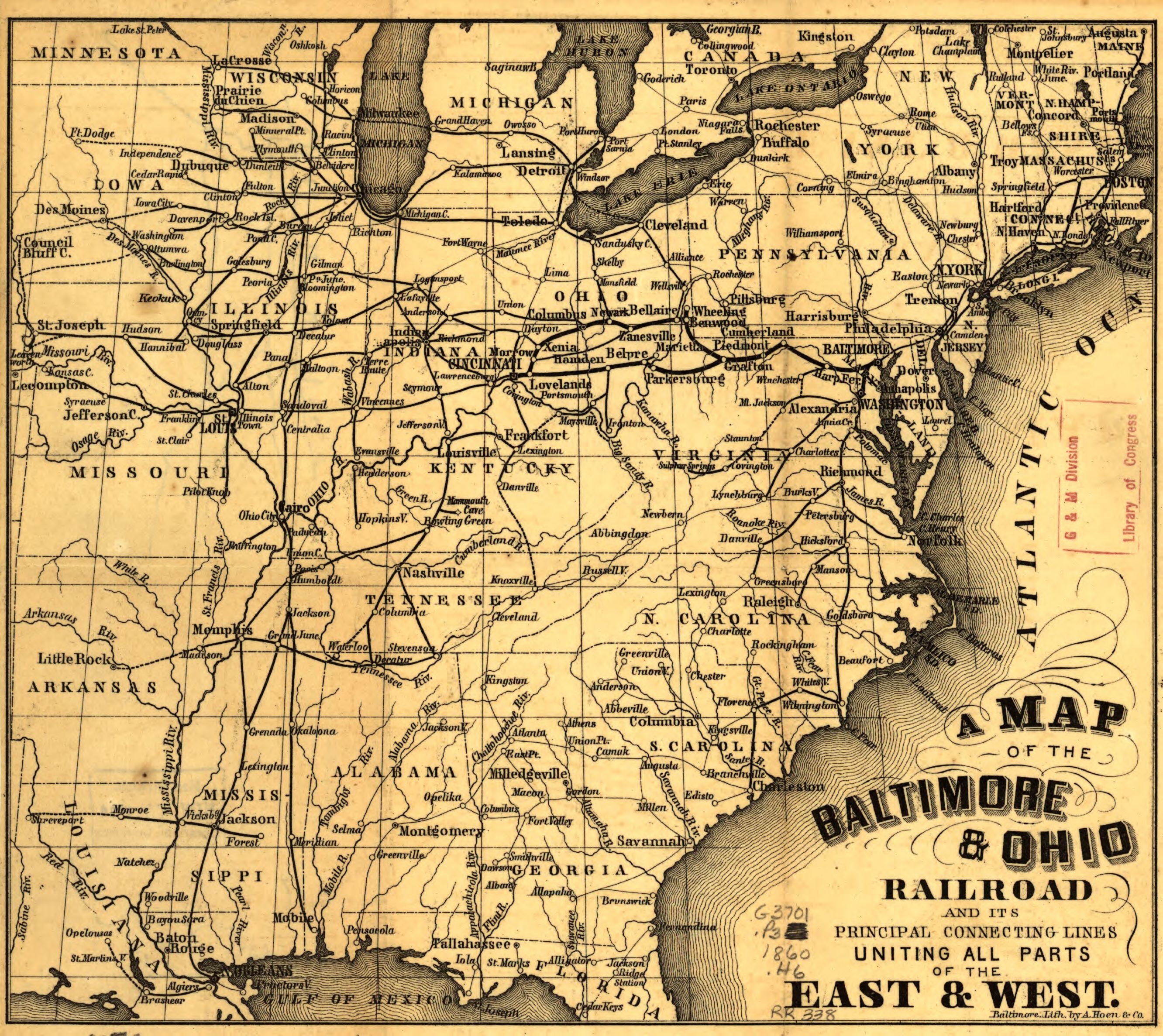
North America in 1914
This is the third post in my series on Harry Turtledove's Timeline-191, following my introduction and my review of How Few Remain. Naturally, from now on all reviews will contain spoilers for the preceding books.

There's a strong argument that the First World War could easily have ended very differently. If the German High Command had not diverted forces eastwards that were later missed during the Battle of the Marne - if Italy or later the United States had remained neutral - if the German spring offensive of 1918 had succeeded... The consequences of Central Powers victory would have been momentous.

So it's no surprise that Turtledove's opening scenario would knock something as precarious in real life as the First World War off balance completely. As you'll remember, in Turtledove's timeline the Confederacy defeats the United States in 1862 and again in 1881 in a rematch over the Confederate purchase of Sonora and Chihuahua from Mexico. Fast forward to 1914, and relations between the two American powers are frosty as ever. The USA, who have maintained close relations with the German Empire since the 1880s, are part of the Central Powers, while the CSA join Britain, France and Russia in the Quadruple Entente. When war breaks out, both powers enter the fray, with the USA having to fight Canada and Britain in the north and the Confederates in the south.

As argued here, this scenario is quite problematic. Conducting an arms race against both Germany and the USA would have overstretched Britain impossibly, and it therefore seems likely Britain would have sought an accommodation with one of these powers. Historically, England decided to remain neutral towards the United States, while planning for a confrontation with Germany; there is no reason why this should be different in Turtledove's timeline.

Indeed, the cost of conducting a land war along a border of almost 4000 miles would have convinced any British policy-makers to maintain neutrality towards the United States at almost any cost. Not to mention that the CSA could provide no benefit to Britain in a European war unless the USA were neutral, freeing up CS resources - an unlikely scenario at best.

I disagree, however, with the notion that Britain would have allied herself with the USA against the CSA. It seems more likely to me that British diplomacy would have been aimed at stopping the war from spreading to North America entirely through neutrality towards the USA, which would have forced the CSA into neutrality, since they could never have fought the North by themselves. Like Britain, Germany would have no incentive to ally itself to the Confederate States.

In Turtledove's timeline, the most likely scenario therefore seems peace in North America, or else an opportunistic US-British alliance in which the US could have attacked the South with impunity. But of course, Turtledove is at this particular point not interested in historical plausibility: what he wants is a massive land war in North America, and his scenario gives it to him.

Like How Few Remain, The Great War: American Front is told through a number of characters. But this time there are rather more of them and they're entirely fictional. That's not without its problems, unfortunately, for Turtledove is on rails here: he feels the need to create allohistorical analogues for people and events that do not occur in his timeline. You get one guess, for example, to figure out who 'Irving Morrell' (say it out loud), US tactician making his name with innovative tactics of surprise and speed on the Alpine Rocky Mountains front, might be based on. Unfortunately this sort of thing abounds.

Generally the oppressed characters (women, blacks, and civilians living under military occupation) are far more interesting than the relatively tedious middle-class white men. That rule of thumb is not without its exceptions: Anne Colleton, as a Scarlett O'Hara expy, is possibly my least favourite character. The opposite goes for Flora Hamburger (gee, I wonder which real person's name Turtledove might be inspired by here), socialist agitator in New York, who I can really root for.

Unfortunately, American Front is also somewhat less well written than How Few Remain, to put it mildly. I present you with the very first paragraph of the book:
The leaves on the trees were beginning to go from green to red, as if swiped by a painter's brush. A lot of the grass near the banks of the Susquehanna, down by New Cumberland, had been painted red, too, red with blood.
Someone please make him stop. Clumsy exposition is another massive problem:
'General McClellan, whatever his virtues, is not a hasty man', Lee observed, smiling at Chilton's derisive use of the grandiloquent nickname the Northern papers had given the commander of the Army of the Potomac. 'Those people' - his own habitual name for the foe - 'were also perhaps ill-advised to accept battle in front of a river with only one bridge offering a line of retreat should their plans miscarry.'
This sort of unspeakably awful thing goes on for six hundred pages, I'm sorry to say. Turtledove was perhaps ill-advised to include in-text exposition rather than append some basic information and allow the reader to figure out a lot of facts, rather than constantly attempting to show how much research he's done. A sense of strangeness, rather than thudding exposition at every turn, would surely serve an alternate history novel well.

So, then: Harry Turtledove is a pretty bad writer. But I'm not ashamed to say I'm devouring this series all the same. It's far more plausible than is usually the case with alternate history, it's aware of social and political issues (especially blacks' struggles) to an uncommon extent, and it offers really fascinating breaks from our timeline and occasional wonderful touches (of which more next time). I do hope it picks up a bit, though.

In this series:
Setting the scene
How Few Remain
The Great War: Walk in Hell
The Great War: Breakthroughs 

Thursday, 7 July 2011

How Few Remain (Southern Victory Series, Part 2)


This post follows my introduction to the general setting of Harry Turtledove's alternate history timeline in which the Confederacy wins the American Civil War in 1862.

In the Anglosphere at least, Southern victory in the American Civil War is one of the most popular historical 'What ifs?', beaten out only by a certain other scenario which Godwin's law won't let me mention. So Turtledove had to choose an original approach if he wanted to make his mark. That he did it twice is to his credit.

In The Guns of the South (1992), time-travelling white supremacists armed a beleaguered Robert E. Lee with AK-47s for the 1964 campaign, leading to a Confederate victory. So when How Few Remain was published in 1997, Turtledove was at pains to point out that it was not a sequel to the earlier book, but rather the beginning of an entirely different timeline: one in which the Confederacy won 'through natural causes', as outlined in my earlier post.

How Few Remain picks up the story in 1881. The Union and the Confederacy remain rivals. The CSA have maintained strong ties with their allies Britain and France while also taking Cuba and Puerto Rico from the fading Spanish Empire. The USA, by contrast, have crushed the resistance of the remaining Indians but have not taken Alaska from the Russian Empire. But trouble starts a-brewin' when the CSA offer to buy the provinces of Sonora and Chihuahua from a perpetually broke Mexican Empire. (In Turtledove's timeline, French intervention in Mexico was successful, leaving a feeble Emperor Maximilian on the throne.)

You see, buying up Sonora and Chihuahua would give the Confederates access to the Gulf of California and raises the prospect of a Confederate transcontinental railroad. The USA, keen to (a) keep the Confederacy out of the Pacific and (b) give the 'Rebs' a good thrashing to make up for the War of Secession, soon declare war. Britain and France both join their Confederate allies. President James Longstreet, a prudent politician, even agrees to manumit the Confederacy's slaves in return for European support.

Like all the books in the Southern Victory series, How Few Remain is narrated in the third person through a number of point-of-view characters; but unlike later books, there are fewer of them, and they're all well-known historical characters. There's Abraham Lincoln, socialist orator and former president of the US; Thomas 'Stonewall' Jackson, general-in-chief of the Confederate States Army; Samuel Clemens, newspaper editor in San Francisco; Frederick Douglass, abolitionist, journalist, and orator; George Armstrong Custer, US cavalry colonel; Theodore Roosevelt, an independently wealthy landowner in Montana; Jeb Stuart, commander of the Confederate forces in the Trans-Mississippi; and Alfred von Schlieffen, the German Empire's military attaché to the United States.

These are really fascinating characters, and Turtledove does a really good job of showing how a different outcome in 1862 put them on alternate paths. As a socialist, I'm obviously rather pleased with Abraham Lincoln's adoption of Marx (but not poor, perpetually forgotten Engels, apparently). Because they're based on historical figures, Turtledove has little trouble creating rounded, compelling characters. And he finds their voice, too: I'm especially pleasantly surprised by his invocation of Sam Clemens's journalistic style.

Most characters here are the sort of people you can root for, too: that goes especially for Lincoln, Douglass and Clemens and not at all for Custer, who is stupid, vainglorious, arrogant and selfish, but quite fascinating all the same. The Ensemble Darkhorse is Alfred von Schlieffen, who's a genuinely likeable character despite coming up with the military plan that bears his name. Turtledove must be criticised, however, for his frequent and annoying use of Poirot Speak: foreign characters fall back on their native language for simple words, not coincidentally those the monoglot reader is most likely to know. This tends to render them a little ridiculous.

All in all, How Few Remain presents a thoroughly plausible alternate timeline with largely rounded and compelling characters, and with a warm humanity suffused throughout: Turtledove never cushions the systemic inhumanity of slavery. A good start, then: let’s see if he can keep it up in The Great War: American Front.

In this series:
Setting the scene
How Few Remain
The Great War: American Front
The Great War: Walk in Hell
The Great War: Breakthroughs

Wednesday, 8 June 2011

Southern Victory, Part One: Setting the scene


I'm a sucker for alternate history. It was only a matter of time, then, before I began reading Harry Turtledove, the 'master' of the genre. Turtledove has written some zany stuff (aliens in the Second World War! Confederate AK-47s! Byzantines and magic!), but it'll be no surprise I was most interested in what is usually dubbed the Southern Victory series or Timeline-191, in which the Confederate States win the American Civil War in 1862 and survive to participate in the major events of the later nineteenth and twentieth centuries.

I hope to review the books one by one as I read them (I've read the first two, How Few Remain and The Great War: American Front). For this post I want to explore Turtledove's setting. I'll do some gushing here as I'm quite enamoured with its general realism, but of course there are also criticisms. You'll forgive the geekery in what follows; it's par for the course.

Unlike the many alternate histories of the Civil War that hinge on a different outcome at Gettysburg, Turtledove's timeline diverges in 1862. This is undoubtedly a correct choice. As Marx and Engels (yes, really; they were astonishingly competent on military matters) argued throughout the war, the key to Union victory was always the Western Theatre, that is control of Tennessee followed by an invasion of Georgia, accomplished by Sherman in 1864. By the time of the Battle of Gettysburg in 1863, the Union already controlled much of Tennessee as well as the Mississippi; accordingly, the Confederates were in very deep trouble that could only partially have been alleviated by victory at Gettysburg. The CSA's best hope was an early knockout blow in the east before Federal forces could make crucial gains in the west. That was precisely Lee's strategy, and the reason he invaded the North in both 1862 and 1863.


Historically, Robert E. Lee split the Army of Northern Virginia into three parts when he invaded Maryland in the late summer of 1862. The order detailing the precise troop deployments was lost by a courier and, by sheer chance, picked up by Federal troops, permitting the Union to defeat Lee at Antietam/Sharpsburg on 17 September. In Turtledove's version of events Order 191 is never lost, Lee is subsequently able to destroy the Army of the Potomac at the Battle of Camp Hill in Pennsylvania and goes on to occupy Philadelphia. This catastrophic defeat forces the US to divert forces from the west, allowing Braxton Bragg's Confederates to occupy Kentucky. Britain and France extend diplomatic recognition to the Confederacy, forcing Abraham Lincoln to negotiate the end of the war.

In the settlement the Confederacy retains Kentucky, but accepts that western Virginia (which soon becomes the Union state of West Virginia), Missouri and Arizona will remain in the Union. The US subsequently emancipate their remaining slaves (some 200,000, I believe). I'm pleased with how relatively low-key this is: no overwhelming Confederate victory leading to, say, all the border states joining the CSA. It's perfectly clear throughout the novels that the United States are and remain by far the stronger of the two powers. At the same time, Turtledove makes the important point that Confederate victory was a very real possibility - something that Marxists of the orthodox variety may be loath to admit since the US were undoubtedly the more 'historically advanced' of the two parties. (It's very clear from their articles that Marx and Engels supported the North not because it was more 'advanced' but because of the horrors of slavery.) But in 1862 the CSA undoubtedly had better generalship, and this created a window of opportunity before the North could bring its crushing numerical and industrial superiority to bear.

In jumping straight from 1862 to 1881, the first novel, How Few Remain, sidesteps a number of historical questions. I'm particularly interested in what might have happened to the many thousands of slaveholders in the border states: would some of them have chosen to move to the Confederacy? I can imagine a scheme of the Confederate government resettling slaveowners and buying up slaves to compensate those expropriated in the US, which would have simultaneously stimulated the ailing slave economy of the South. Someone who ought to have been a point-of-view character in How Few Remain is Jesse James, for his life - as the scion of a slaveholding Missouri family who first went to war in 1864 - would have been radically altered by Turtledove's alternate history. Would the James family have returned to their native Kentucky? What an opportunity for fanfic!

Turtledove's other interesting general contention is that continuing hostility between USA and CSA would have involved the European powers in North America in a way that did not happen in our timeline, eventually tying both powers into European alliance systems. That seems quite plausible to me: the Confederacy in particular would have needed strong allies to survive.

So, reviews to follow!


In this series:

How Few Remain
The Great War: American Front
The Great War: Walk in Hell
The Great War: Breakthroughs

Property crowned and uncrowned

The classes team up to take down the monarchy.
 
According to the Guardian, sixty-seven per cent of Britons believe the monarchy is 'still relevant'. That figure, of course, is rather worthless since it tells us nothing about approval. We'll all agree that Nelson Mandela is 'relevant'; so, I'm sorry to say, is David Cameron. The point stands, however: the monarchy does not inspire abject hatred. But neither are most Britons of the flag-waving loyalist variety. Before the royal wedding, only 37% professed interest in the event; according to YouGov, 35% would do their 'best to avoid' the whole affair. Indifference seems to be the prevailing attitude towards the House of Windsor.

Among sections of the Left there's a long-standing puzzlement about the British monarchy. It is assumed that a democratic republic is the 'typical' form of bourgeois government and that, accordingly, Britain represents an anomaly. A more Marxist response, surely, would be to argue that 'typical' forms of government hardly exist and that historical materialism is a critical method rather than a template for understanding every historical event. Indeed, the notion that republics are natural forms of government under capitalism can be quite easily refuted. Before the First World War, of the Great Powers only France and the United States were republics; Germany, Austria, Italy, Russia and Britain were all monarchies of varying types. Indeed new monarchies were constantly being created at the height of nineteenth-century capitalism. In the century following the Congress of Vienna, new monarchies were installed in France (which didn't last), the Netherlands, Belgium, Norway, Romania, Bulgaria, Serbia, Montenegro and Greece; both Germany and Italy were unified under conquering monarchies. Where these crowned heads fell at the end of the Great War, this was caused by proletarian revolutions that threatened the entire propertied order.

The French Revolution was a revolution against royal absolutism - yes, but what does this mean? Was it a revolution against untrammelled executive power, against the constant subordination of the periphery to the centre, of the part to the whole - a revolution for 'checks and balances' as Montesquieu advocated them? (This advocacy led Carl Schmitt to dismiss Montesquieu as, essentially, a medievalist.) On the contrary: the Revolution not only displayed all these characteristics of the ancien régime, it shattered all the obstacles to absolute rule the king had been unable to remove. It is in this sense that the Revolution was fulfilled by Napoleon. Lord Elton was right to claim that the twin principles of the revolutionaries of 1789 were order and equality: the removal of all the inefficiencies, corruption and arbitrariness caused by privilege - and the removal of decision-making from a single, weak individual, controlled by advisers, mistresses and outdated noblemen: in short, the replacement of the unchecked rule of a monarch by the unchecked rule of a class.

The reasons for the creation and fall of the Second French Republic (1848-52) are laid out by Karl Marx in his Eighteenth Brumaire of Louis Bonaparte. The July Revolution of 1830 had led the bourgeoisie to embrace not republicanism but the constitutional monarchy of Louis-Philippe. The July Monarchy, however, struggled against proletarian uprisings and increasing hostility from those sectors of the bourgeoisie that felt left out by a state that mostly represented high finance. The February Revolution of 1848 left no option but a republic as the system that divided Frenchmen least (Adolphe Thiers). It was simply impossible to hand the crown over to yet another dynasty, although Louis Napoleon was waiting in the wings. The uprising of the masses in June 1848 was defeated by the bourgeoisie in alliance with the lumpenproletariat and the petite bourgeoisie. Thereafter the country was run by a parliament mostly composed of monarchists that could not muster the strength to resist Louis Napoleon's bid for power.

As the French bourgeoisie discovered in 1830 and 1848, it is very difficult to have a revolution against monarchy and privilege without opening Pandora's box: revolution, where it happened, constantly threatened to create a maelstrom in which the bourgeoisie, having participated in the overthrow of the old order, would itself be destroyed by the propertyless classes. This happened, of course, in Russia in 1917, and was a distinct possibility in Germany, Hungary and Italy after the First World War, France in 1871, Spain after 1931, and others. The result was that, where it perceived a threat from below, the bourgeoisie would prefer to work with rather than against the old order. Sometimes, of course, the bourgeoisie simply repeatedly failed at wresting power from the ancien régime: thus most infamously in Germany.

The accommodation that the bourgeoisie reached with monarchs as well as aristocratic and ecclesiastical elites removed the need for a republican form of government. Today, in Britain at least none of the main bourgeois parties advocates republicanism, although republican views are presumably more commonly held by Labour and Liberal supporters than they are by Tories and the associated Church-and-King mob of the gutter press.

The conclusion must be that the abolition of the monarchy is now quite impossible without a wide-ranging reconfiguration of British society as a whole: in other words, revolution. (The argument that a socialist society would of necessity be republican need not be made here.) The sort of liberal republicanism that impotently mocks the House of Saxe-Coburg-Gotha in the pages of the Guardian rightly elicits little more than pity from the Right. They may not have chosen it, but republicans and revolutionaries can only achieve their aims together.